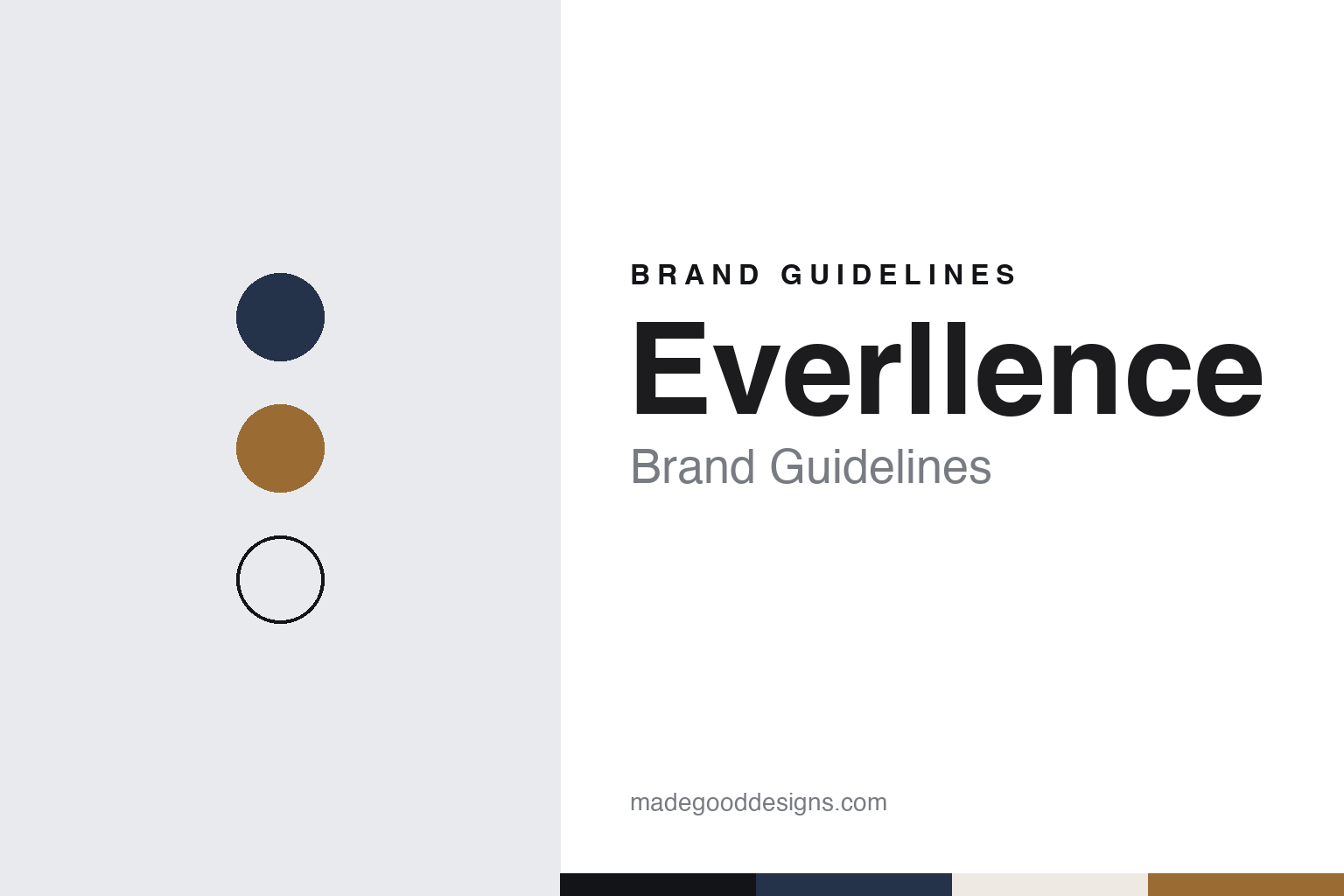
Everllence Brand Guidelines
MAN Energy Solutions, renamed in Augsburg in 2025.
Aa
Two constants: a forge blue, pale stone and bronze palette and a geometric sans register. Abstract homage — not an Everllence product or mark; no engine, logo or nameplate is reproduced.
Augsburg-Nürnberg
Ironworks, a diesel engine and the war years.
Everllence is the newest name for one of the oldest engine businesses in Germany. English Wikipedia traces MAN to the Sander’sche Maschinenfabrik, founded in Augsburg in 1840, and to a Nuremberg ironworks, Klett & Comp.; the two lines merged in 1908 as Maschinenfabrik Augsburg-Nürnberg, or MAN. A third root, the St. Antony ironworks of 1758 in Oberhausen, became Gutehoffnungshütte (GHH), which took a majority stake in MAN in 1921. Everllence speaks of more than 250 years of company history.
The engine that made the business famous was developed in Augsburg. Between 1893 and 1897, Wikipedia says, MAN worked with Rudolf Diesel to develop the first diesel engine, a single-cylinder four-stroke. MAN built upright two-stroke marine engines with the Hamburg shipyard Blohm+Voss from 1910, and from 1926 designed high-output two-stroke engines for ships, according to the same article.
The war years are documented by the economic historian Johannes Bähr, author of the company history Die MAN, in an extract published by manager magazin in July 2008. He describes the combined GHH and MAN group as one of the mainstays of armament production in the German Reich during the Second World War. Like the other firms in that production, GHH and MAN used large numbers of prisoners of war and foreign civilian workers as forced labourers. At the 1944 peak the GHH group had about 31,500 forced labourers, around 8,500 of them at MAN, Bähr writes. At MAN the practice began with prisoners of war late in 1940 and grew in Augsburg and Nuremberg from 1942. MAN’s Hamburg engine works, opened in March 1942, was run largely with forced labour, with foreign workers making up about 73 per cent of its staff in April 1944, according to the same account.
Colour
Copenhagen two-strokes and a run of new names.
The marine business took its present shape after 1979. As shipbuilding moved to East Asia and development costs climbed, MAN took over the Copenhagen engine designer and builder Burmeister & Wain in 1979–80, English Wikipedia says. Since then four-stroke engines have been developed in Augsburg and two-stroke engines designed in Copenhagen, and the largest two-stroke engines still carry the letters B&W in their name. The sources used for this guide do not say how Burmeister & Wain operated during the occupation of 1940–1945. The GHH group itself was folded into the MAN Group in 1986.
A string of names followed. MAN Diesel & Turbo SE was formed in March 2010 by merging MAN Diesel and MAN Turbo, and Volkswagen acquired a majority of MAN SE in 2011. In 2018 the company became MAN Energy Solutions, shifting its strategy towards what it calls sustainable technologies, and in the same year it was separated from MAN’s truck and bus business. It bought 40 per cent of the electrolyser maker H-Tec Systems in 2019 and raised its stake to about 99 per cent by 2021, Wikipedia records; the company now names that subsidiary Quest One.
On 4 June 2025 MAN Energy Solutions became Everllence. The company’s announcement says the new nameplate was unveiled at the Augsburg headquarters while similar ceremonies were held at its main European sites in Oberhausen, Berlin, Zurich and Copenhagen. The name joins the English words “ever” and “excellence”, the company explains, with “ever” standing for a history of more than 250 years and for the “first-ever”. It ties the change to its strategy line, “Moving big things to zero,” and to a business that now also covers large heat pumps, carbon capture and storage and hydrogen electrolysers alongside engines and turbomachinery. At the time the company said it remained part of the Volkswagen Group, with its products and services unchanged.
Typography
Design and documentation.
Marine engine makers sell to shipyards, shipowners and ship managers rather than to the public, and their websites read like technical catalogues. The core of most is an engine range sorted by bore and output. WinGD names its two-stroke engines by cylinder bore in centimetres, from the X52 to the X92, while Everllence gives its four-stroke engines bore-and-stroke numbers such as 32/44 and 49/60. Letters added to those numbers mark the fuel, the generation or the version.
The pictures follow the product. These companies publish cutaway renderings that open an engine to show its cylinders, pistons and crankshaft, alongside photographs of finished engines on test beds and in engine rooms. Model names, cylinder counts and output figures sit beside the images, so a page often reads more like a data sheet than an advertisement.
Fuel has become one of the main ways these makers describe themselves. Their websites sort engines by fuel type as well as by vessel type, with pages for liquefied natural gas, methanol, ammonia and LPG; WinGD adds ethanol, and Everllence marks its alternative-fuel two-stroke engines with a suffix for each fuel. Dual-fuel engines, which run on gas or on liquid fuel, are presented through type designations and technical descriptions in the companies’ own terms.
Two other features recur. Service network maps and location finders show where parts and field engineers can be found; Everllence speaks of more than 140 service locations, and WinGD runs a lifecycle-support arm under its own name. Heritage timelines, meanwhile, tie current engines to Rudolf Diesel, whose engine was developed with MAN in Augsburg in the 1890s and licensed to Sulzer in Winterthur, giving the oldest names in the field more than a century of dates to show.
Aa
A geometric sans for an invented English compound. (Specimen set in Manrope, a sans STAND-IN; NOT the Everllence logo.)
Everllence
Engine families, a pending sale and a new word.
The engine range is presented by family. On its website Everllence lists its two-stroke marine engines under the Everllence B&W name: the ME-C series, plus gas and alternative-fuel versions such as ME-GI, ME-LGIM for methanol and ME-LGIA for ammonia. Four-stroke engines carry bore-and-stroke numbers, such as the 32/44CR and the 49/60DF, which Wikipedia says was introduced in 2022 to run on LNG, diesel, heavy fuel oil and sustainable fuels; a 175DF-Methanol model sits in the same list. The company also makes turbochargers, propellers, compressors and steam turbines, and offers service for older S.E.M.T. Pielstick engines.
Ownership is changing again. On 25 June 2026 the investment firm Bain Capital announced that it had agreed to acquire a majority stake in Everllence from Volkswagen, which will keep a shareholding, subject to regulatory approvals and closing conditions. The regional business site b4b Schwaben reported the same day that Bain would take 51 per cent and Volkswagen keep 49 per cent, and that the sale still needed regulatory approval and consultation with employee representatives in France, which Volkswagen aimed to complete by the end of the year. The sale was agreed in June 2026 and not completed at the time of writing. b4b Schwaben also reported that Everllence employs around 16,000 people, more than 4,000 of them at the Augsburg headquarters, and that an agreement with the works council and the IG Metall union rules out closing the German sites in Augsburg, Oberhausen, Berlin, Hamburg and Ravensburg until 2030.
The identity work sits in the name. Everllence chose an invented English compound rather than another variation on the three MAN initials, which remain in use at MAN Truck & Bus, and it kept B&W as a product name on its largest engines, so the Copenhagen line survives inside the new brand. The company presents the word as a statement of long history and of a shift from diesel engines alone towards decarbonisation work, and it carried out the change on a single day across its main European sites.
For a design guide, Everllence shows how a long industrial lineage can be renamed without losing its product names, with an invented word above and the old B&W letters below. Compare Wärtsilä, another engine maker that also builds four-stroke engines, and WinGD, the Winterthur two-stroke designer with Sulzer roots. For this guide we use a forge blue, a pale stone and a bronze with a sans, an unofficial interpretation; no product or logo is reproduced.
Explore & save
Keep Everllence’s identity on hand — save it to a board in the Made Good inspiration library.
Everllence identity set
Pin the Everllence forge blue, pale stone and bronze palette and the geometric sans register to your own board.