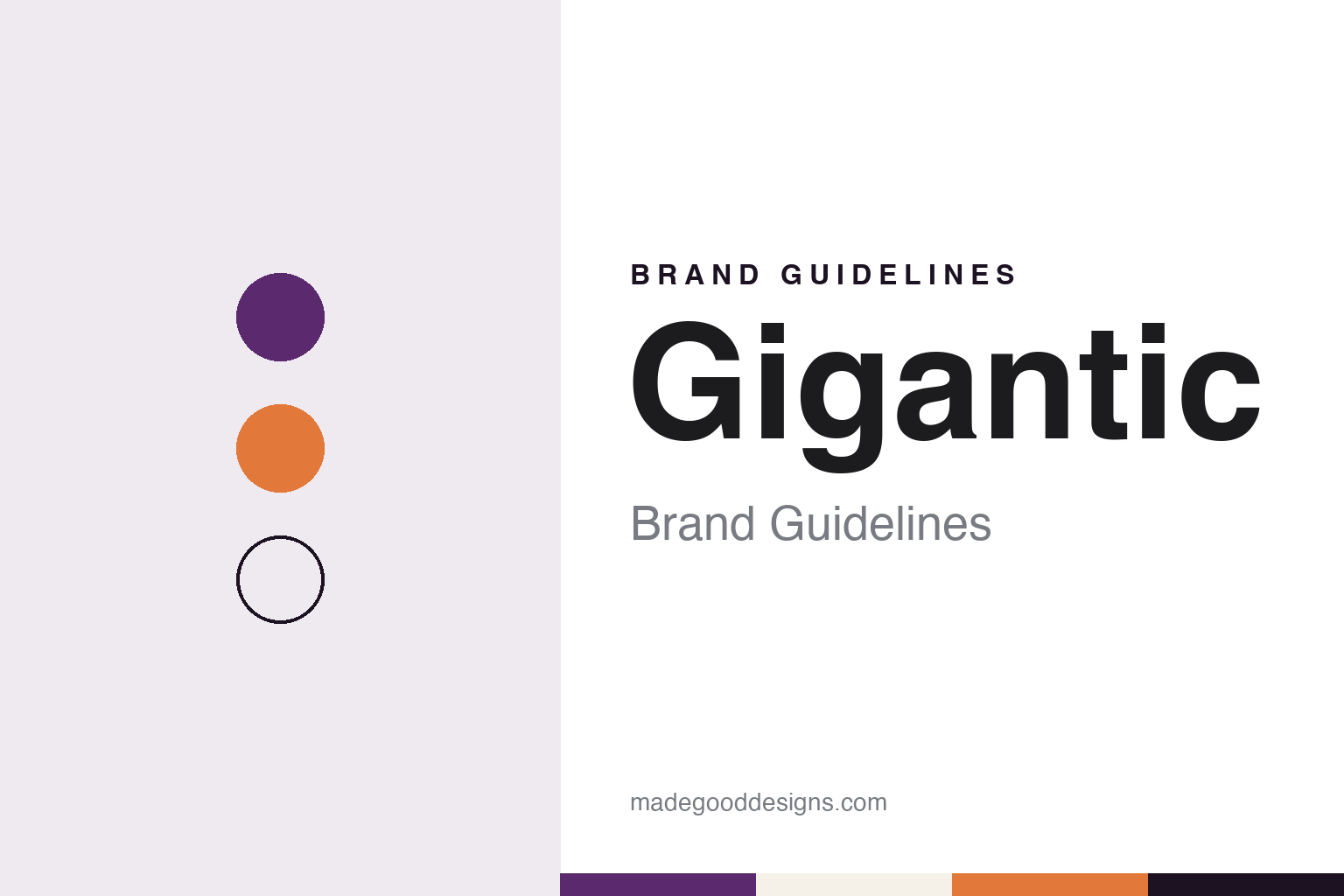
Gigantic Brand Guidelines
A 2007 UK primary ticketer, Myticket and KMJ.
Aa
Two constants: a plum, ink and orange palette and a heavy grotesque register. Abstract homage — not a Gigantic product or mark; no logo, ticket or screen is reproduced.
Gigantic Tickets
A UK ticket agent built for promoters.
Gigantic Tickets, usually shortened to Gigantic, is a UK primary ticketing company: it sells tickets on behalf of the promoters, venues and festivals that put on events, rather than reselling them between fans. Music Week reported in December 2019 that it was founded by Mark Gasson in April 2007; the UK company register shows Gigantic Tickets Limited incorporated on 8 January 2007, a few months earlier. Gasson himself was quoted in 2025 as saying he first founded the company in 2007. By November 2024, Music Week wrote, the business was approaching its 18th year of operation and offered a spectrum of services to the promoter, venue and festival sectors.
Music Week says James Woodward joined in 2011 and later served as chief technology officer, and that by 2019 the two ran the business as managing directors. The same report says 2019 brought two launches: a fan-to-fan resale platform inside Gigantic, and the company’s first paperless ticketing, used for Ed Sheeran’s summer 2019 UK shows. For a ticketing brand, both changes moved part of the product from a printed ticket to a phone screen and an account page.
Trade reports use both forms of the name: “Gigantic Tickets” in headlines and “Gigantic” in the company’s own quoted statements, and this guide follows that short form. No colour code or typeface for the wordmark appears in the sources used here, so the tones and fonts in this guide are our own choices.
Colour
A German owner that also owns promoters.
In December 2019 Gigantic changed hands. Music Week reported on 16 December 2019 that Myticket, a subsidiary of the German live-entertainment group DEAG (Deutsche Entertainment AG), had acquired the company. Gasson and Woodward stayed on as managing directors. In a joint statement they said they had built consistent growth for Gigantic in a competitive marketplace, and that the deal would bring investment and stability to its ticketing operations. A Myticket representative told the magazine that Gigantic would remain an independent company and keep working for promoters, festivals and customers across the UK, and said Gasson and Woodward had built a company known for reliable, customer-focused ticketing.
The same report noted that DEAG was also the parent of the promoter Kilimanjaro Live. Gigantic now sits within KMJ Entertainment Group, which Access All Areas reported in November 2026 owns the promoters Kilimanjaro Live, Regular Music, FORM, Singular Artists and Fane, among others. The same report described Berlin-based DEAG as a pan-European promoter, ticketer and venue group that stages around 6,000 events a year. Music Week named Kilimanjaro Live among its clients in October 2026, alongside Crosstown Concerts, Bird On The Wire, Sheffield Octagon and the Belladrum festival in the Scottish Highlands.
Leadership passed to a second generation in two steps. Music Week reported in November 2024 that Simon Carpenter, who had led Gigantic’s commercial team for nine years, joined the board as co-CEO alongside Gasson, while Joe Lilley, part of the core technical team for more than 13 years, became co-CTO alongside Woodward. In February 2025 Carpenter became sole chief executive and Lilley chief technology officer, with Gasson and Woodward moving to joint chairmen. The 2024 round also made Kelly McKinney, who had spent eight years in event management and client services at Gigantic, head of operations. In its February 2025 statement the company said the new team showed it was investing in its staff, whose work had helped the business grow since its formation in 2007.
Typography
Ticketing and event platforms.
Ticketing and event platforms sit between the people who put on events and the people who go to them, and their design has to serve both sides at once. Some are primary agents that sell on behalf of promoters, venues and festivals; others run resale marketplaces where fans and traders list tickets they already hold. Each kind presents itself differently, and each is worth reading on its own terms rather than as a single category.
The interface is where most of the brand lives. Event pages, seat maps, ticket wallets and checkout screens carry the name more often than any advertisement does, and the companies publish these flows in their own apps and help pages. In the United Kingdom, a 2018 court order secured by the Competition and Markets Authority required one resale site to show seat details, face value and the identity of the seller, so for resale brands some page elements are set by regulators as well as by designers.
Around the interface sit the smaller marks: app icons, short wordmarks and the photography used on event listings. Much of that photography belongs to artists, promoters and venues rather than to the platform, which means the platform’s own colours and type often act as a frame around other people’s posters, line-ups and stage shots.
Corporate pages tell a further story about owners and markets. Ticketing brands are often bought and sold, merged into larger live-entertainment groups or kept as separate names inside one company, and their about pages, trade-press announcements and regulator filings are the plainest record of who owns what, and where each name trades. The guides in this group read those records alongside each brand’s public identity; every palette shown is our own unofficial interpretation.
Aa
A heavy grotesque for a loud, one-word name. (Specimen set in Archivo, a sans STAND-IN; NOT the Gigantic logo.)
Venues, promoters and a new parent
Crosstown, Union Chapel and a pending deal.
Recent deals show where Gigantic sells. In February 2026 Music Week reported a multi-year primary ticketing agreement with the promoter Crosstown Concerts, covering ticketing and CRM marketing support; Gigantic called it its largest contract outside its own group and said it had worked with Crosstown since that promoter’s first shows in 2016. Crosstown, which marks its tenth anniversary in 2026, said Gigantic supported independent voices in the UK concert industry. In October 2026 the magazine reported that Gigantic had extended its partnership with London’s Union Chapel, providing ticketing, customer support and box-office services for the venue’s music, comedy and guided tours; the venue’s head of commercial and programming said its varied events needed a ticketing partner that understood the different needs of each audience. Gigantic says 2025 was its most successful year to date.
Its parent is now the subject of a takeover. Access All Areas reported on 6 November 2026 that the New York-based Enhanced Group had agreed to acquire a controlling stake in DEAG, whose UK interests include Gigantic Tickets, MyTicket and KMJ Entertainment. The deal was agreed in November 2026; not completed at the time of writing. At the time of writing, Gigantic remains part of DEAG through KMJ Entertainment Group.
For a design guide, Gigantic shows how a mid-sized primary ticketer presents itself to two audiences at once: fans who meet it on an event page and checkout, and promoters and venues who choose it as their box office. Its short, loud name sits beside promoters’ own artwork and listings, so the platform’s identity has to frame other people’s posters rather than compete with them. Compare the UK agent See Tickets and the self-service platform TicketSource. For this guide we use plum, ink, orange and cream with a sans, an unofficial interpretation; no product or logo is reproduced.
Explore & save
Keep Gigantic’s identity on hand — save it to a board in the Made Good inspiration library.
Gigantic identity set
Save the Gigantic plum, ink and orange palette and the heavy grotesque register to your own board.