Gliga Brand Guidelines
The violin actually made in Romania’s town of violins.
Aa
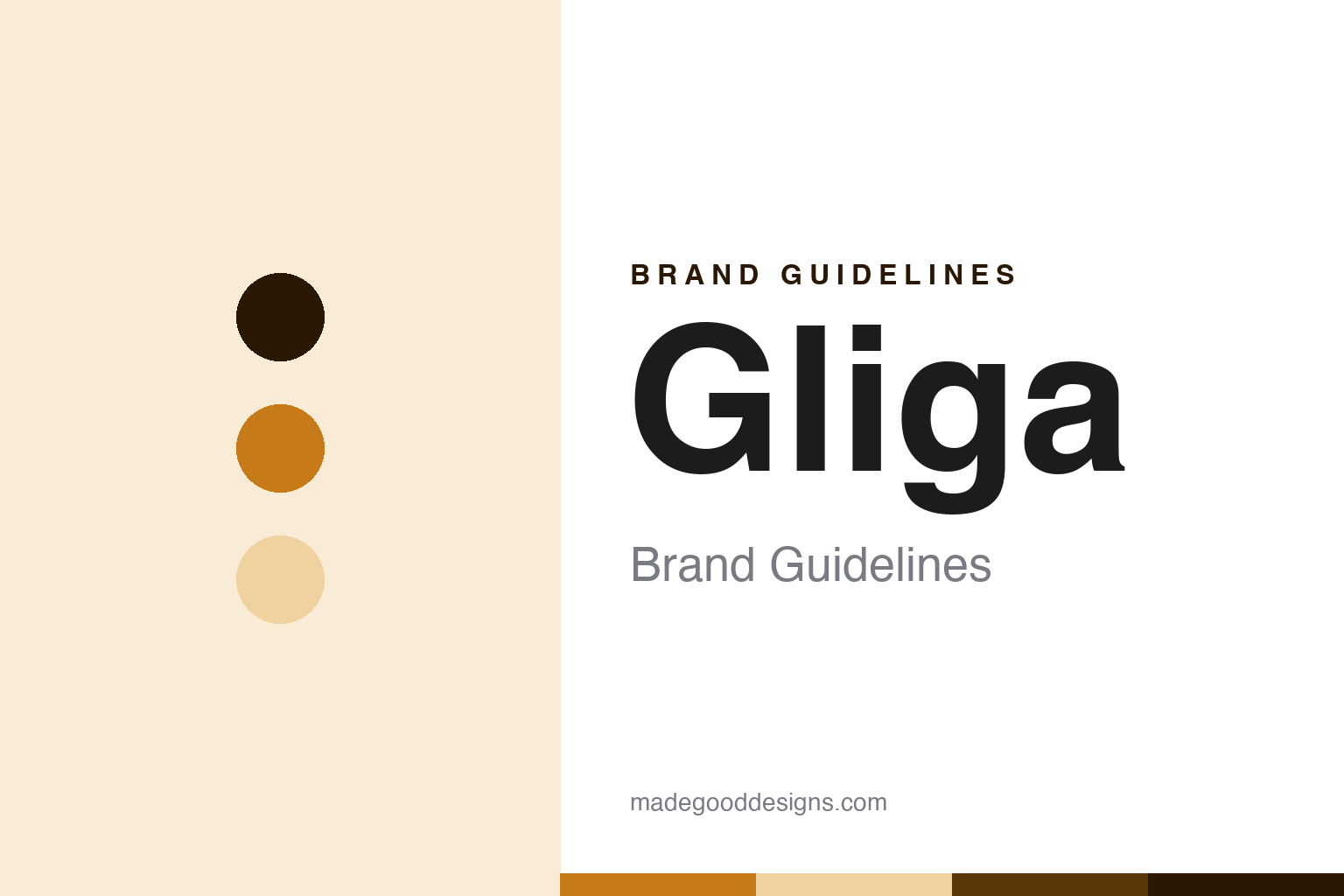
Two constants: a Gliga-amber palette and a luthier-sans register. Abstract homage — not a Gliga product or mark; no violin or logo is reproduced.
The violin actually made in Romania’s town of violins
Gliga is the hand-carved instruments master luthier Vasile Gliga has made since 1991 in Reghin, Romania, a town famous for violin-making — the round’s genuine European maker.
Gliga sits at the heart of the round as its genuine-maker node — the one brand here whose violins are hand-carved in Europe rather than branded onto imports. Its answer to a round about who owns and where-makes the student violin is the honest counter-example: the violin actually made in Romania’s town of violins.
Its identity is the violin actually made in Romania’s town of violins. The 1991 founding, Vasile Gliga and the Reghin making are the story here. The genuine maker. The violin actually made in Romania’s town of violins.
(Honest notes, so the founding, the maker, the place and the making are framed accurately. Gliga sells hand-carved violins as its heroes; we report its language as the brand’s own. On founding: Gliga dates itself to 1991, when the master craftsman Vasile Gliga finished his first violin. On the maker: Vasile Gliga is a master luthier, and the company is family-owned and independent in Romania. On the place: it began in his workshop in Reghin, Romania, and Reghin is well known for violin-making, using resonance wood from the Calimani and Gurghiu forests, with a violin monument in the city as its symbol. On the making, the key point: the instruments are hand-carved and made in Romania, which is the genuine made-in-Europe contrast to the reported China making of the other brands in this round. On the lines: tiered handmade ranges such as Gems, Genial, Genova and Gloria, from beginner and school to professional, concert, maestro and master. On a note: Yehudi Menuhin is reported to have used a Gliga violin, which we attribute. Its designs and the Gliga name are IP we describe but do not reproduce; there is no official brand hex; these tones are an unofficial interpretation.)
Colour
Gliga lives in a Gliga amber. Click a swatch to copy the hex.
Gliga’s identity is genuine, Romanian and hand-carved — a Gliga amber, an ink, a pale amber, a deep umber, and a paper. The palette leans Gliga amber and deep umber: a warm, crafted register that stands in for a genuine European maker rather than a loud logo colour. It signals the violin actually made in Romania’s town of violins — genuine, Romanian and hand-carved. The honest caveat: with no official brand hex, these values are a crafted, unofficial interpretation, not first-party colours.
The lesson is a Gliga amber signals a genuine, Romanian identity. Gliga’s world is the carving bench and the resonance wood of the Carpathians. For designers, it is a reminder that a warm amber and a pale amber can carry a genuine, Romanian brand — a crafted tone held as an accent, not a product shot. Because a warm hue can fail as small text, keep type dark and let the colour live in the accents, palette and band. The takeaways: date the founding to 1991 and name Vasile Gliga; place it in Reghin, the town of violins; state the Romania making as the genuine contrast; and attribute the Menuhin note.
Typography
The register is a luthier sans — genuine, Romanian, hand-carved.
Gliga’s identity carries a genuine, Romanian spirit — a real maker in a real place. A luthier sans captures the mood: clean, warm and grounded, the register of a craft house. Set in a Gliga-amber palette, the luthier sans feels dependable and earned — exactly the personality Gliga carries. It behaves like a made, carved thing rather than a loud logo, mirroring a bout-line and a peg-dot. (Gliga’s real products and the name are things we describe but do not reproduce, and the exact typeface is not ours to use.) Because it is not ours to use, the honest description is “a luthier-sans brand,” shown here in a stand-in. The type behaves like the brand: genuine, Romanian and hand-carved.
Aa
A luthier-sans brand — dependable and earned. (Specimen set in Jost, a luthier-sans STAND-IN; NOT the Gliga logo or products.)
The student-violin node
Gliga stands for the violin actually made in Romania’s town of violins.
Gliga sits fifth in the round as its genuine-maker node. A Gliga-amber palette, a luthier sans and a 1991 founding make one thing — the violin actually made in Romania’s town of violins — the whole identity: genuine, Romanian and hand-carved. The 1991 founding is the pitch, Vasile Gliga is the maker, and the Reghin making is the honest contrast. The point is a real European maker among branded imports, in a round about who owns and where-makes the student violin.
Put to work, the identity is the brand told straight, the place named and the making stated. A brand in this spirit would date the founding to 1991 and name Vasile Gliga, place it in Reghin the town of violins, state the Romania making as the genuine contrast, and attribute the Menuhin note. A reader in this spirit would keep the facts right: Gliga makes hand-carved violins; it dates to 1991; it is family-owned in Romania; and it is genuinely made in Romania. Gliga sits after Knilling and before Mendini. The honest editorial moves are to date the founding, to name the place, to state the making, and to attribute the note.
For designers and brand-builders, Gliga carries the student-violin node: the genuine maker is the counter-example that keeps the round honest. The lessons: a round of branded imports can still have one real maker, here Gliga; a founding is dated to 1991, when the master craftsman Vasile Gliga finished his first violin; a maker is named, Vasile Gliga, a master luthier whose company is family-owned and independent in Romania; a place is named, his workshop in Reghin, a town well known for violin-making, using resonance wood from the Calimani and Gurghiu forests, with a violin monument as its symbol; a making is stated, that the instruments are hand-carved and made in Romania, the genuine made-in-Europe contrast; and a note is attributed, that Yehudi Menuhin is reported to have used a Gliga violin. It is also a reminder to stay precise: Gliga is the Gliga-family Romanian maker whose violins are actually made in Reghin — with the palette here an unofficial interpretation, and the Menuhin note kept attributed. The hook is that place: Gliga is the violin actually made in Romania’s town of violins, the hand-carved instruments master luthier Vasile Gliga has made since 1991 in Reghin, Romania, a town famous for violin-making. Read that way, Gliga is less a single violin than the violin actually made in Romania’s town of violins: genuine, Romanian, hand-carved. The lesson for a brand is that the genuine maker is the counter-example that keeps the round honest, and dating the founding keeps it earned. Gliga made the-violin-actually-made-in-Romania the identity — proof that a genuine maker can anchor a node.
Explore & save
Keep Gliga’s identity on hand — save it to a board in the Made Good inspiration library.
Gliga identity set
Pin the Gliga-amber palette and the luthier-sans register to your own board.