Hawksmoor Brand Guidelines
A Spitalfields charcoal grill that grew into a transatlantic steakhouse.
Aa
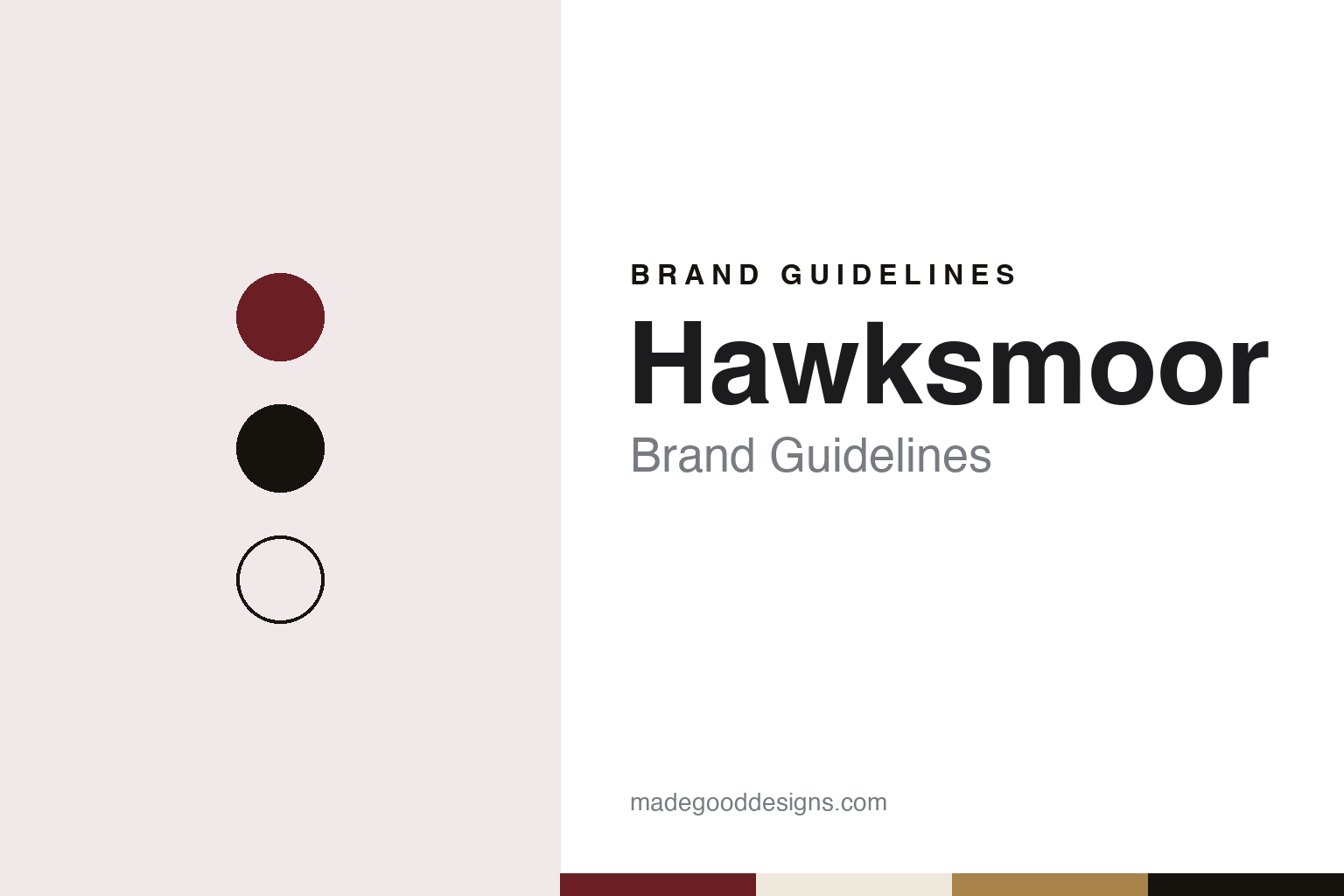
Two constants: an oxblood, charcoal and brass palette and an old-style serif register. Abstract homage — not a Hawksmoor product or mark; no dish, logo or sign is reproduced.
Spitalfields, 2006
A charcoal grill in a former Turkish restaurant.
Hawksmoor was founded in 2006 by Will Beckett and Huw Gott. English Wikipedia says the two had worked in bars and kitchens in London’s East End before opening a bar and restaurant on Commercial Street, and Restaurant Online gave the same founders and year in March 2026. The company’s own history describes the founders as childhood friends and places the first site just down the road from Christ Church Spitalfields, the church designed by the architect Nicholas Hawksmoor.
That first site had been a Turkish restaurant, the company says, and it came with a tiny kitchen and a long, open charcoal grill once used for kebabs. The founders bought a set of grill bars from a railway arch nearby that was full of second-hand kitchen equipment. The company says every Hawksmoor kitchen is still built around a version of that original grill, down to the spacing between the bars, and that most of its steaks are still cooked over real charcoal. English Wikipedia adds that the founders tasted beef from many countries before deciding to serve beef from the UK.
The second restaurant opened in Seven Dials in 2010, according to English Wikipedia. In 2013 the founders sold a majority stake to the London private-equity firm Graphite Capital, which English Wikipedia notes had also invested in Wagamama, while the founders stayed on to run the business. Graphite’s own portfolio page says Hawksmoor had four restaurants in central London when it invested. Restaurant Online, profiling the group in 2018, said the two founders had worked together since 2003, when they opened the Redchurch bar in Shoreditch.
Colour
Old buildings, new cities.
Several Hawksmoor restaurants occupy listed or historic buildings. Its first site outside England, opened in July 2018 as the group’s ninth, is a 185-cover restaurant in a Category A-listed building on St Andrew Square in Edinburgh, built in the 1930s for the Bank of Scotland, Restaurant Online reported. The magazine described the group’s signature look as old-school English glamour and listed the parts of the room: parquet floors, reclaimed furniture, original door frames, brass ironmongery, made-to-order light fittings, and a curved bar built from the panelling of an old Glasgow townhouse. In Liverpool the group took space in the Grade II-listed India Buildings, The Good Food Guide reported in May 2022, and in London it had opened a floating steakhouse at Wood Wharf in 2021.
Its Dublin restaurant, which opened in May 2023 as the group’s twelfth, is in the former National Bank building on College Green, opposite the main entrance to Trinity College, Graphite Capital said at the time. In Chicago, Restaurant Online reported in June 2024, the group took a three-storey building of 16,500 sq ft that began life in 1887 as a powerhouse for the city’s cable-car system; the main dining room seats up to 125, a second dining room 76, and there are two private dining rooms. It opened on 27 June 2024 as the group’s second American restaurant, after New York, which opened in Manhattan’s Flatiron district in 2021.
Will Beckett, co-founder and chief executive, described the offer at the Chicago opening as steak, seafood, cocktails and wine, Restaurant Online reported. In Britain the estate has spread from London to Manchester, Edinburgh and Liverpool. In March 2026 the same magazine counted 13 sites, seven of them in London, named the St Pancras London Hotel as the most recent opening, and reported that the group had announced a third US restaurant, in Boston’s Fort Point district, with around 200 covers and a terrace, in its twentieth-anniversary year.
Graphite Capital’s portfolio page now lists fifteen restaurants: eight in London and one each in Manchester, Edinburgh, Dublin, Liverpool, New York, Chicago and Boston, and it says the Boston restaurant opened in September 2026. The St Pancras restaurant took over the former Midland Grand dining room in the Grade I-listed hotel building by George Gilbert Scott, with a Martini Bar in the room previously known as the Gothic Bar, Harden’s reported in October 2025 and Graphite confirmed on its opening that December; it has 95 covers. English Wikipedia’s list of London sites includes Air Street, Borough, Guildhall, Knightsbridge, Seven Dials, Spitalfields, Wood Wharf and St Pancras.
Typography
How British restaurant groups present themselves.
Britain’s fast-casual and restaurant-group chains sit between the quick-service counter and the traditional sit-down restaurant. Many of them began as a single London room and grew into groups of dozens or hundreds of sites, and their identities are built as much from the room, the menu and the tone of voice as from a logo. Wagamama’s website, for example, describes its format through communal benches, open kitchens and food served in bowls as soon as it is ready.
The format often comes from somewhere else. Some chains borrow a setting from abroad — a Tokyo ramen bar, a Bombay Irani café, a street-food stall — and rebuild it for British high streets, shopping centres and railway stations. The restaurant guide Harden’s, writing in 2018, credited one such chain with popularising communal, canteen-style dining in Britain. Others are built around a single dish, such as a burger, a bowl of noodles or a plate of sushi, and keep the menu short enough to repeat across many sites.
Naming is usually plain and descriptive. Dishes are listed by what they are, sometimes in the language of the food’s home country, and restaurants are named after their street or district. Some groups give each site its own story or decorative theme; others keep every branch close to a single template so that a guest knows what to expect anywhere in the estate.
Ownership is part of the story. Founders often appear on the companies’ own pages, while trade titles such as Restaurant Online record the private-equity owners, listed groups, takeovers and restructurings that follow. This guide sets out what can be checked about each brand — who founded it, who owns it, and where it trades — and marks clearly what rests only on the company’s own word.
Aa
An old-style serif for a steakhouse name. (Specimen set in Libre Caslon Text, a serif STAND-IN; NOT the Hawksmoor logo.)
Hawksmoor
One owner since 2013.
Ownership has not changed since 2013. Graphite still lists Hawksmoor in its portfolio in November 2026. The founders remain involved: Restaurant Online described Will Beckett as co-founder and chief executive in June 2024 and quoted him speaking for both founders.
The constants in the company’s own account are physical rather than graphic: a name shared with the architect of the church near its first site, a charcoal grill rebuilt in every kitchen and, outside Britain, rooms with a past, from a bank on College Green to a Victorian cable-car powerhouse in Chicago.
For a design guide, Hawksmoor shows how a restaurant group can keep one name and one cooking method fixed while each new room brings its own architecture. Compare Dishoom, another London restaurant group, and Wagamama, an earlier Graphite Capital investment. For this guide we use oxblood, charcoal, linen and old brass with an old-style serif, an unofficial interpretation; no product or logo is reproduced.
Explore & save
Keep Hawksmoor’s identity on hand — save it to a board in the Made Good inspiration library.
Hawksmoor identity set
Pin the oxblood, charcoal and brass palette and the old-style serif register to your own board.