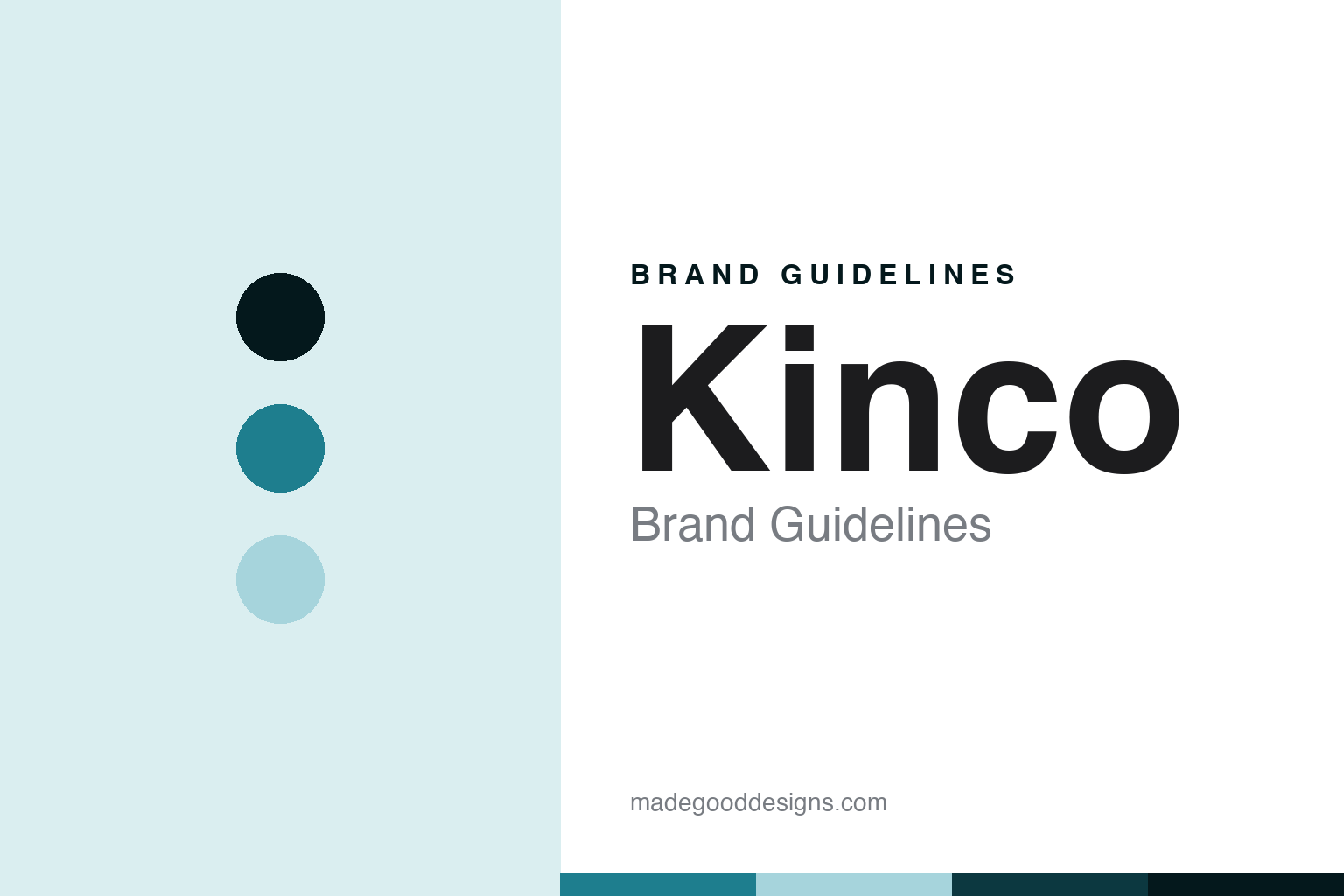
Kinco Brand Guidelines
The pigskin workhorse Mechanix Wear just bought.
Aa
Two constants: a Kinco-teal palette and a workhorse-sans register. Abstract homage — not a Kinco product or mark; no glove, hand or logo is reproduced.
The pigskin workhorse Mechanix Wear just bought
Kinco is the Oregon glove maker founded by the Kindler family in 1975, famous for its tan pigskin work glove — acquired by Mechanix Wear in 2025.
Kinco follows HexArmor as the round’s just-acquired node — a fifty-year family workhorse that became the newest brand on Mechanix Wear’s platform, closing a loop back to the round’s opener. Its answer to a round about who owns and where-makes the glove is a family sale: the pigskin workhorse Mechanix Wear just bought.
Its identity is the pigskin workhorse Mechanix Wear just bought. The 1975 Kindler founding, the tan pigskin glove and the 2025 Mechanix Wear acquisition are the story here. The pigskin workhorse. The pigskin workhorse Mechanix Wear just bought.
(Honest notes, so the founding, the family, the product, the ownership and the making are framed accurately. Kinco sells leather work gloves as its heroes; we report its language as the brand’s own. On founding: Kinco, from Kinco International, is an American maker founded in 1975 by Bruce Kindler, based in the Portland, Oregon area, and the name Kinco derives from Kindler, not Kinerk. On the family: it was family-owned for about fifty years, with founder’s son Travis Kindler buying the company in 2004. On the product: leather work gloves, welding and winter gloves, and its signature is the tan pigskin lined glove, style number 1927, launched in 1987 and still in the line, widely worn as a workhorse and ski glove. On ownership, the key point: it is no longer independent, having been acquired by Mechanix Wear in 2025, so it now sits under the same platform, owned by the private-equity firm Gryphon Investors, as the round’s opener. On the making: overseas, with long-standing Hong Kong vendor relationships, so designed in the US and made overseas. Its designs and the Kinco name are IP we describe but do not reproduce; there is no official brand hex; these tones are an unofficial interpretation.)
Colour
Kinco lives in a Kinco teal. Click a swatch to copy the hex.
Kinco’s identity is family-built, workhorse and just-acquired — a Kinco teal, an ink, a pale aqua, a deep teal, and a paper. The palette leans Kinco teal and deep teal: a clean, practical register that stands in for a family workhorse brand rather than a loud logo colour. It signals the pigskin workhorse Mechanix Wear just bought — family-built, workhorse and just-acquired. The honest caveat: with no official brand hex, these values are a practical, unofficial interpretation, not first-party colours. A further design lesson is that an ownership change is part of an honest identity, so a Kinco teal can carry the fifty-year family workhorse story while the words note plainly that Mechanix Wear bought the brand in 2025.
The lesson is a Kinco teal signals a family-built, workhorse identity. Kinco’s world is the tan pigskin glove and the woodpile. For designers, it is a reminder that a clean teal and a pale aqua can carry a family-built, workhorse brand — a practical tone held as an accent, not a product shot. Because a mid hue can fail as small text, keep type dark and let the colour live in the accents, palette and band. The takeaways: date the founding to 1975 and name the Kindler family; center the tan pigskin glove, style 1927; tell the 2025 Mechanix Wear acquisition; and note the designed-in-US, made-overseas split.
Typography
The register is a workhorse sans — family-built, workhorse, just-acquired.
Kinco’s identity carries a family-built, workhorse spirit — a fifty-year family brand now under a bigger owner. A workhorse sans captures the mood: clean, honest and practical, the register of a leather work glove. Set in a Kinco-teal palette, the workhorse sans feels dependable and earned — exactly the personality Kinco carries. It behaves like a made, stitched thing rather than a loud logo, mirroring a seam-ring and a hex-line. (Kinco’s real products and the name are things we describe but do not reproduce, and the exact typeface is not ours to use.) Because it is not ours to use, the honest description is “a workhorse-sans brand,” shown here in a stand-in. The type behaves like the brand: family-built, workhorse and just-acquired.
Aa
A workhorse-sans brand — clean and honest. (Specimen set in Outfit, a workhorse-sans STAND-IN; NOT the Kinco logo or products.)
The glove node
Kinco stands for the pigskin workhorse Mechanix Wear just bought.
Kinco sits sixth in the round as its just-acquired node. A Kinco-teal palette, a workhorse sans and a 1975 founding make one thing — the pigskin workhorse Mechanix Wear just bought — the whole identity: family-built, workhorse and just-acquired. The 1975 Kindler founding is the frame, the tan pigskin glove is the substance, and the 2025 Mechanix Wear acquisition is the twist, closing the loop back to the round’s opener. The point is a fifty-year family workhorse now on a private-equity platform, in a round about who owns and where-makes the glove.
Put to work, the identity is the brand told straight, the family named and the sale told. A brand in this spirit would date the founding to 1975 and name the Kindler family, center the tan pigskin glove, tell the 2025 Mechanix Wear acquisition, and note the designed-in-US, made-overseas split. A reader in this spirit would keep the facts right: Kinco makes leather work gloves; it dates to 1975; the Kindler family founded it; and Mechanix Wear bought it in 2025. Kinco sits after HexArmor and before ATG. The honest editorial moves are to date the founding, to name the family, to tell the sale, and to note the making.
For designers and brand-builders, Kinco carries the glove node: a long family brand can become the newest name on a platform. The lessons: a family brand can be acquired, here Kinco by Mechanix Wear; a founding is dated to 1975, by Bruce Kindler in the Portland, Oregon area, with the name Kinco from Kindler, not Kinerk; a family is named, family-owned for about fifty years with Travis Kindler buying it in 2004; a product is centered, the tan pigskin lined glove, style 1927, launched in 1987; an ownership is told, acquired by Mechanix Wear in 2025 and now under the same Gryphon Investors platform as the round’s opener; and a making is placed, designed in the US and made overseas through Hong Kong vendor relationships. It is also a reminder to close a loop honestly: Kinco is the family pigskin workhorse Mechanix Wear bought in 2025 — with the palette here an unofficial interpretation. The hook is that sale: Kinco is the pigskin workhorse Mechanix Wear just bought, the Oregon glove maker founded by the Kindler family in 1975, famous for its tan pigskin work glove, acquired by Mechanix Wear in 2025. Read that way, Kinco is less a single glove than the pigskin workhorse Mechanix Wear just bought: family-built, workhorse, just-acquired. The lesson for a brand is that a long family brand can become the newest name on a platform, and telling the sale keeps it honest. Kinco made the-pigskin-workhorse-Mechanix-Wear-just-bought the identity — proof that an acquisition can carry a node.
Explore & save
Keep Kinco’s identity on hand — save it to a board in the Made Good inspiration library.
Kinco identity set
Pin the Kinco-teal palette and the workhorse-sans register to your own board.