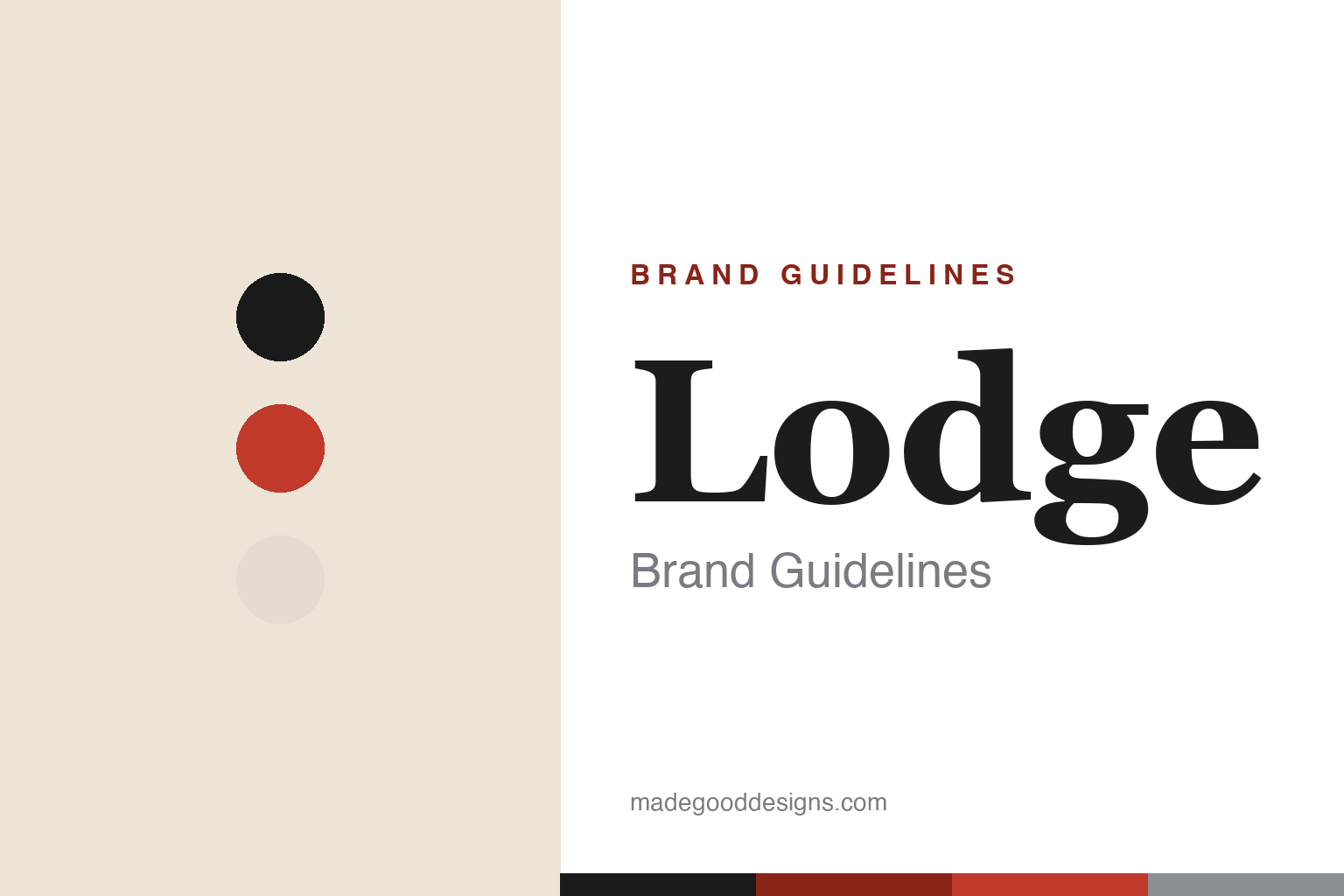
Lodge Brand Guidelines
Cast iron since 1896 — a Tennessee foundry, a fire that forged a new name, and made-in-USA heritage.
Aa
Two constants: a rugged cast-iron-black-and-red palette and a heritage slab wordmark. Abstract homage — not the Lodge wordmark.
Cast iron since 1896
Lodge has cast iron in Tennessee since 1896.
Lodge is a lesson in durable, made-in-one-place heritage. It was founded in 1896 by Joseph Lodge in South Pittsburg, Tennessee — still the company’s home and home foundry today, more than 125 years on. It started as the Blacklock Foundry (named after a friend/associate named Blacklock — an honest note: the popular “named for a preacher” detail isn’t confirmed, so it’s best left vague). In 1910 the Blacklock foundry burned down, and when Joseph Lodge rebuilt it he renamed it the Lodge Manufacturing Company — a fire that quite literally forged the modern name. (Two more honest notes: no official brand hex is published, and the wordmark typeface is undocumented.)
Lodge is famous for affordable, durable, made-in-USA seasoned cast-iron skillets and Dutch ovens — one of the oldest family-owned cookware manufacturers in the United States. A pivotal modern moment: in 2002 Lodge became the first cast-iron cookware maker to season its products in the foundry, so pans arrive ready to cook (no lengthy home-seasoning ritual required) — a change that helped bring cast iron to a new generation. It later added enamelled cast iron (2005) and carbon steel (2013).
Lodge remains privately held and owned by descendants of founder Joseph Lodge (long associated with the Kellermann family), though it is now led by a professional CEO (Mike Otterman) — so it’s family-owned, even if no longer run day-to-day by the family. Its still-in-use logo dates to 1973, it opened the Lodge Museum of Cast Iron in 2022, and it’s closely associated with South Pittsburg’s National Cornbread Festival. The identity is rugged and honest — cast-iron black, a warm red, and a heritage wordmark. Cast iron since 1896.
Colour
Lodge lives in cast-iron black and warm red. Click a swatch to copy the hex.
Lodge’s identity reads through cast-iron black and a warm red, with cream and steel supporting tones. The black is the colour of the product itself — seasoned iron — and reads as rugged, dependable and timeless, while the warm red adds heritage warmth and Americana. It’s an honest, utilitarian palette befitting a 125-year-old made-in-USA foundry: it signals durability and tradition rather than fashion novelty, the look of a pan you inherit rather than replace. The honest caveat: Lodge publishes no official brand hex, so the black and red here are an original, unofficial interpretation drawn from its cast iron and logo, not first-party values.
The lesson is a rugged, honest palette can signal heritage durability. Lodge’s iron-black-and-red world reads as dependable and timeless — matching made-in-USA cast iron. For designers, it’s a reminder that a product’s own material can lead the palette. The takeaways: let the material set the tone (cast-iron black); add warmth for heritage (a warm red); and treat specific hexes as unofficial when no brand spec is published.
Typography
The wordmark is a rugged heritage slab — sturdy and American.
Lodge’s identity carries a rugged, heritage, honest spirit — a sturdy slab-style wordmark that reads as dependable, American and made-to-last. The solid letterforms match a brand built on cast iron and a 125-year foundry heritage, and the plainness signals durability over decoration. Set against cast-iron black and warm red, the type feels stamped and timeless — exactly the honest, made-in-USA personality Lodge cultivates. It’s sturdy and heritage rather than delicate, mirroring the cast iron. Because the exact wordmark (in use since 1973) is undocumented as a named face, the honest description is “a rugged heritage slab spirit,” not a named font. The type behaves like the brand: sturdy, heritage and honest.
Aa
A rugged heritage slab spirit — sturdy and American. (Specimen set in Zilla Slab, a sturdy slab serif in the heritage spirit of the Lodge identity; the real 1973 wordmark is undocumented.)
Made to be handed down
Lodge sells heritage durability.
Lodge is a lesson in heritage and durability as the brand. In a world of disposable cookware, Lodge sells the opposite: an affordable, nearly indestructible cast-iron pan, made in the same Tennessee town since 1896, that improves with use and gets handed down through generations. That combination — genuine heritage, made-in-USA continuity, and a product built to outlive its owner — is a deeply ownable position. Lodge also modernised smartly without abandoning it: the 2002 move to factory pre-seasoning removed the biggest barrier to entry (the intimidating home-seasoning ritual) and brought cast iron to a new, younger audience, while the museum, the logo continuity since 1973 and the family ownership all reinforce the heritage story. The lesson is that authentic, single-place heritage plus real durability can be a powerful, affordable brand — one that competes not on novelty but on trust, tradition and the promise of a product you’ll never need to replace. Make it to last, and heritage does the selling.
For designers and brand-builders, Lodge offers a clear takeaway: authentic heritage plus genuine durability can be a strong, affordable brand. The lessons: root the brand in a real, continuous place and story (South Pittsburg since 1896); remove modern barriers without losing the heritage (factory pre-seasoning from 2002); and protect continuity (the 1973 logo, family ownership, the museum). It’s also a reminder to keep the facts precise — Lodge was founded in 1896 by Joseph Lodge, was originally the Blacklock Foundry (which burned in 1910), began factory pre-seasoning in 2002, and is family-owned but professionally led today. Lodge sells heritage durability — proof that made-to-last can be the brand.
Explore & save
Keep Lodge’s identity on hand — save it to a board in the Made Good inspiration library.
Lodge identity set
Pin the cast-iron-black-and-red palette and the heritage-slab spirit to your own board.