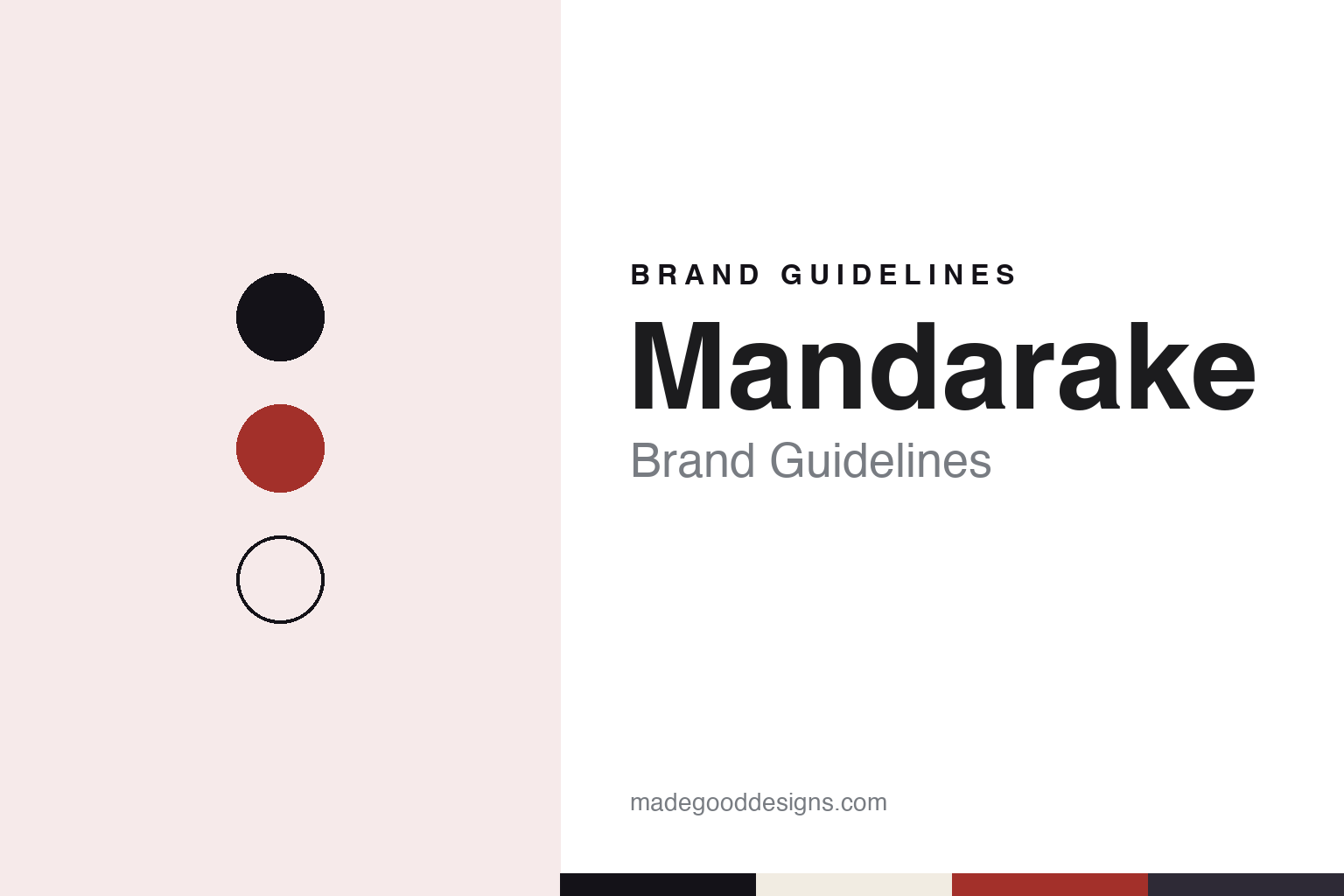
Mandarake Brand Guidelines
A seven-square-metre manga shop that grew into a building full of collectors’ annexes.
Aa
Two constants: a Mandarake black, paper and red palette and a heavy display sans register. Abstract homage — not a Mandarake product or mark; no sign, logo or shop front is reproduced.
Nakano Broadway
A manga artist, a tiny shop and an emptying building.
Mandarake began in 1980 as a used-manga shop in Nakano Broadway, the shopping and residential block at the end of the Sun Mall arcade north of JR Nakano Station in Tokyo. Nippon.com, in a feature by Hasegawa Shōichi published in August 2022, describes the opening: a used bookseller appeared on the building’s second floor in a space of about seven square metres, run by Furukawa Masuzō, then 30 years old. Japanese Wikipedia gives the same year, and notes that Furukawa’s own 1995 memoir gives 1982.
Furukawa was a manga artist before he was a shopkeeper. Japanese and English Wikipedia both say he drew for the alternative manga magazine Garo in the 1970s, where he was grouped with Abe Shin’ichi and Suzuki Ōji as one of the magazine’s “three crows.” Japanese Wikipedia adds that the business grew out of an earlier rental-book shop in Chōfu, western Tokyo, which he had started with partners and which later became a manga-only used bookshop.
The timing mattered. Nippon.com says Nakano Broadway opened in 1966 with smart boutiques, lost trade within a decade to newer malls along the Chūō line, and by the start of the 1980s had many empty units. Two years after opening, Furukawa leased a second unit on the north side of the third floor, then another facing the main corridor. The company was incorporated on 20 February 1987, according to its own corporate profile; English Wikipedia says Furukawa’s father was its first president, and Japanese Wikipedia that Furukawa later took the role.
Furukawa also became a public face for the trade. Both Wikipedia editions say he appeared as an appraiser of rare and vintage manga on Kaiun! Nandemo Kanteidan, the TV Tokyo valuation show. Japanese Wikipedia credits the shop with setting prices for old manga that took rarity into account, at a time when no settled market price existed.
Colour
One building, dozens of annexes.
Mandarake’s look is less a single shop front than a pattern of themed units. Nippon.com lists the early ones: a Ladies Kan for girls’ manga and anime goods, a Mania Kan for dōjinshi fanzines and rare older books, Daiyogen for the occult and paranormal, and a Special Kan for toys, garage-kit models, CDs and laserdiscs. In 2022 the same feature counted 35 affiliated shops on floors one to four of Nakano Broadway. Each kan, or annex, keeps to one category, English Wikipedia says, and several were once independent shops that the company bought.
The Tokyo Shimbun, in a November 2024 walking guide to the building, describes three of them. The main shop, the Honten, faces the open atrium street on the third floor and carries boys’ and girls’ manga, boys’-love comics and novels, and male-idol goods. Henya, on the fourth floor, is marked by a torii gate at its entrance and sells company novelties, Shōwa-era retro goods, antiques and vintage toys. Special 1, on the second floor, is lined with Ultraman, Transformers and soft-vinyl monster figures, Zoids and special-effects garage kits. The paper also names Mandarake CoCoo, a soft-vinyl figure shop in Akihabara.
Staff are part of the presentation. Japanese Wikipedia says the company drew attention for keeping costumed staff on the floor in its stores, and its corporate site still carries a page on its cosplay staff. Time Out Tokyo notes that the name is pronounced “Mandala-K,” and describes the stock as action figures from obscure anime, retro American toys of the 1960s and ’70s, manga and dōjinshi.
Print has been part of the identity too. English Wikipedia says the company set up a publishing department in 1995 to produce a mail-order catalogue, the Mandarake Manga List, and Mandarake Zenbu, a magazine for collectors; Japanese Wikipedia says the catalogue became a reference for used-manga prices.
Typography
How the category presents itself.
Japan’s second-hand, hobby, book and sports chains tend to present themselves through the store itself before any logo. Many of them grew from a single shop, and their corporate pages often open with that first branch, the town it stood in and the year it opened, followed by a timeline of new formats, franchise agreements and listings on the Tokyo Stock Exchange.
In second-hand retail, the buying counter is as much a part of the identity as the sales floor. Chains publish what they buy, how customers can bring goods in or send them by post, and which stores take which categories, from books and CDs to trading cards, toys, clothing and electronics. Some run separate buying-only centres or online services alongside their shops, and describe these on the same corporate pages as their stores.
Hobby and collector chains lean on display and naming. Shops are often split into small rooms or annexes, each with its own name and a single subject, such as manga for one readership, vinyl figures or vintage toys, so that a sign at the door tells a visitor what lies inside. Book chains, by contrast, describe long aisles, broad stock and space to browse, and some have used bright lighting and open layouts to make used books look like new retail. Mascots and capitalised store names appear on signs, bags and advertising.
Behind the shop fronts sit corporate structures that the companies set out in plain terms: founders, holding companies, parent groups, franchisees and shareholders, along with overseas stores that opened, moved or closed. The guides in this group follow those published histories, and treat colours and typefaces as an unofficial interpretation rather than an official brand standard.
Aa
A heavy display sans for shelf labels and annex names. (Specimen set in Dela Gothic One, a sans STAND-IN; NOT the Mandarake logo.)
Mandarake
From Nakano to a listed company.
The chain spread beyond Nakano from the 1990s. English Wikipedia dates the Shibuya store to 1994, and Japanese Wikipedia says later stores went mainly to Japan’s large designated cities. The eight-storey Mandarake Complex in Akihabara opened in April 2008 in a building the company owns, Japanese Wikipedia says, and the Ikebukuro store near Otome Road focuses on goods for women. English Wikipedia also describes Mandarake Sahra, a storage and fulfilment centre in Katori, Chiba, open to the public for buying in only, and an online store in Japanese and English.
Overseas stores did not last. English Wikipedia says a California store ran from 1999 to 2003, first in Torrance and then in Santa Monica, and that the company also ran stores in Bologna and Beijing; Japanese Wikipedia says all of its overseas stores have closed and that it serves foreign buyers through online sales.
Mandarake has been a public company since 26 July 2000, when it listed on the Mothers market of the Tokyo Stock Exchange; both Wikipedia editions say its listing moved to the exchange’s Second Section on 1 February 2015. Its corporate profile describes the business as running used-book and second-hand-goods shops and editing and selling its own publications, and gave a staff of 364 at 30 September 2021. Nippon.com credits the chain with drawing other specialist dealers into Nakano Broadway, which by the 1990s had become what the writer calls a holy ground for otaku, and where signs in English, Chinese and Korean were later added for visitors.
For a design guide, Mandarake shows how a second-hand dealer can build a recognisable presence from many small, single-subject rooms, each with its own name and sign, inside one older building. Compare the Animate and Book Off guides. For this guide we use Broadway black, manga paper and vinyl red with a heavy display sans, an unofficial interpretation; no product or logo is reproduced.
Explore & save
Keep Mandarake’s identity on hand — save it to a board in the Made Good inspiration library.
Mandarake identity set
Pin the Mandarake black, paper and red palette and the heavy display sans register to your own board.