McIntosh Brand Guidelines
The blue meters that mean high-end audio — black glass, a green logo, handcrafted in Binghamton since 1949.
Aa
Two constants: a blue-and-green-on-black palette and a heritage serif. Abstract homage — not the McIntosh meters or wordmark.
The blue meters
McIntosh built an American audio icon.
McIntosh Laboratory is a lesson in an ownable design signature as brand identity. It was founded in 1949 by Frank H. McIntosh, a consulting engineer in the Washington, DC / Silver Spring, Maryland area, with engineering partner Gordon J. Gow — and it moved manufacturing to Binghamton, New York in 1956, where it has been handcrafted ever since. Its founding breakthrough was the Unity Coupled Circuit, a patented bifilar-wound output transformer (credited to Frank McIntosh and Gordon Gow) that delivered high power with very low distortion. (An essential myth to correct: McIntosh is NOT the Apple Macintosh — Apple named its computer after the McIntosh apple. Caveats: no official brand hex is published — the tones below are observed — and the wordmark is a custom logotype.)
McIntosh’s reputation rests on high-end amplifiers and, above all, an instantly recognisable look: the blue “Watt” output meters (universally called VU meters), the black glass front panels, the green backlit logo and big knobs. The blue meters are one of the most recognisable icons in all of audio — though, honestly, they emerged in the late 1960s rather than from day one. The tube-era MC275 (1961), engineered in the Sidney Corderman era, is among the most revered amplifiers ever made and has been reissued for modern buyers.
A great heritage hook: McIntosh amplifiers powered the Woodstock 1969 sound system (engineered by Bill Hanley, “the father of festival sound”). The identity is heritage-rich and unmistakable — blue and green glowing on black glass, a script wordmark — under the line “Handcrafted in Binghamton, New York.” On ownership, McIntosh passed through Clarion, D&M, Fine Sounds (the “McIntosh Group,” also owner of Sonus Faber) and Highlander Partners, and — as announced in 2024 — is now owned by Bose (which said the brands would keep operating independently). 75+ years of American audio.
Colour
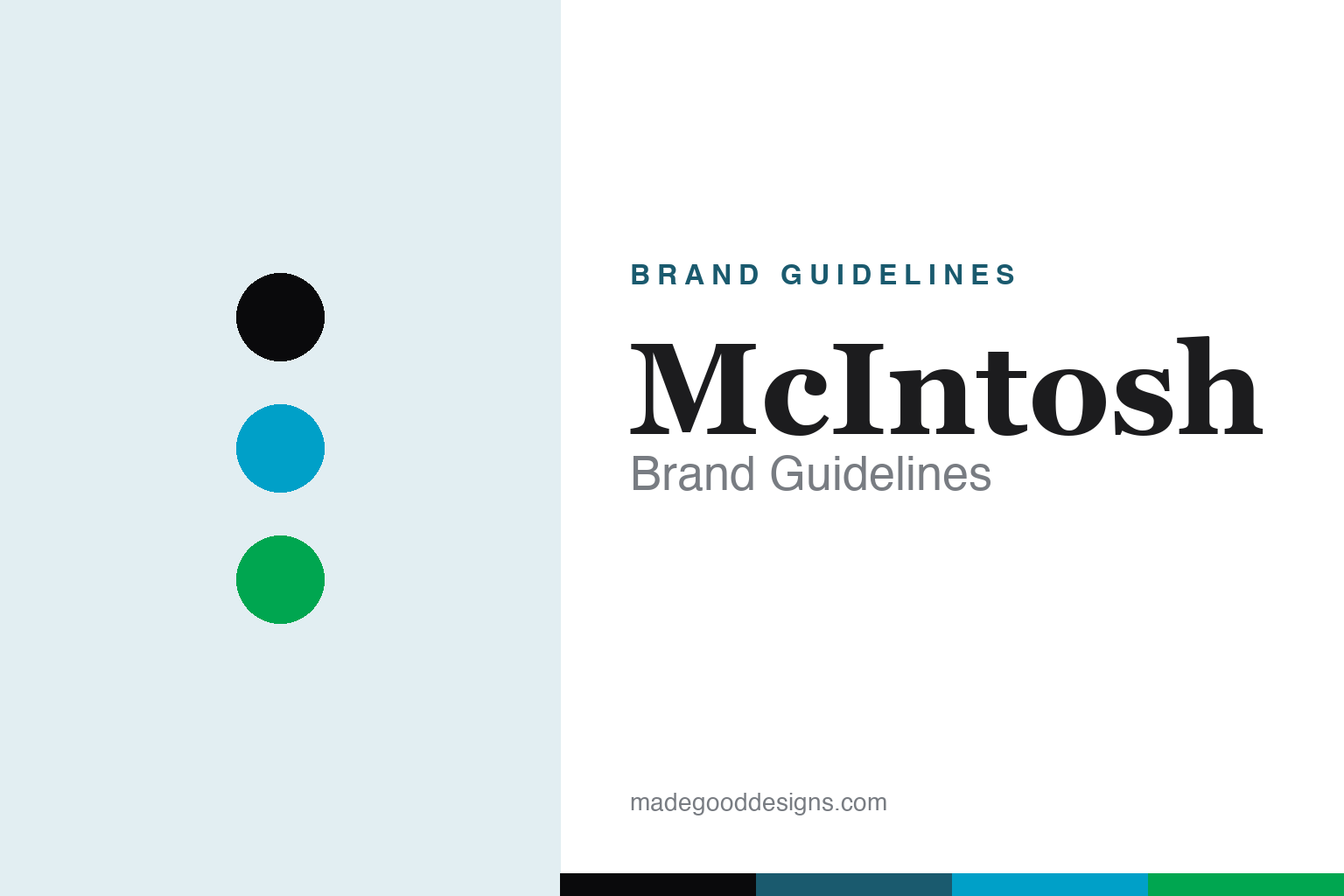
McIntosh lives in blue, green and black. Click a swatch to copy the hex.
McIntosh’s identity is one of the most ownable in audio: the McIntosh blue of its illuminated meters and the green of its backlit logo, glowing against black glass. The blue reads as precise, premium and iconic — a specific, instantly-recognisable glow that says “McIntosh” across a dark room — while the green logo and black glass complete a look that has stayed remarkably consistent for decades. It’s a rare case where a brand’s colours come from functional, illuminated hardware (the power meters), making the palette both distinctive and authentic. The blue meters are the brand. The honest caveat: McIntosh publishes no official brand hex — the blue, green and black here are eyeballed approximations to the product glow, not first-party values.
The lesson is own a colour through an iconic, functional detail. McIntosh’s blue comes from its meters — functional hardware that became the brand’s signature. For designers, it’s a reminder that a distinctive, consistently-applied detail can become a colour no rival can claim. The takeaways: tie the palette to an ownable, functional detail (the blue meters); keep it consistent for decades to build recognition; and treat specific hexes as approximate when no official spec is published.
Typography
The wordmark is a heritage serif — authoritative and timeless.
McIntosh’s identity pairs a heritage serif-flavoured “McIntosh” script wordmark with its green backlit logo badge. The classic, authoritative letterforms read as established, premium and timeless, matching a 75-year-old American audio institution whose gear is handcrafted in one town, and the restraint lets the iconic blue meters be the star. Set in blue and green on black glass, the identity feels heritage-rich and unmistakable — exactly the enduring, made-in-Binghamton personality McIntosh cultivates. It’s classic and authoritative rather than trendy, mirroring amplifiers designed to be treasured for decades. Because the exact face is a custom logotype, the honest description is “a heritage serif spirit,” not a named font. The type behaves like the brand: authoritative, timeless and premium.
Aa
A heritage serif spirit — authoritative and timeless. (Specimen set in DM Serif Display, a high-contrast serif in the heritage spirit of the McIntosh wordmark; the real mark is a custom logotype.)
An icon that never changed
McIntosh kept its look for decades.
McIntosh is a lesson in the power of a consistent, iconic design. For decades, McIntosh has kept the same unmistakable look — blue meters, black glass, green logo — so a McIntosh amplifier is recognisable at a glance across any room, generation to generation. That consistency is enormously valuable: it builds instant recognition, signals heritage and reliability, and turns the hardware itself into the brand’s advertising. Paired with genuine substance (the Unity Coupled Circuit, the revered MC275, handcrafting in one American town since 1956, and even a Woodstock legacy), the unchanging design becomes a badge of authenticity rather than stagnation. It’s proof that in a category chasing the newest thing, a brand can win by finding an iconic look and keeping it — letting recognition and heritage compound over 75+ years. The icon never changed, and that’s the point.
For designers and brand-builders, McIntosh offers a clear takeaway: a consistent, iconic design — kept for decades — builds recognition and becomes the brand. The lessons: find an ownable signature and keep it (the blue meters, black glass); tie it to real substance and heritage (the MC275, Binghamton craft, Woodstock); and let consistency signal authenticity, not stagnation. It’s also a reminder to keep the facts precise — McIntosh was founded in 1949 by Frank McIntosh, handcrafts in Binghamton, NY since 1956, is known for its blue Watt meters and the MC275, powered Woodstock 1969, and is now owned by Bose (brands independent). McIntosh’s icon never changed — proof that a consistent design can be a brand’s deepest asset.
Explore & save
Keep McIntosh’s identity on hand — save it to a board in the Made Good inspiration library.
McIntosh identity set
Pin the blue-and-green palette and the heritage-serif spirit to your own board.