Paylogic Brand Guidelines
A 2005 Dutch ticket shop that lets festival brands lead.
Aa
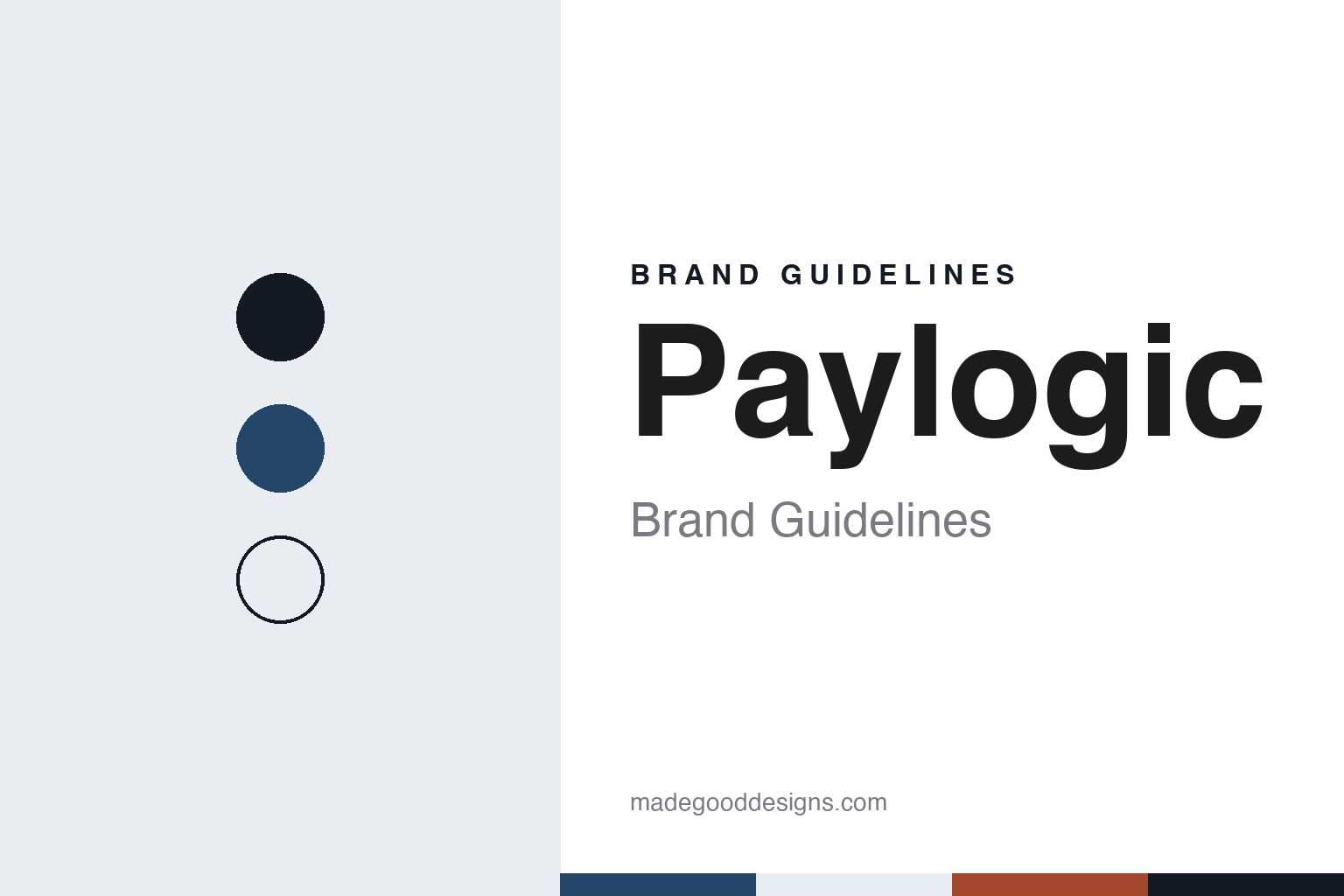
Two constants: a Paylogic canal blue and brick red palette and a Plain sans register. Abstract homage — not a Paylogic product or mark; no ticket, logo or interface is reproduced.
A Dutch ticket shop
Founded in 2005, grown on dance music.
Paylogic is a Dutch online ticketing company based in Amsterdam. Music Week, reporting in April 2018, described it as founded in the Netherlands in 2005, with offices in the Netherlands, Belgium and Germany. The company tells its own beginning more loosely: Paylogic “was launched” more than a decade ago, its website says, to close the gap between fans and event brands and to challenge what it calls the poor service levels and high rates of the ticketing companies of the time.
Its growth was tied to dance music. By 2013 Paylogic was selling tickets for events run by ID&T, the Dutch promoter of Mysteryland and Sensation, Dancing Astronaut reported in December 2013; the same report said Paylogic had sold more than 20 million tickets to fans around the world by then. That autumn it made its American debut. Billboard reported that Paylogic handled ticketing for TomorrowWorld, the three-day festival held in September 2013 at Chattahoochee Hills, Georgia, which English Wikipedia describes as a US spin-off of the Belgian festival Tomorrowland.
That link brought a new owner. In December 2013 the American company SFX Entertainment, which had bought into ID&T earlier in the year, acquired 75 per cent of Paylogic, Billboard reported on 3 December 2013. English Wikipedia’s article on SFX’s successor says Paylogic’s services were to be phased in across SFX’s other event brands, and that SFX’s chief executive singled the company out for its ability to handle large surges of ticket sales. SFX filed for Chapter 11 bankruptcy protection in February 2016 and emerged in December 2016 as a private company renamed LiveStyle, which kept its Paylogic holding, the same source says.
Colour
From LiveStyle to See Tickets and Eventim.
In April 2018 Paylogic changed hands again. Music Week reported on 16 April 2018 that See Tickets, the Nottingham ticketing company then owned by Vivendi, the Paris-based parent of Universal Music Group, had acquired Paylogic from LiveStyle. As part of the deal, See Tickets also entered a long-term agreement to ticket LiveStyle’s festivals and events in the United States. At the time, according to Music Week, Paylogic sold more than five million tickets a year in more than ten countries, and its clients included Tomorrowland, ID&T, the Amsterdam Dance Event and Awakenings.
English Wikipedia says Paylogic itself took the See Tickets name in 2019. The Paylogic name and website have nonetheless stayed in use for organisers. In November 2026 the Paylogic site named its publisher as See Tickets B.V. of Amsterdam, listed offices in Amsterdam, Groningen, Berlin and Antwerp, and offered its pages in English, German, French and Dutch.
The ownership above it changed in 2024. TicketNews reported in March 2025 that the German group CTS Eventim had completed its purchase of Vivendi’s festival and international ticketing businesses, including See Tickets, the previous year; English Wikipedia dates the acquisition to June 2024. The same TicketNews report said See Tickets was being rebranded as Eventim. The Paylogic website now sends job seekers to EVENTIM Benelux, so a company founded in the Netherlands in 2005 has passed, since 2013, through American- and French-owned groups into a German one.
Typography
Design and documentation.
Ticketing and event platforms sit between the people who put on events and the people who go to them, and their design has to serve both sides at once. Some are primary agents that sell on behalf of promoters, venues and festivals; others run resale marketplaces where fans and traders list tickets they already hold. Each kind presents itself differently, and each is worth reading on its own terms rather than as a single category.
The interface is where most of the brand lives. Event pages, seat maps, ticket wallets and checkout screens carry the name more often than any advertisement does, and the companies publish these flows in their own apps and help pages. In the United Kingdom, a 2018 court order secured by the Competition and Markets Authority required one resale site to show seat details, face value and the identity of the seller, so for resale brands some page elements are set by regulators as well as by designers.
Around the interface sit the smaller marks: app icons, short wordmarks and the photography used on event listings. Much of that photography belongs to artists, promoters and venues rather than to the platform, which means the platform’s own colours and type often act as a frame around other people’s posters, line-ups and stage shots.
Corporate pages tell a further story about owners and markets. Ticketing brands are often bought and sold, merged into larger live-entertainment groups or kept as separate names inside one company, and their about pages, trade-press announcements and regulator filings are the plainest record of who owns what, and where each name trades. The guides in this group read those records alongside each brand’s public identity; every palette shown is our own unofficial interpretation.
Aa
A plain sans — a ticketing name that steps back for its clients. (Specimen set in Inter Tight, a sans STAND-IN; NOT the Paylogic logo.)
Paylogic
Shops in the client’s own identity.
Paylogic presents itself less as a ticket seller than as a builder of shops for other brands. Its features page lists stability under peak traffic; “shops in your own visual identity”; reporting and data; e-commerce add-ons from travel to merchandise; a digital queue that lets organisers talk to waiting buyers; personalisation; and payments, from credit cards to iDEAL, the Dutch online payment method. “We’re performing in the background, you are rocking the stage,” the company says.
Its case studies make the same point, in the company’s own words. For Dour Festival in Wallonia, Belgium, which it says draws 240,000 visitors a year, Paylogic says it built an online shop matching the festival’s identity and selling camping, hotels, merchandise and shuttles alongside tickets. For Awakenings, the techno brand, whose festival it says draws more than 70,000 visitors, it describes a shop in the Awakenings style in which every buyer creates an account, optionally through a Facebook login, so that the organiser can tailor later messages; the same shop, the company says, also sold the brand’s book 20 Years of Techno. For the Amsterdam Dance Event, it describes a single shop holding 221 events from 74 promoters, with hotels and merchandise, under one ADE account. Its purpose page says it works with thousands of clients in more than thirty countries; that is the company’s own figure.
The Paylogic identity itself stays quiet. Its site carries the short lines “better together” and “authentic together” in its footer, and leads with its clients’ festivals rather than its own mark. No brand guidelines are published on the site. What it shows instead is a service: a customer-service desk split between people going to an event and people organising one, and a press contact routed through See Tickets in the Netherlands.
For a design guide, Paylogic shows a ticketing brand that keeps itself in the background so that festival brands can lead. Compare See Tickets, its owner since 2018, and Eventim, the group that bought See Tickets in 2024. For this guide we use a canal blue and a brick red on a pale mist with a sans, an unofficial interpretation; no product or logo is reproduced.
Explore & save
Keep Paylogic’s identity on hand — save it to a board in the Made Good inspiration library.
Paylogic identity set
Pin the Paylogic canal blue and brick red palette and the Plain sans register to your own board.