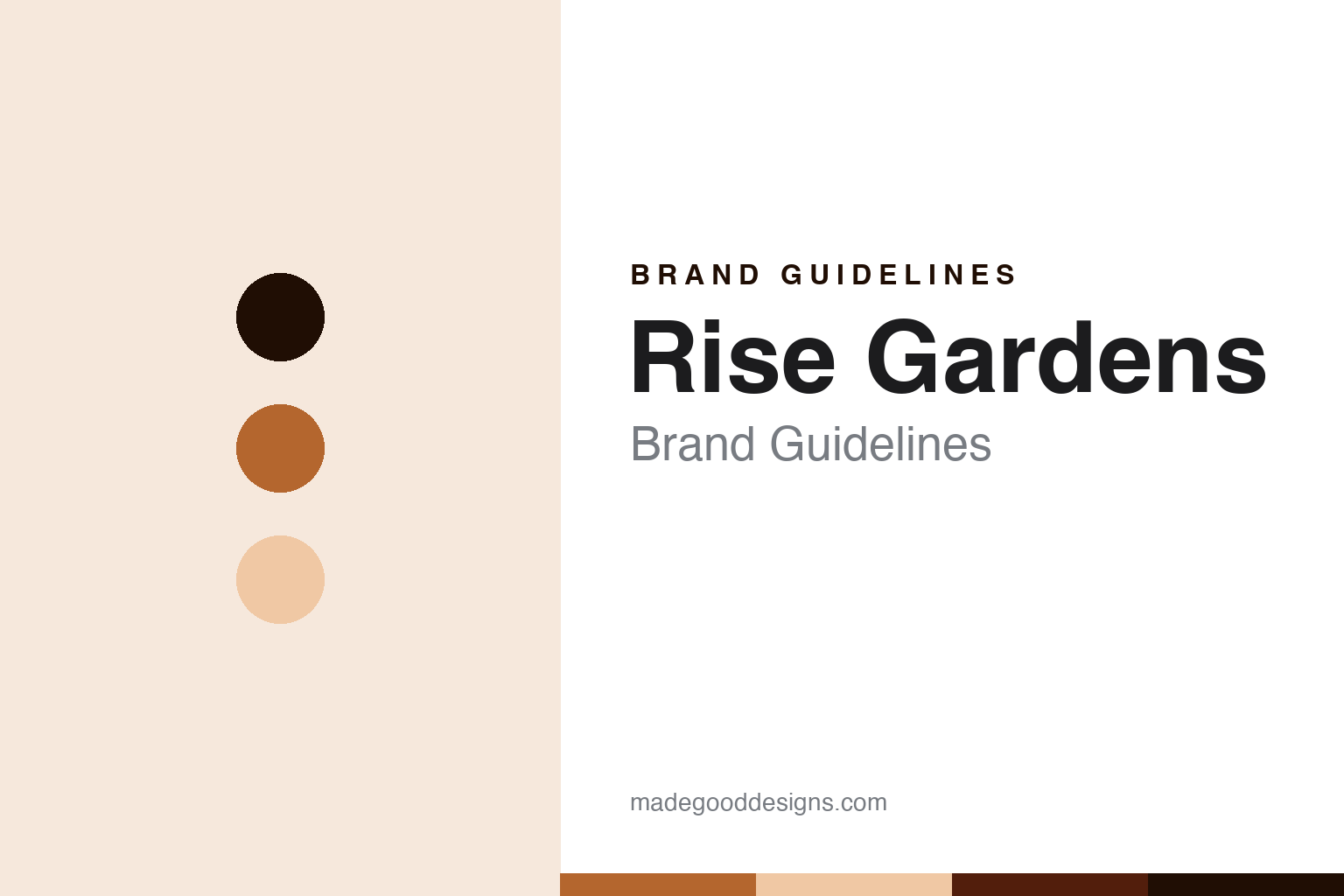
Rise Gardens Brand Guidelines
The furniture-style garden.
Aa
Two constants: a warm-wood palette and a furniture-sans register. Abstract homage — not a Rise Gardens product or mark; no garden, cabinet or logo is reproduced.
The furniture-style garden
Rise Gardens is the US hydroponic garden built to look like furniture, a modular cabinet you grow greens in.
Rise Gardens brings the round its furniture node — a US hydroponic garden designed to look like a piece of furniture, a modular cabinet whose stackable levels grow greens in the living room rather than on a countertop. Its answer to a round about who owns the garden and where it is made is a US one, flagged where unverified: an independent-seeming company, operating and selling, whose exact ownership we could not confirm.
Its identity is the furniture-style garden. The furniture-style cabinet, the modular stackable levels and the design-first, living-room placement are the story here. A garden, like furniture. The furniture-style garden.
(Honest notes, so the status is observed and the unverified parts are flagged. Rise Gardens sells hydroponic gardens as its heroes — furniture-style, cabinet-form gardens with modular, stackable levels, pod-based and app-controlled, with a nutrient and seed-pod refill model, in a range from a personal unit up to larger multi-level cabinets, sold across the US and Canada with a three-year warranty; we report its language as the brand’s own, and keep to growing greens indoors rather than any nutrition claim. On status: as of 2026 its store is live and selling, citing tens of thousands of indoor gardeners and showing no shutdown notice, so we say it is operating and selling. On origin and ownership, flagged: it is a US company, and while it is widely reported to be based in Chicago and to have taken investment from Amazon’s Alexa Fund in a 2021 raise, we could not confirm the headquarters, the Alexa Fund investment or the current ownership from a live source this session, so we present it as an independent US company that is operating, and flag those details as to-verify rather than asserting them. Its designs and the Rise Gardens name are IP we describe but do not reproduce; there is no official brand hex; these tones are an unofficial interpretation.)
Colour
Rise Gardens lives in a warm wood. Click a swatch to copy the hex.
Rise Gardens’ identity is furniture-like, design-first and homely — a warm wood, an ink, a pale oak, a deep umber, and a paper. The palette leans warm wood and pale oak: a warm, furniture register that nods to a cabinet in the living room rather than a loud logo colour. It signals the furniture-style garden — furniture-like, design-first and homely. The honest caveat: with no official brand hex, these values are an original, unofficial interpretation, not first-party colours.
The lesson is a warm wood signals a furniture-like, design-first identity. Rise Gardens’ world is a garden that passes for furniture. For designers, it is a reminder that a warm wood and a soft oak can carry a design-first garden brand — a furniture tone held as an accent, not a product shot. Because a warm hue can fail as small text, keep type dark and let the colour live in the accents, palette and band. The takeaways: lead with the furniture-style, cabinet design; state it is operating and selling in 2026; flag the Chicago HQ, Alexa Fund and ownership as to-verify; and avoid nutrition claims.
Typography
The register is a furniture sans — furniture-like, design-first, homely.
Rise Gardens’ identity carries a furniture-like, design-first, homely spirit — a living-room garden, not a countertop gadget. A furniture sans captures the mood: clean, warm and current, the register of a design-first cabinet. Set in a warm-wood palette, the furniture sans feels furniture-like and design-first — exactly the personality Rise Gardens carries. It behaves like a made, homely thing rather than a loud logo, mirroring a grow-light glow and a hydro-flow ring. (Rise Gardens’ real products and the name are things we describe but do not reproduce, and the exact typeface is not ours to use.) Because it is not ours to use, the honest description is “a furniture-sans brand,” shown here in a stand-in. The type behaves like the brand: furniture-like, design-first and homely.
Aa
A furniture-sans brand — furniture-like and design-first. (Specimen set in Manrope, a furniture-sans STAND-IN; NOT the Rise Gardens logo or products.)
The indoor garden
Rise Gardens stands for the furniture-style garden.
Rise Gardens brings the round its furniture node. A warm-wood palette, a furniture sans and a cabinet design make one thing — the furniture-style garden — the whole identity: furniture-like, design-first and homely. The furniture-style cabinet is the pitch, and the modular stackable levels are the proof. The point is a US garden built to look like furniture, operating in 2026, in a round about who owns the garden and where it is made.
Put to work, the identity is the brand told straight, the status observed and the details flagged. A brand in this spirit would lead with the furniture-style design, state it is operating and selling in 2026, and flag the Chicago HQ, Alexa Fund and ownership as to-verify. A reader in this spirit would keep the facts right: Rise Gardens sells furniture-style hydroponic cabinets as heroes; it is a US company, operating and selling in 2026 with a three-year warranty across the US and Canada; and its reported Chicago headquarters, Amazon Alexa Fund investment and current ownership could not be confirmed this session and are flagged. Rise Gardens sits third in the round, after Click & Grow. The honest editorial moves are to lead with the furniture design, to state the current operating status, to flag the unverified details, and to avoid nutrition claims.
For designers and brand-builders, Rise Gardens continues the indoor garden: design a garden as furniture — and flag the details you cannot confirm. The lessons: a garden can be designed to belong in the living room as furniture, a real differentiator; a current operating status is stated from what the live store shows; and reported details that could not be confirmed — a headquarters, an investor, current ownership — are flagged as to-verify rather than asserted. It is also a reminder to stay precise: Rise Gardens is the US hydroponic garden built to look like furniture, a modular cabinet you grow greens in — with the palette here an unofficial interpretation. The hook is that design: Rise Gardens makes a hydroponic garden that reads as a cabinet, not a gadget, and as of 2026 it is operating and selling, with some corporate details left honestly to verify. Read that way, Rise Gardens is less a countertop gadget than the furniture-style garden: furniture-like, design-first, homely. The lesson for a brand is that a furniture-design identity and honest flagging of unverified details reinforce each other, and not asserting the unconfirmed keeps the story earned. Rise Gardens made the-furniture-style-garden the identity — proof that design placement can carry a round.
Explore & save
Keep Rise Gardens’s identity on hand — save it to a board in the Made Good inspiration library.
Rise Gardens identity set
Pin the warm-wood palette and the furniture-sans register to your own board.