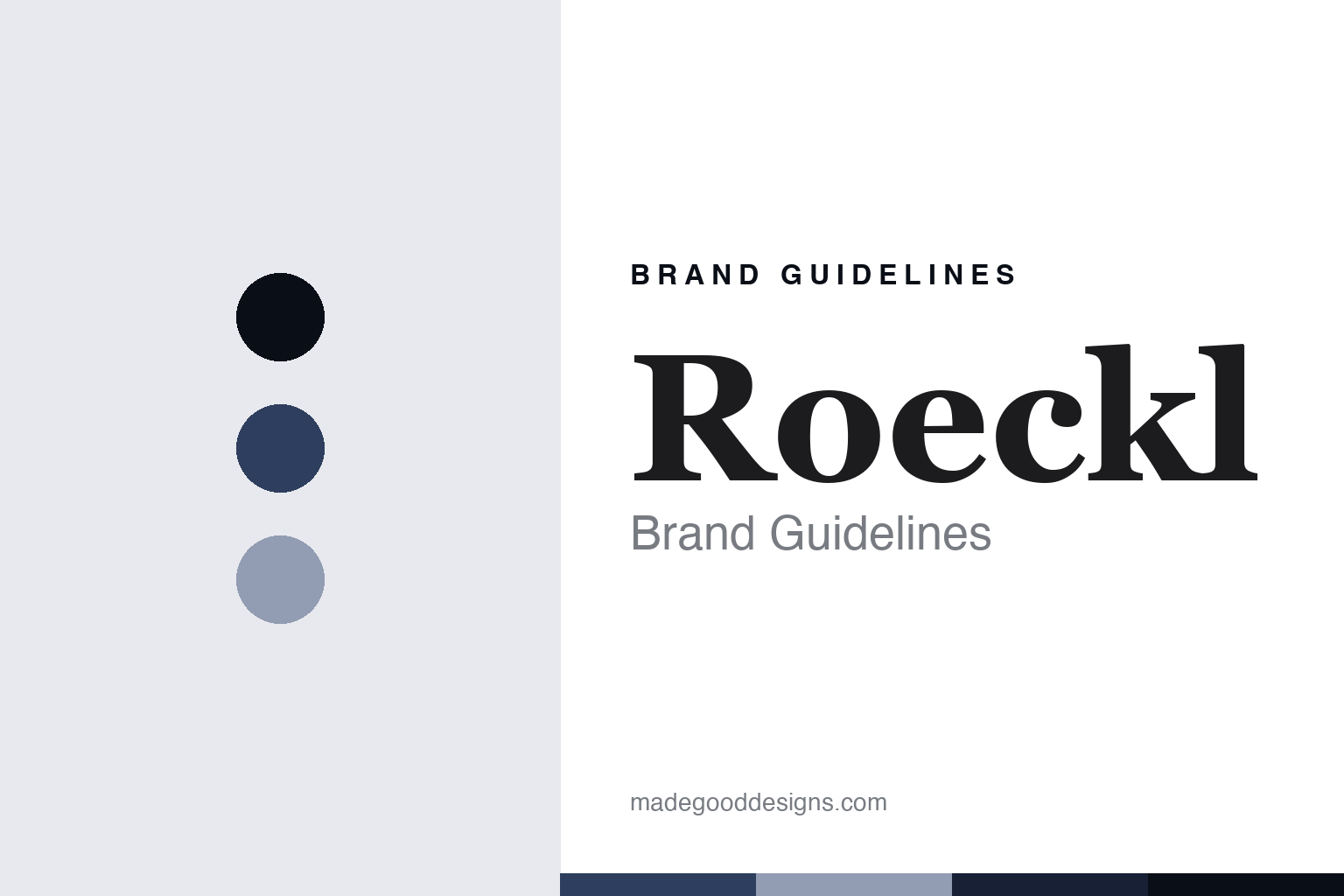
Roeckl Brand Guidelines
The Munich glovemaker.
Aa
Two constants: a Munich-navy palette and a Munich-serif register. Abstract homage — not a Roeckl glove, label or court crest.
The Munich glovemaker
Roeckl is the Munich glovemaker founded in 1839, a family firm into its sixth generation, designed in Germany and with leather gloves made in Romania.
Roeckl is a lesson in how a family firm carries nearly two centuries. From Munich, Roeckl makes leather gloves — its heritage core — plus knitted gloves, scarves and accessories. Its answer to how a glove is made is a long family craft: cut a fine leather glove, and keep the house in the family for six generations. A Munich glovemaker with a royal-court past.
Its identity is the Munich glovemaker. Roeckl’s leather gloves, and its long Munich heritage, are the work it is known for. A glove, from a Munich house. A family firm into its sixth generation.
(Honest notes, so the story stays precise. Roeckl was founded in 1839 in Munich by Jakob Roeckl (the surname historically written Röckl), and remains a family firm, into its sixth generation. On where it is made, an important, honest point: Munich is its headquarters, but its leather gloves are made in Romania (in Timișoara), its silk scarves in Italy, and some collections in India — so we say designed in Germany, with leather gloves made in Romania, and never imply “made in Germany.” We present its family ownership carefully: family-run into the sixth generation, without asserting its exact current status, and we note its history includes a separation of its sports-glove arm and a brief insolvency in 2017 that it withdrew. Its heritage is genuine: it was a Royal Bavarian court supplier from 1893, with historic clients such as King Ludwig II and Empress Elisabeth — which we describe in the past tense, reproducing no court crest or royal arms. Its name and marks are IP, described but never reproduced, and there is no official brand hex; these tones are an unofficial interpretation. This is design commentary and does not promote any product.)
Colour
Roeckl lives in a Munich-navy palette. Click a swatch to copy the hex.
Roeckl’s identity is heritage, German and refined — a Munich navy, an ink, a slate, a midnight, and a paper. The palette leans Munich navy and slate: the register of a fine leather glove and a long-established Munich house. It signals lineage over fashion. The honest caveat: with no published brand hex, these values are an original, unofficial interpretation, not first-party colours.
The lesson is a Munich-navy palette signals a heritage, German-glovemaker identity. Roeckl’s world is a heritage, leather, German-designed object. For designers, it is a reminder that a deep navy and a soft slate can carry a house built on a long family craft — the navy of a formal glove and the grey of a Munich workshop. Because these tones can fail as small text, keep type dark and let the colour live in the accents, palette and band. The takeaways: keep the family craft; carry the heritage; be honest about where it is made; and treat any single hex as unofficial.
Typography
The register is a Munich serif — heritage, refined, German.
Roeckl’s identity carries a heritage, refined, German spirit — an 1839 family firm, not a new label. A Munich serif captures the mood: traditional, established and elegant, the register of a Munich craft house. Set in a Munich-navy palette, the Munich serif feels heritage and refined — exactly the personality Roeckl carries. It is German rather than generic, mirroring a fine leather glove. (Roeckl’s real labels and any court crest are things we describe but do not reproduce, and the exact typeface is not ours to use.) Because it is not ours to use, the honest description is “a Munich-serif spirit,” shown here in a stand-in. The type behaves like the house: heritage, refined and German.
Aa
A Munich-serif spirit — heritage and refined. (Specimen set in Playfair Display, a Munich-serif STAND-IN; NOT the Roeckl wordmark or court crest.)
The glove makers
Roeckl stands for the family glovemaker, honestly located.
Roeckl is a lesson in how a family firm carries a heritage across borders. A Munich-navy palette, a Munich serif and a leather glove make one thing — a Munich glovemaker into its sixth generation — the whole identity: heritage, German and refined. The long family line is the differentiator, and the royal-court past is the meaning. The point is an 1839 Munich house, once a Bavarian court supplier, that has kept the family running it while its making moved abroad.
Put to work, the identity is a family heritage, honestly located, as design. A glovemaker in this spirit would carry its long line, keep the family in charge, and be candid about the present — designed in Munich, gloves made in Romania. A brand learning from it would see that a long family heritage is a durable identity — that a house nearly two centuries old carries a depth a new brand cannot — and that being precise, founded 1839 by Jakob Roeckl, family-run into the sixth generation, gloves made in Romania rather than Germany, keeps the story honest. A brand learning from it would also treat its royal past with restraint: describing the Bavarian court supply in the past tense, reproducing no crest, is exactly what keeps a heritage credible. The lesson Roeckl teaches is that a family heritage can hold an identity across borders: the lineage gives it depth, and the honesty about location keeps it credible. The heritage is the personality, and the glove is the proof.
For designers and brand-builders, Roeckl holds the family-heritage pole in this round of the glove makers, from Germany: carry the line, and locate the make honestly. The lessons: keep the family craft; carry the heritage; disclose that the gloves are made abroad; describe a royal past in the past tense; and never reproduce a court crest. It is also a reminder to stay precise: Roeckl is the Munich glovemaker founded in 1839, a family firm into its sixth generation, designed in Germany and with leather gloves made in Romania — with the palette here an unofficial interpretation. Roeckl made the family heritage the identity — proof that a long line, honestly located, can be the difference.
Explore & save
Keep Roeckl’s identity on hand — save it to a board in the Made Good inspiration library.
Roeckl identity set
Pin the Munich-navy palette and the Munich-serif register to your own board.