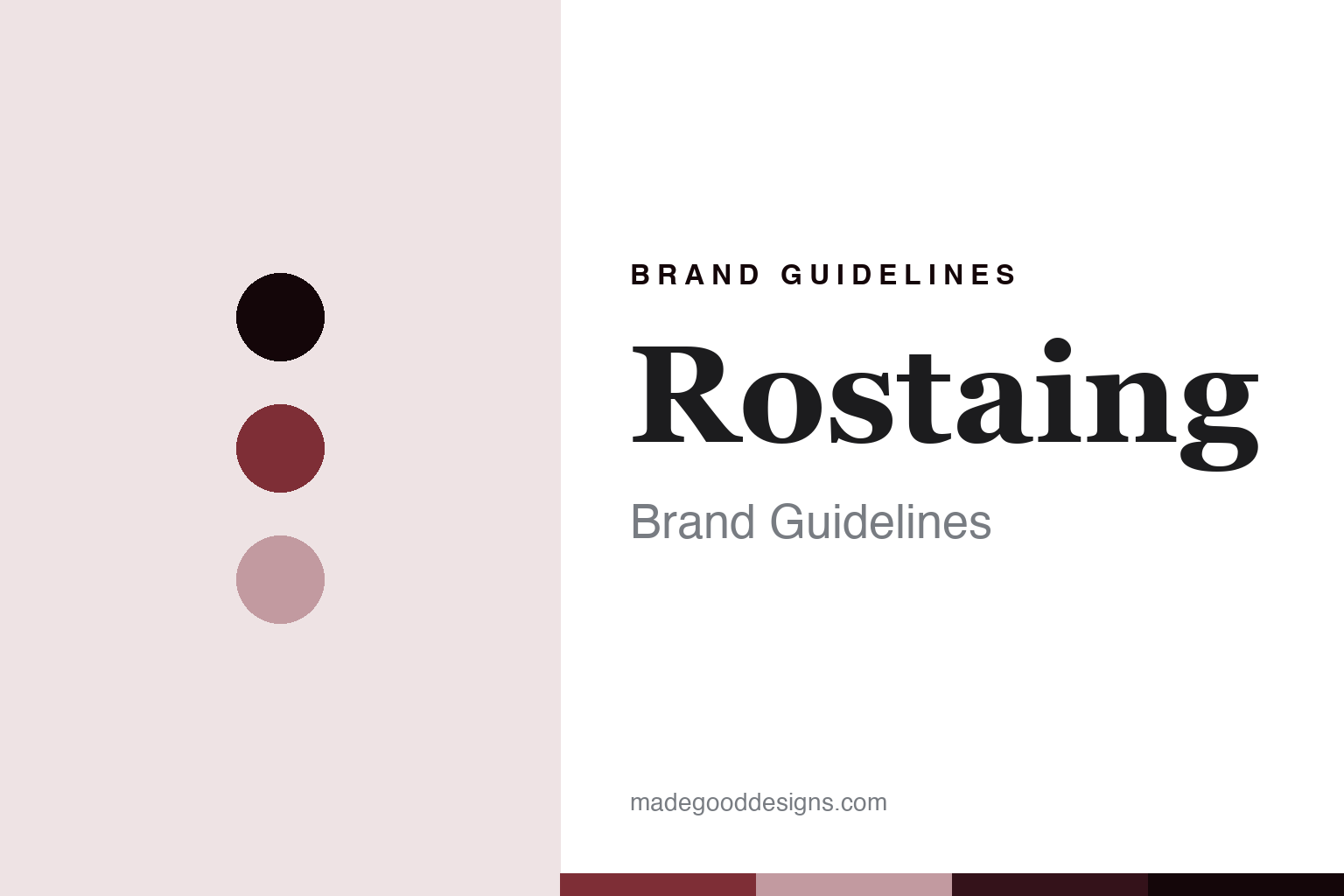
Rostaing Brand Guidelines
The French technical glove.
Aa
Two constants: a bordeaux palette and a ganterie-serif register. Abstract homage — not a Rostaing glove, logo or product mark.
The French technical glovemaker
Rostaing is the French protective-glove maker whose family leather lineage dates to a 1789 tannery, with the glove business begun in 1959 and manufacturing split between France and offshore sites.
Rostaing is a lesson in how a leather lineage becomes a technical brand. From the Lyon region of France, Rostaing makes technical protective gloves — anti-cut, handling, heat- and fire-resistant, and gardening — hundreds of references for a hundred trades. Its answer to how a glove becomes a name is a deep family root in leather, carried forward into modern protective work gear. A French technical glove, out of a two-century leather family.
Its identity is the French technical glovemaker. Rostaing’s protective and technical gloves, and its long family heritage, are the work it is known for. A glove, for protection and trade. A house with a tannery in its past.
(Honest notes, so the story stays precise, with an important correction. Rostaing frames itself around 1789, but that date is a tannery: Joseph Rostaing created an artisanal tannery in 1789, and the glove business began only in 1959, under Jean Rostaing — so we present “since 1789” as the family and leather lineage, not as “making gloves since 1789.” It is based near Lyon (Villieu-Loyes-Mollon, in the Ain), not in France’s other glove towns of Saint-Junien or Grenoble. On where its gloves are made — the crux of this round — Rostaing is a France-plus-offshore mix: it has manufactured in Tunisia, Morocco and Vietnam since the 1970s (its Vietnamese subsidiary opened a tannery in 2006), with design, R&D and headquarters in France; it makes no blanket “made in France” claim, and neither do we. It is family-owned, with Stéphane Rostaing holding it today; the house says six generations. We drop an unverified heritage-label claim and any “oldest French glovemaker” line. Its name and product marks are IP, described but never reproduced, and there is no official brand hex; these tones are an unofficial interpretation. This is design commentary and does not promote any product.)
Colour
Rostaing lives in a bordeaux palette. Click a swatch to copy the hex.
Rostaing’s identity is technical, French and heritage — a bordeaux, an ink, a rose, a claret, and a paper. The palette leans bordeaux and rose: the register of dressed leather and a protective glove. It signals craft heritage and function over fashion. The honest caveat: with no published brand hex, these values are an original, unofficial interpretation, not first-party colours.
The lesson is a bordeaux palette signals a technical, leather-heritage identity. Rostaing’s world is a technical, leather, French object. For designers, it is a reminder that a deep bordeaux and a soft rose can carry a brand built on a tannery lineage — the tone of tanned hide and the neutral of a workshop. Because these tones can fail as small text, keep type dark and let the colour live in the accents, palette and band. The takeaways: carry the lineage; date the craft honestly; disclose the offshore make; and treat any single hex as unofficial.
Typography
The register is a ganterie serif — French, heritage, refined.
Rostaing’s identity carries a French, heritage, refined spirit — a technical glovemaker with an old leather root, not a fashion label. A ganterie serif captures the mood: elegant, established and rooted, the register of a French glove house. Set in a bordeaux palette, the ganterie serif feels French and heritage — exactly the personality Rostaing carries. It is workshop-and-lineage rather than runway, mirroring a technical glove with a tannery behind it. (Rostaing’s real logo and product marks are things we describe but do not reproduce, and the exact typeface is not ours to use.) Because it is not ours to use, the honest description is “a ganterie-serif spirit,” shown here in a stand-in. The type behaves like the house: French, heritage and refined.
Aa
A ganterie-serif spirit — French and heritage. (Specimen set in Cormorant Garamond, a ganterie-serif STAND-IN; NOT the Rostaing wordmark or any product mark.)
The work glove
Rostaing stands for the technical glove out of a leather lineage.
Rostaing is a lesson in how a lineage can be an identity, honestly dated. A bordeaux palette, a ganterie serif and a technical glove make one thing — the French protective glove with a two-century leather root — the whole identity: technical, French and heritage. The 1789 tannery lineage is the differentiator, and the modern protective range is the meaning. The point is a family that began in leather and pivoted, generations later, into technical work gloves for a hundred trades.
Put to work, the identity is a lineage, honestly dated, as design. A maker in this spirit would carry its deep root, modernise into real protective gear, and be candid about the story — an 1789 tannery, a glove business from 1959, manufacturing split between France and offshore. A brand learning from it would see that a long leather lineage is a durable identity — that a technical glove out of a two-century family carries a provenance a new entrant cannot claim — and that being precise, a 1789 tannery rather than a 1789 glove house, gloves since 1959, made in France and in Tunisia, Morocco and Vietnam, keeps the story honest. Rostaing is the round’s cautionary lesson about heritage dates: it would be easy to let “since 1789” imply two centuries of glovemaking, and the honest correction — a tannery in 1789, gloves from 1959 — is exactly what keeps the lineage credible rather than inflated. The where-made point matters just as much: a French headquarters and French design do not make a French-made glove, and declining the blanket “made in France” claim is what lets the real French heritage stand without overstating the manufacture. The lesson Rostaing teaches is that a lineage can hold an identity when it is dated honestly: the root gives it provenance, and the precision keeps it credible. The lineage is the personality, and the honestly-dated glove is the proof.
For designers and brand-builders, Rostaing holds the France pole in this round of the work glove: carry the lineage, and date it honestly. The lessons: root the brand in real heritage; separate the tannery from the glove business; locate the manufacture precisely; drop unverified labels; and never reproduce a logo or product mark. It is also a reminder to stay precise: Rostaing is the French protective-glove maker whose family leather lineage dates to a 1789 tannery, with the glove business begun in 1959 and manufacturing split between France and offshore sites — with the palette here an unofficial interpretation. Rostaing made the honestly-dated lineage the identity — proof that a root, precisely told, can be the difference.
Explore & save
Keep Rostaing’s identity on hand — save it to a board in the Made Good inspiration library.
Rostaing identity set
Pin the bordeaux palette and the ganterie-serif register to your own board.