Smart Fit Brand Guidelines
The São Paulo gym chain that took a low-price format across Latin America.
Aa
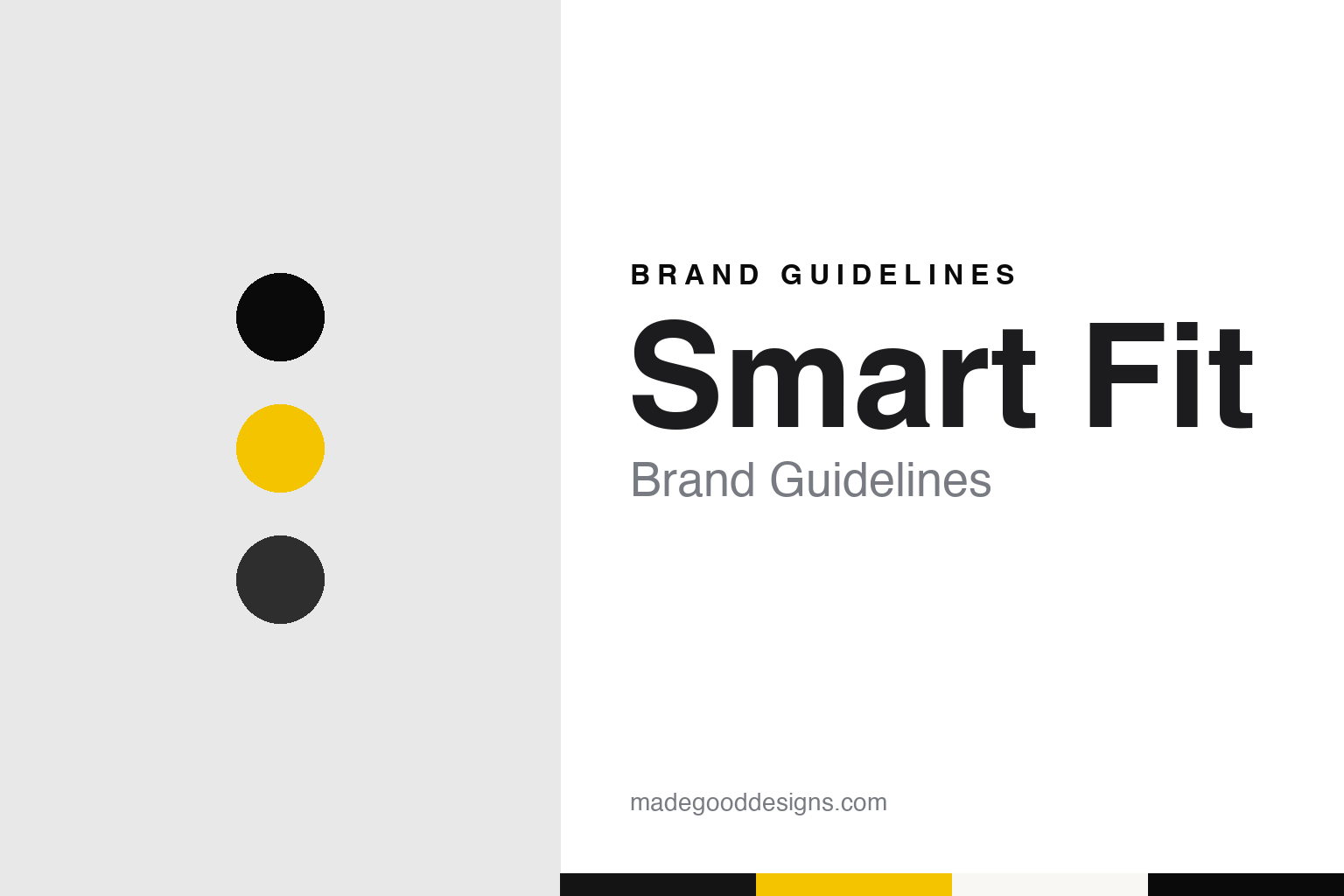
Two constants: a Smart Fit yellow and black palette and a Condensed sans register. Abstract homage — not a Smart Fit asset or mark; no gym, logo or signage is reproduced.
Bio Ritmo to Smart Fit
A São Paulo club group tries a low-price format.
Smart Fit grew out of an earlier gym business in São Paulo. The company says its founder, the chemical engineer Edgard Corona, opened the first Bio Ritmo club in 1996. The newspaper Folha de S.Paulo reported in May 2016 that this first unit, on Avenida Santo Amaro, did not go very well, and that a second club, in the Conjunto Nacional building on Avenida Paulista, came with a new architectural design and a focus on the customer’s experience, from the lighting to the changing room. The company dates that redesigned unit, with its special lighting design, to 1997, and says that in 2003 it adopted a management model built around the Net Promoter Score, a customer-satisfaction measure.
The new chain came in 2009. After a fitness-industry event in the United States, Corona decided to launch a cheaper format, Folha reported, quoting his view that Brazil then had only expensive gyms or cheap ones with poor facilities. The company calls the format “high value, low price” and says the first Smart Fit opened in São Paulo; Folha placed the first unit in the Morumbi district. Portuguese Wikipedia adds early units in Porto Alegre, Brasília and Rio de Janeiro and describes gyms of more than 2,000 square metres, with equipment from makers such as Technogym and Movement.
By May 2016 Smart Fit had more than 250 units, 104 of them in São Paulo state, and was also present in Mexico and Chile, Folha reported. That year it sponsored the treadmills on the reality show Big Brother Brasil, broadcast by Globo; the newspaper said it was the first time a real-life company had sponsored them. Corona told the newspaper that the chain was putting its weight behind short, high-intensity classes of 30 minutes, three times a week, which members could take alone or as a competition. Portuguese Wikipedia says that by the end of 2018 the chain had 378 units and an app that builds training plans from each member’s goals.
Colour
Fifteen countries and a family of brands.
International growth began in 2011, when the company opened its first unit in Mexico City, it says. By the end of 2019 it had added Chile, the Dominican Republic, Colombia, Peru, Ecuador, Argentina, Paraguay, Guatemala and Panama, according to its investor site, which lists operations in 15 Latin American countries. At 30 June 2024 the group counted 1,529 gyms, 736 of them in Brazil, 339 in Mexico and 454 elsewhere in the region, and 1,500 of them carried the Smart Fit name, the company says; it put its active customer base, including digital customers, at 5 million at the same date. Portuguese Wikipedia adds that in 2023 a local franchise partner opened two units in Portugal.
The group runs several brands side by side. Bio Ritmo remains its premium club, and its studio brands include Race Bootcamp, Jab House and One Pilates, the company says; Race Bootcamp and Vidya opened as stand-alone studios in 2017 after starting inside Bio Ritmo clubs. In 2024 the group launched Nation, a gym brand for strength training. TotalPass, a corporate benefit that gives employees access to partner gyms and studios, operates in Brazil and Mexico, and the digital class platform Queima Diária joined the group in 2020, according to the company.
Two records were checked by Guinness World Records, which reported in February 2025 that on 10 November 2024 Smart Fit gathered 268 people on treadmills in 30 of its units across 12 Brazilian cities, during an event called Smart Fit Run, which Corona started. The same article said that in December 2024 the chain opened 92 gyms in one month, in Brazil, Chile, Mexico and Peru, all verified by the organisation’s adjudicators.
Typography
The category.
Gym and health-club chains sell a place, so much of their visual identity lives in photographs of the clubs themselves: the equipment floor, the class studios, the changing areas and, increasingly, the details of a refit. The companies publish this imagery in their own press rooms and on club pages, and when a chain modernises, the new interior often becomes the story; RSG Group’s 2024 release on McFit described steel, concrete and wood rather than a new logo.
Many chains split one name into tiers and sub-brands. A club brand may run a premium line and a value line under separate colours, give its class formats their own names, or sell a training programme through its member app. Fitness First’s German owner, for example, separates BLACK and RED clubs, and the UK business launched a training service called “able” inside its app in 2025.
Campaign identities change faster than logos. Slogans, ambassadors and sports sponsorships give a chain public visibility for a few years, while a wordmark and its colours may last a decade or more. Where a rebrand is documented, it is usually in trade or marketing press at the time of the launch, and that is where the guides in this set look for it.
Ownership is often the least visible layer. Corporate websites, press releases and trade magazines record which investor owns a chain, how many clubs it counts and in which countries, and those figures change with each purchase or sale. The guides in this set give club, member and country counts only as a dated source states them, and name the owner as of that source.
Aa
A tall condensed sans for a brand built on bold signage and short names. (Specimen set in Barlow Condensed, a sans STAND-IN; NOT the Smart Fit logo.)
Smart Fit
A listed company since July 2021.
The business has had outside investors for years. Portuguese Wikipedia says growth sped up after the fund manager Pátria Investimentos and Singapore’s sovereign fund invested in the Bio Ritmo group. In July 2021 the company completed its initial public offering, and its shares began trading on the Novo Mercado segment of the São Paulo exchange, B3, under the ticker SMFT3, the company says.
The leadership has since changed. The company’s investor site lists Edgard Corona as president of the board, describing him as a founding partner and former chief executive, and names Diogo Corona, who has worked at the company since 2010, as chief executive; Spanish Wikipedia dates that change to February 2026. The investor site also says Edgard Corona received the EY Entrepreneur of the Year award in Brazil in 2016.
Smart Fit describes its mission as making high-standard fitness and wellness more widely accessible, and says it holds the largest active client base in Brazil, Mexico, Colombia, Chile and Peru; those are the company’s own claims. Its investor site also points to recognition in 2024 from Brazilian publications, including a place on Veja’s list of the 100 most influential companies in Brazil.
For a design guide, Smart Fit shows how one low-price brand can sit beside premium clubs, studios and a corporate pass without the names blurring together. Compare Basic-Fit, a European budget chain, and Planet Fitness, which Twin Cities Business has described as a value-driven chain. For this guide we use a strong yellow and near-black with a condensed sans, an unofficial interpretation; no product or logo is reproduced.
Explore & save
Keep Smart Fit’s identity on hand — save it to a board in the Made Good inspiration library.
Smart Fit identity set
Pin the Smart Fit yellow and black palette and the Condensed sans register to your own board.