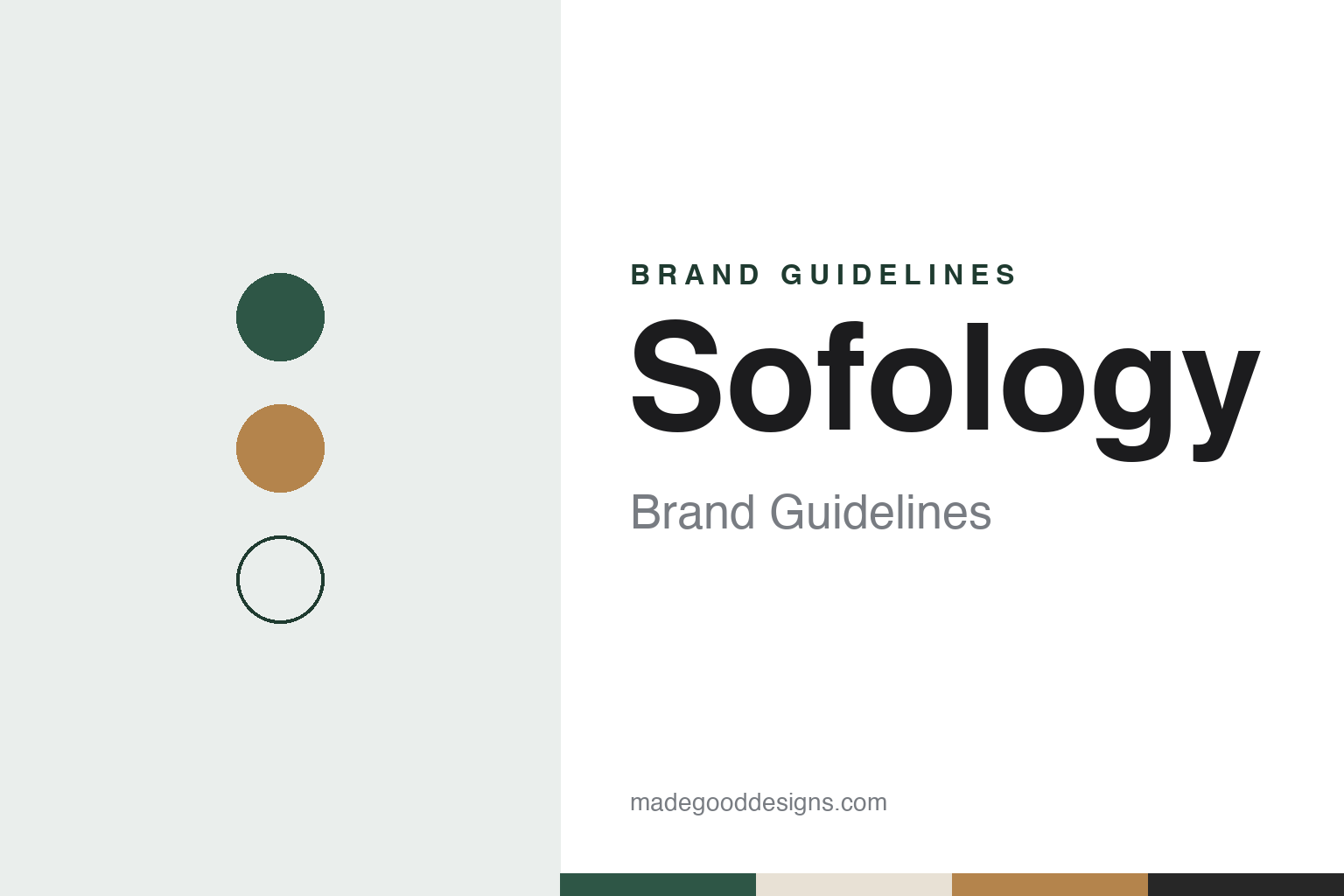
Sofology Brand Guidelines
Salerooms, CSL, Sofaworks, then Sofology inside the DFS group.
Aa
Two constants: a green, caramel and oatmeal palette and a showroom sans register. Abstract homage — not a Sofology product or mark; no logo, sofa or advert is reproduced.
From the salerooms
Auction rooms, CSL, Sofaworks and a new name.
Sofology is a British sofa retailer owned by DFS. English Wikipedia says the business began as auction rooms in Clayton-le-Moors, near Accrington in Lancashire, lists Clayton Salerooms among its earlier names, and says that in 1982, after taking on catalogue seconds of lounge furniture, it moved into specialist sofa retail and manufacture. Companies House records show the company was incorporated in December 1983 as C S Upholstery Limited and renamed C. S. Lounge Suites Limited in 1990. It traded for years as CSL, a high street chain selling only its own products, English Wikipedia says.
Manufacturing ended in the early 2000s. English Wikipedia says that around 2002 CSL stopped making sofas in the United Kingdom, saying it could source them in Europe, Eastern Europe and the Far East, and that the business has since concentrated on retailing leather, fabric, corner and recliner sofas.
The name then changed twice in quick succession. CSL rebranded as Sofaworks in December 2013, Furniture News reported, and Companies House shows the company name Sofaworks Limited from 3 December 2013. According to the same report, the company had acquired the Sofaworks name in 1996 but did not apply to register it as a trade mark until September 2013, when the application was opposed. DFS had bought the Sofa Workshop brand in October 2013 and took action against Sofaworks on its behalf. On 29 June 2015, after a two-day hearing at the Intellectual Property Enterprise Court, the court found Sofaworks liable for passing off against The Sofa Workshop, Furniture News reported that day. English Wikipedia dates the rebrand to Sofology to December 2015, and Companies House shows the company name changing to Sofology Limited on 16 February 2016.
Two years later the former opponents combined. On 3 August 2017 TheBusinessDesk reported the sale of Sofology, which it described as Wigan-based with 37 stores, to DFS. The Competition and Markets Authority opened a merger inquiry on 2 October 2017 and cleared the deal at phase 1 on 20 November 2017; its decision said Sofology then operated 38 stores. DFS’s corporate history lists the acquisition in 2017.
Colour
Retail parks, showrooms and a group of two brands.
Sofology trades from showrooms and online. The CMA treated the overlap between the two companies as the retail supply of upholstered living room furniture, through stores and online across the UK, and assessed shop and online competition both together and separately. The CMA’s 2017 decision described both DFS-branded stores and Sofology’s stores as typically found on retail parks with good road connections, in contrast with DFS’s Sofa Workshop and Dwell stores, which it said were usually in town and city centres. At that time DFS ran 110 DFS stores, 32 Dwell stores and 20 Sofa Workshop stores, the decision said, alongside the 38 Sofology stores it was buying. The CMA looked at four local areas in detail and found sufficient competition in each, with other large chains such as Furniture Village, Harvey’s and ScS among the alternatives it named.
The chain has grown inside the group. As of November 2026, the DFS corporate site said Sofology traded through 56 showrooms and its website, and named DFS and Sofology as the group’s two core retail brands. The registered office of Sofology Limited is in Golborne, near Warrington, according to Companies House, which listed the company as active in November 2026.
The products sit in a few broad families. English Wikipedia names leather, fabric, corner and recliner sofas as the focus of the business.
Typography
Showrooms, swatches and sale seasons.
British sofa, furniture and bed retailers sell large, slow purchases, and most of them present themselves through the showroom before anything else. Several chains grew on out-of-town retail parks, where a single unit can hold many sofas set out as room sets, and their websites send shoppers back to those floors with store finders, appointment booking and the offer of a specialist who will walk them through sizes, fabrics and leathers.
The fabric swatch sits at the centre of the sale. Many ranges are made to order, so one sofa design is shown in a single cover on the shop floor and offered online and in store in a long list of fabrics and finishes; one UK chain’s website, for example, lists more than 200 fabrics and leathers. Alongside in-house ranges, several retailers sell collections made with magazine titles, fashion labels or long-established furniture makers, and credit those partners by name.
Advertising is seasonal and public. Television campaigns have been part of the category’s face for decades, and retailer websites carry named sale events in the same banner space as their ranges. The store fascia, the advert and the website usually share one short brand name, often a set of initials or a plain phrase about sofas or beds.
Behind the shop window sits a separate corporate voice. Listed groups publish investor sites with dated history timelines, founder stories, the brands they own and the number of showrooms each one runs; private-equity and overseas owners enter the same record through takeovers, administrations and changes of name. This guide follows that record: who founded each company, who owns it now, and how its name and look have changed along the way.
Aa
A rounded showroom sans for a coined retail name. (Specimen set in DM Sans, a sans STAND-IN; NOT the Sofology logo.)
Sofology
A coined name carried by its advertising.
The name itself is the result of the 2015 ruling. English Wikipedia lists Clayton Salerooms, CSL and Sofaworks among the earlier names, and TheBusinessDesk wrote in August 2017 that the court battle had forced the company to change its name.
Advertising has carried much of the identity. English Wikipedia says that from December 2013 to April 2016 its adverts featured a three-toed sloth named Neal, that Owen Wilson appeared in two campaigns from November 2017, and that Helena Bonham Carter has appeared in its commercials since May 2021.
In January 2023 Marketing Beat reported the brand’s first campaign with the creative agency The Corner London, a 30-second film titled “Nothing feels like” in which Bonham Carter comes home to find everything turned upside down except her green Sofology sofa. The film was directed by Chris Cottam through the production company Chief and closed with the line “Feel at home on a sofa you love,” the magazine said. It ran on TV, video on demand, press, social and digital channels and in stores.
The platform changed again in 2025. Furniture News reported on 2 September 2025 that Sofology had launched a new brand platform, “so fussy? Sofology,” with a campaign by the agency TBWA\MCR. Its film, titled New Pet, follows a grandmother and granddaughter to a pet shop, where they match a guinea pig to the colour swatch of their sofa, and its humour rests on paint-chart style colour names such as “bronzed beaver” and “potent caramel,” the magazine said.
For a design guide, Sofology shows how a retailer can rebuild an identity around one coined word after a forced change of name, then let celebrity-led and humour-led campaigns carry it. Compare DFS, its owner since 2017, and ScS, another British sofa retailer. For this guide we use a deep green, charcoal, a caramel and oatmeal with a sans, an unofficial interpretation; no product or logo is reproduced.
Explore & save
Keep Sofology’s identity on hand — save it to a board in the Made Good inspiration library.
Sofology identity set
Pin the Sofology green, caramel and oatmeal palette and the showroom sans register to your own board.