Splash Brand Guidelines
Landmark Group’s homegrown high-street label, opened in 1993.
Aa
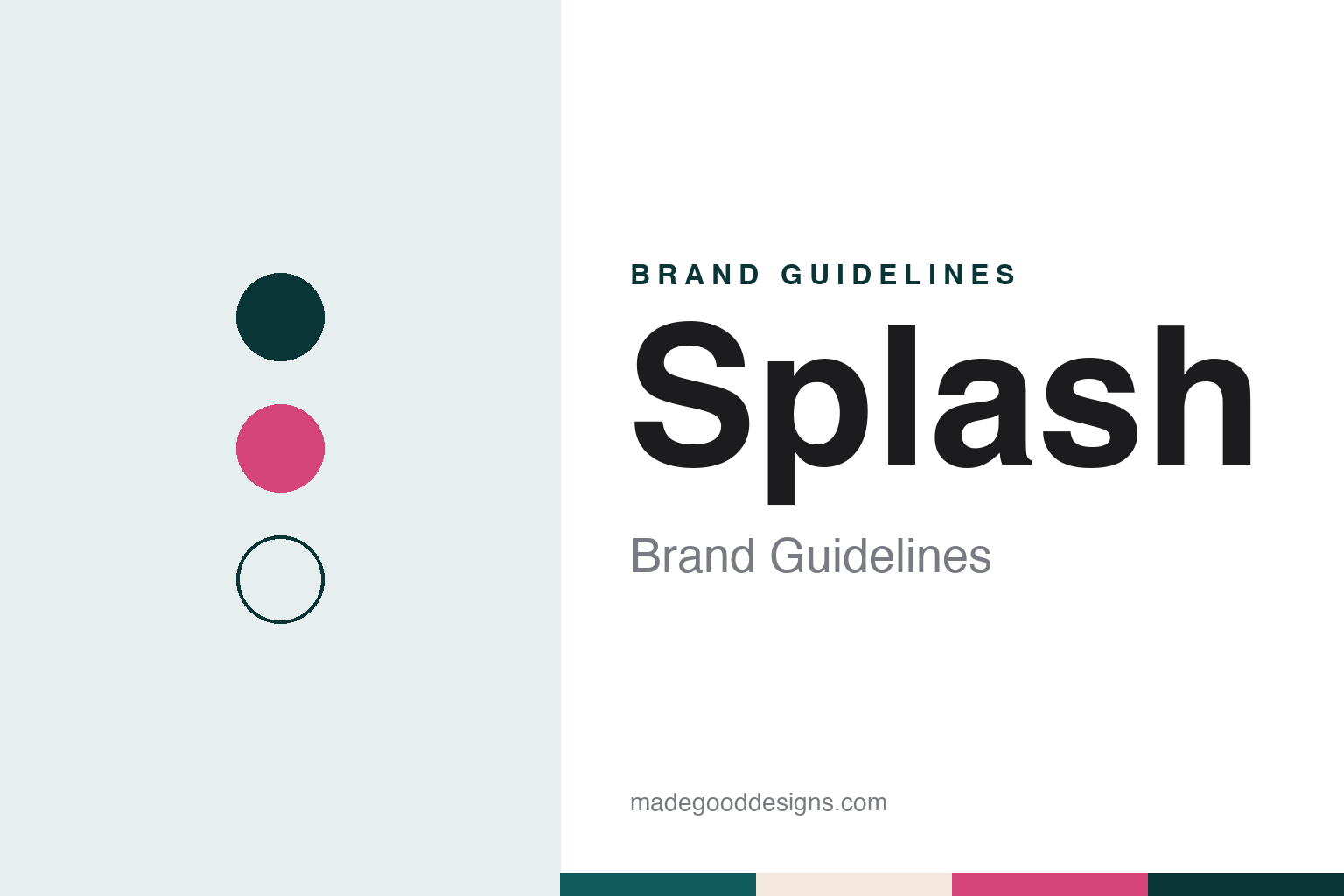
Two constants: a deep teal, pink and sand palette and a high-contrast display serif register. Abstract homage — not a Splash product or mark; no garment, logo or store fascia is reproduced.
An in-house label
A buyer, a store and a group in Dubai.
Splash is a high-street fashion label of the Dubai-based Landmark Group, and unlike many of the international names the group sells, it was built in-house. RetailME, the Gulf retail trade magazine, wrote in February 2018 that Splash opened its doors in the UAE in March 1993 and was about to turn 25, and in January 2017 the same magazine described it as the high-street brand launched in-house by the Landmark Group in 1993. The group itself grew out of a single store in Bahrain in 1973, Retail Gazette noted in May 2026, and English Wikipedia names Micky Jagtiani as its founder.
The fullest account of the start comes from a Gulf News profile of Raza Beig, the label’s chief executive. In 1992, the paper reported, he answered a newspaper advertisement for a fashion buyer at a Mothercare outlet in Bahrain run by Micky and Renuka Jagtiani, who later set up the Landmark Group in Dubai. The following year, Gulf News wrote, the Jagtianis set up Splash in Dubai and asked him to take over as store manager. Beig told the paper that he spent about two months as store manager before he was made a fashion buyer, and that he eventually took charge of the brand; he has been its chief executive and a director of the Landmark Group since. In 2017 RetailME called him the brand’s chief architect, a man who still spends time on the shop floor watching customers.
The label spread across the Gulf and beyond. In January 2017 RetailME counted a network of more than 240 stores in 14 countries, more than 4,000 staff and a recently launched e-commerce site. When Splash opened a 14,000-square-foot store at Al Wahda Mall in Abu Dhabi in July 2019, Indian Retailer gave the company’s own figure of more than 150 stores and 50 brand stores across 14 countries, including India, Pakistan, Tanzania and Libya. Splash also has an Indian company, Splash Fashions India, whose chief operating officer told Retail4growth in 2013 that the label had kept a subdued presence in India since it arrived.
Colour
From trading to designing.
Beig has described the label’s history as four stages. In a February 2018 interview with RetailME, he said the first three or four years were “purely trading”: going out to buy products, putting them together and selling them in Splash stores. Around 2005–06, he said, came the next shift, when Splash had to focus on design: it began hiring its own designers and curating its own collections, so that it could stand out once Spanish, French and other international brands were in the same malls.
The fourth stage was branding. Once the collections were, in Beig’s words, market relevant, with the team attending the right fashion shows and following high-street trends without lagging European brands by three to six months, Splash began presenting itself as a high-street retailer rather than a store that bought in stock. He told RetailME that loyal customers, whom he defined as those who visit at least six times a year, can spot new collections in the store and know when the last drop arrived. In 2019 he told Indian Retailer that the aim had always been to offer trend-led clothing that takes ideas from international runways and adapts them to the tastes of customers and the climate of the region.
The face of the label has changed with its campaigns. In September 2025, Khaleej Times reported that Splash had named the Lebanese singer, actress and television presenter Maya Diab as its fashion ambassador and the new face of the brand for its campaigns across the Middle East. Beig said in that report that she had long been a friend of the label and that her style spoke to an Arabic-speaking audience.
Typography
Malls, apps and fascias.
Gulf fashion, home and online retailers present themselves first through the places where people shop. In the UAE, Saudi Arabia, Kuwait and their neighbours, many chains trade from large mall units, and the store fascia, a name in lit letters above a wide entrance, is often the first piece of branding a shopper sees. Groups that run several chains often place them side by side in the same mall, or gather them under one umbrella name, so that a single visit can cover clothing, shoes, children’s goods and homeware.
Value-fashion and home chains speak through campaigns timed to the retail calendar: seasonal collections, catalogues and named sale events. Their identity work tends to show up in store refits as much as in advertising. A new logo usually arrives with a redesigned flagship, new signage and new in-store graphics, and then spreads to the rest of the estate store by store, sometimes over months or years.
Online retailers carry the same task onto app screens, product pages and delivery packaging. There the brand becomes a set of repeated elements: a wordmark, a colour, a tone of voice in notifications, and the boxes and bags that arrive at the door. Store groups in the region also run their own apps and click-and-collect services, so the line between the shop and the screen is less sharp than it once was.
Store names are usually plain and descriptive, and the companies publish them in English as they appear above the door. Corporate pages and dated press coverage give the facts behind those names: who founded each business and when, which family or group owns it, and whether its shares are listed on an exchange such as Tadawul, ADX or DFM. These guides draw on those dated sources and describe colour and type only as our own interpretation, with no logo or fascia reproduced.
Aa
A high-contrast display serif — for campaign headlines and mall fascias with a fashion-magazine tone. (Specimen set in DM Serif Display, a serif STAND-IN; NOT the Splash logo.)
Splash
A homegrown label among imports.
Splash’s online shop came later than its stores. RetailME reported in September 2020 that the Splash online platform had been rolled out about three years earlier and revamped in 2019, and that in 2020 the team reviewed everything from logistics and last-mile delivery to product availability and payments for online shoppers. In the same interview Beig said Splash had placed 18 to 19 stores under review, measuring performance against cost across its markets, and that future store openings would be more calculated, and possibly slower, as e-commerce grew.
The label’s positioning rests on being local. In July 2019 Beig described Splash to Indian Retailer as one of the few home-grown fashion retail brands in the region, with a loyal customer base in Abu Dhabi. The company’s figures that year counted around 50 brand stores alongside the Splash stores themselves. He said the label takes the strongest ideas from the international runway and customises them for the region, and that its focus had always been on trend-led clothing for that market.
For a design guide, Splash shows how a store that began by buying in stock built a recognisable label by hiring designers, following the runway and returning to the same loyal shoppers with frequent new collections. Compare it with its Landmark Group stablemates Max and Centrepoint. For this guide we use a deep teal, a bright pink and a shell sand with a serif, an unofficial interpretation; no product or logo is reproduced.
Explore & save
Keep Splash’s identity on hand — save it to a board in the Made Good inspiration library.
Splash identity set
Pin the Splash deep teal, pink and sand palette and the display serif register to your own board.
Source & notes
Frequently Asked Questions
What font can I use to match the Splash look?
This guide describes Splash’s type as “A high-contrast display serif — for campaign headlines and mall fascias with a fashion-magazine tone”. Its type specimen is set in DM Serif Display from Google Fonts as a stand-in; DM Serif Display is not Splash’s own lettering.
What colours are in the Splash palette?
This guide’s Splash palette is Deep teal #0E5A5C, Lagoon ink #0A3536, Splash pink #D6457A, Shell sand #F4E9DC and Paper #FBF8F5. The tones are the guide’s own unofficial interpretation, not official Splash hex codes.
When did Splash open?
Splash opened in March 1993, in United Arab Emirates. Splash is known for Own-design high-street fashion and brand stores.
Who founded Splash?
Splash was founded in March 1993 by Landmark Group, in-house.