TAD Brand Guidelines
The beryllium coaxial.
Aa
Two constants: a bronze-and-charcoal palette and a reference sans register. Abstract homage — not a TAD speaker or wordmark.
The beryllium coaxial
TAD builds reference speakers around its own beryllium coaxial driver, hand-made in Japan.
TAD is a lesson in a driver as the identity. A Japanese reference-audio maker whose name means Technical Audio Devices, it builds high-end loudspeakers and electronics around its own beryllium coaxial driver — a tweeter set inside a midrange, machined from beryllium — and hand-builds its reference pieces in Japan. Sound, made a measurement reference.
Its identity is the beryllium coaxial. TAD’s in-house coaxial driver, and its engineering-reference stance, are the work it is known for. A driver, made a signature. A maker that treats a speaker as a laboratory reference.
(Honest notes, so the story stays precise. TAD grew out of Pioneer’s professional-audio division and became a separate company, TAD Laboratories, in 2007. On ownership, we are candid: through Pioneer’s later history its parent now traces to the Taiwanese group CarUX (linked to Innolux), so it is owned abroad — but, importantly, its reference components are still hand-built in Japan, in Kawagoe, so we say “owned abroad, made at home,” in the honest company of other makers who keep manufacturing where they were born. Its signature is a genuine in-house technology — the beryllium “Coherent Source Transducer” coaxial driver. Its designs and name are its IP, described but never reproduced, and there is no official brand hex — these tones are an unofficial interpretation. This is design commentary and does not promote any product.)
Colour
TAD lives in a bronze-and-charcoal palette. Click a swatch to copy the hex.
TAD’s identity is engineered, precise and refined — a bronze, an ink, a charcoal, a silver, and a chalk. The palette leans bronze and charcoal: the register of a warm metal driver against a dark, reference chassis. It signals engineering and precision over decoration. The honest caveat: with no published brand hex, these values are an original, unofficial interpretation, not first-party colours.
The lesson is a bronze-and-charcoal palette signals a reference-engineering identity. TAD’s world is a precise, technical, laboratory-grade object. For designers, it is a reminder that a warm metallic against charcoal can carry a brand built on engineering — the bronze of a beryllium driver and the charcoal of a reference chassis. Because these tones can fail as small text, keep type dark and let the colour live in the accents, palette and band. The takeaways: own a driver; make it at home; measure everything; and treat any single hex as unofficial.
Typography
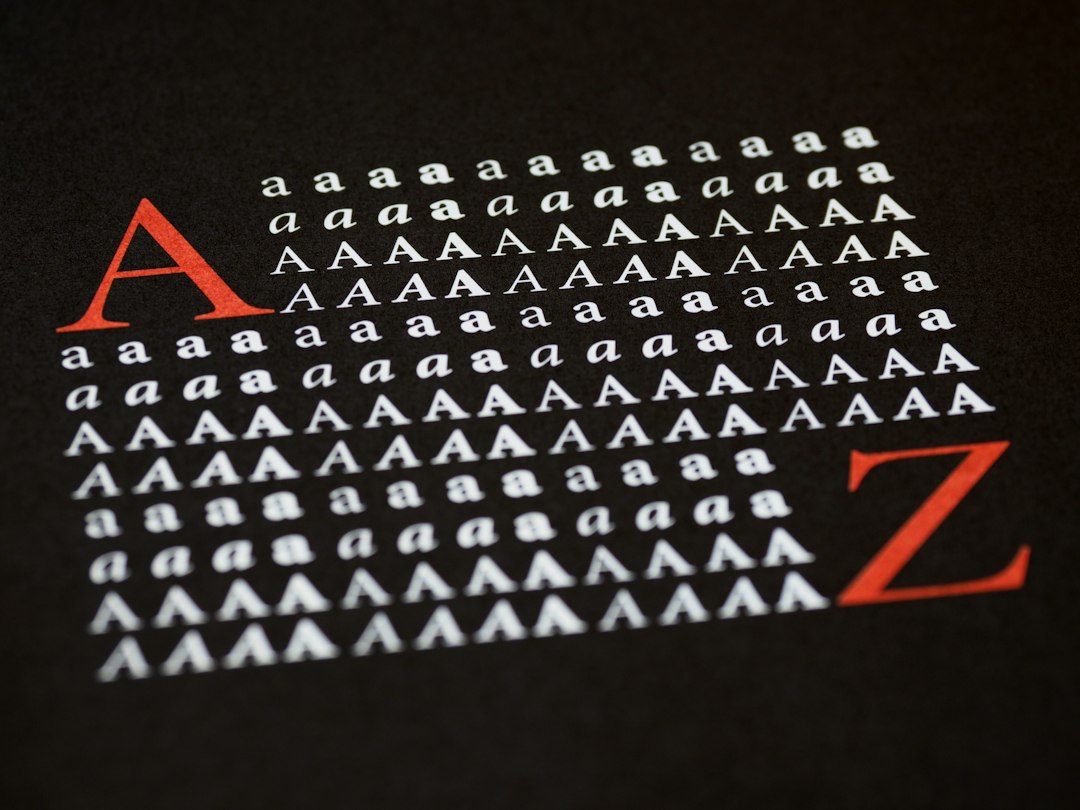
The register is a reference sans — precise, technical, refined.
TAD’s identity carries a precise, technical, refined spirit — a reference object, not a decorative one. A reference sans captures the mood: even, engineered and quietly confident, the register of a laboratory-grade loudspeaker. Set in a bronze-and-charcoal palette, the reference sans feels precise and technical — exactly the personality TAD carries. It is refined rather than showy, mirroring a measurement-led reference piece. (TAD’s real speakers and wordmark are things we describe but do not reproduce, and the exact typeface is not ours to use.) Because it is not ours to use, the honest description is “a reference-sans spirit,” shown here in a stand-in. The type behaves like the maker: precise, technical and refined.
Aa
A reference-sans spirit — precise and technical. (Specimen set in Hanken Grotesk, a reference-sans STAND-IN; NOT the TAD wordmark or any speaker design.)
A driver as identity
TAD stands for the beryllium coaxial.
TAD is a lesson in making a driver the identity. A bronze-and-charcoal palette, a reference sans and beryllium coaxial speakers make a single technology the whole maker — precise, technical and refined. The driver is the differentiator. The differentiator is a genuine in-house invention — a beryllium coaxial driver, a tweeter inside a midrange — hand-built at home even under foreign ownership.
Put to work, the identity is a technology as the brand. A maker building in this spirit would own one real, hard-to-copy technology rather than a spec sheet, keep the critical making at home, and be candid about its ownership, so the customer buys into engineering rather than a badge. In a field where ownership often changes hands, it would treat hand-building its reference pieces in Japan as the thing that stays true. It would let the driver be the whole argument, so that the object is judged by what it measures. The lesson TAD teaches is that a genuine in-house technology plus at-home making can build a brand across changes of ownership: the driver gives it substance, and the Japanese making gives it credibility. The technology is the personality, and the making is the proof.
For designers and brand-builders, TAD offers a clear takeaway: own a technology and keep it made at home. The lessons: own a driver; make it in Japan; measure everything; and be honest about ownership. It is also a reminder to stay accurate: TAD grew out of Pioneer’s professional division and became TAD Laboratories in 2007, is now owned abroad through the Taiwanese group CarUX, but hand-builds its beryllium coaxial reference speakers in Kawagoe, Japan — with the palette here an unofficial interpretation. TAD made the beryllium coaxial the maker — proof that a driver can be the difference.
Explore & save
Keep TAD’s identity on hand — save it to a board in the Made Good inspiration library.
TAD identity set
Pin the bronze-and-charcoal palette and the reference-sans register to your own board.