Tastien Brand Guidelines
Fuzhou’s Chinese burger, hand-rolled buns and a red-caped lion.
Aa
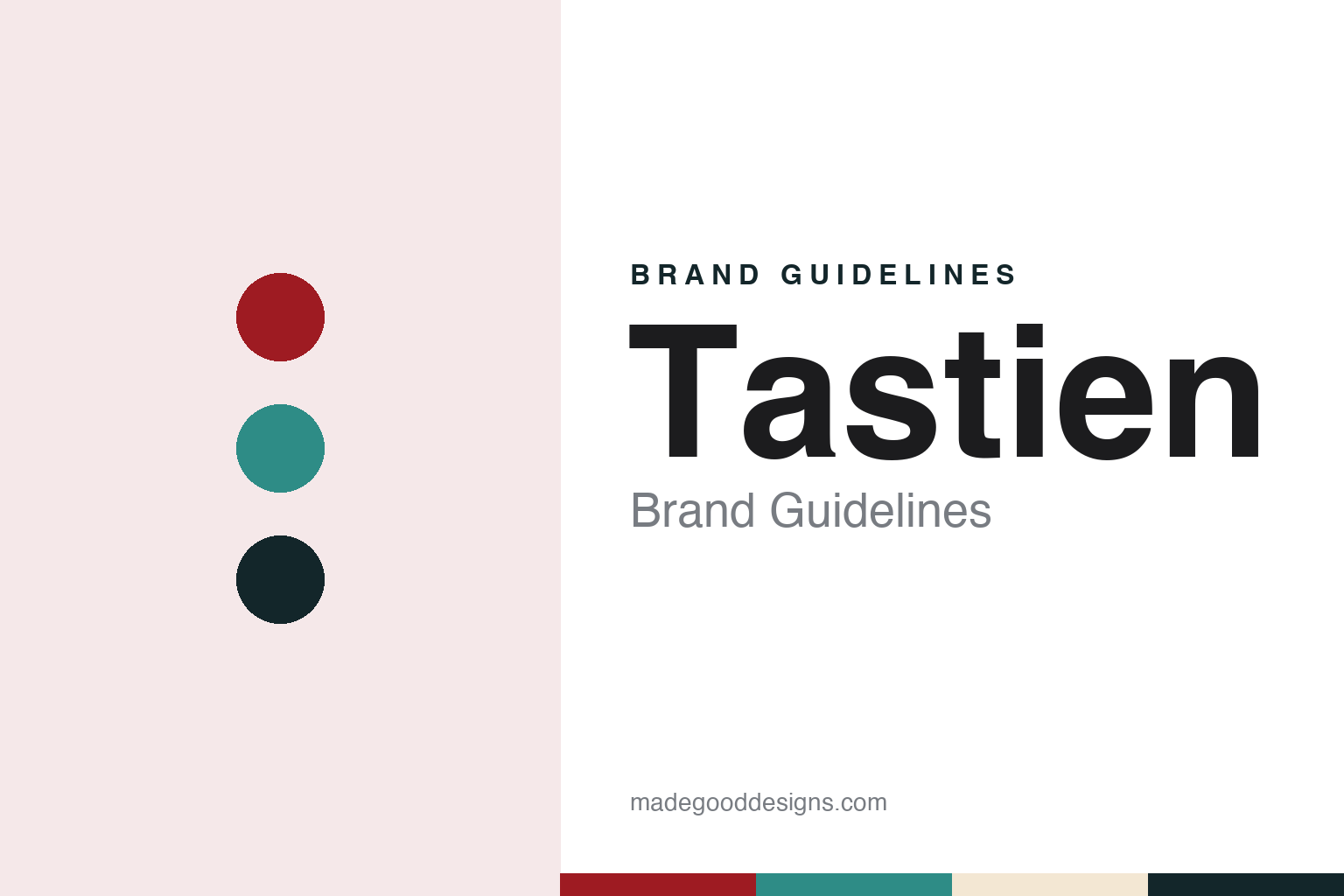
Two constants: a lion red, pattern teal and ink green palette and a display serif register. Abstract homage — not a Tastien product or mark; no mascot, logo or packaging is reproduced.
Fuzhou, 2012
From a pizza business to the Chinese burger.
Tastien is a fast-food chain from Fuzhou, the capital of Fujian province. Its Chinese name is 塔斯汀, written Tǎsītīng in pinyin, and China Daily also gives the romanisation Tasiting. English Wikipedia says the company was founded in 2012 and first ran as a pizza business; Sixth Tone reported in October 2023 that it did not start selling burgers until 2017, and English Wikipedia says it began marketing a “Chinese hamburger” concept in 2019.
The idea is a fusion of a Western burger and Chinese bread and fillings. The company says its hand-rolled buns are made with traditional Chinese pastry techniques, Sixth Tone reported, and English Wikipedia and The Sydney Morning Herald both connect the bread to roujiamo, the meat-filled flatbread sold by street vendors and associated with Shaanxi province. Fillings borrow from Chinese dishes: Sixth Tone listed Peking duck, mapo tofu and fish-fragrant pork slices, and China Daily in April 2024 listed Peking duck, garlic pork and mapo tofu and reported that a cumin-flavoured duck burger was added at the end of March that year. The Sydney Morning Herald described a beef burger topped with cumin mushrooms in March 2025.
The bread is part of the show. Jiemian, the Shanghai business news site, reported in April 2023 that Tastien restaurants put dough rolling and baking on view at an open kitchen counter, so customers can watch buns being shaped and baked on site.
Colour
Ta Lion, patterned boxes and a blue-edged sign.
Tastien’s identity is built around a mascot. China Daily described Ta Lion in April 2024 as the chain’s brand ambassador: a figure wrapped in a bright red cape, with a horn, a round belly, starry eyes and flame-shaped eyebrows. The Sydney Morning Herald’s Beijing correspondent reported in March 2025 that the red lion appears on packaging and on advertising throughout the restaurant, and that the in-store soundtrack is a jingle mixing Chinese opera and rap.
Packaging and shopfronts carry Chinese pattern work. Sixth Tone wrote in 2023 that the burgers come in a red-and-turquoise box covered in traditional Chinese patterns. Jiemian described the shopfront formula in April 2023 as a neon sign with white lettering and a blue edge, paired with a red-and-white lion logo, and placed it within a wider wave of new Chinese-style bakery and snack brands using similar shop design; it also noted that newer rivals were adding a “Chinese burger” suffix to their own signs. Sixth Tone, citing the industry analysis firm Hongcan, reported that outlets using “Chinese burger” in their store names rose from 1,770 in August 2022 to 3,530 in January 2023. A consultant quoted by Jiemian said the format blends Chinese and Western food, pairing a staple with a meat dish to create a concept with a local character.
The wording has shifted with the brand. China Daily reported in May 2024 that a brand upgrade in July 2023 brought a new tagline, which the paper translated as “For the Chinese taste, love Chinese burgers”; Sixth Tone rendered the chain’s slogan in 2023 as “Chinese stomachs love Chinese burgers”. The chain also runs a weekly “Member Tuesday” and, China Daily said, has built a strand of short-form posts called “Tastien Literature” on Douyin, Xiaohongshu and Bilibili. The company has not published a typeface or colour specification, so the tones in this guide are an unofficial interpretation.
Typography
How the category presents itself.
China’s tea-drink, coffee, burger and restaurant chains present themselves first at street level. A shopfront, a cup and a paper bag are often the first things a customer sees of the brand, and many chains add a mascot, a theme song or a recurring character that appears on signs, packaging and social media at the same time. Some keep their shops small and built for takeaway; others put the same care into seating, lighting and a bakery counter as into the drinks.
Menus are usually organised by named drinks and dishes rather than by codes. Fruit teas, cheese-topped teas, lemon drinks, soft-serve ice cream, fried chicken and hotpot appear under house names, and chains that move abroad often add local flavours while keeping the core list the same. The names, the cups and the colours of the shop carry the brand from one city to the next.
The size of a network is something these companies publish themselves, in annual reports, listing documents and on their own sites, and the press repeats those counts with a date attached. Some chains run every shop directly; others rely mainly on franchisees, and several have moved from one model to the other. Store networks now reach Southeast Asia, Australia, Europe and North America as well as the home market.
Ownership is usually set out plainly on corporate pages: who founded the business and where, which group owns it now, and whether its shares trade in Hong Kong, on a mainland exchange or in New York. This guide follows those published facts, attributes counts to dated sources, and treats each chain’s visual identity as a design subject rather than a claim about its food or drinks.
Aa
A display serif for a chain that mixes Chinese pattern work with burger-bar signage. (Specimen set in DM Serif Display, a serif STAND-IN; NOT the Tastien logo.)
Tastien
Franchised stores, from county towns to Shanghai.
Tastien grew through franchising, mostly outside China’s biggest cities. Jiemian reported in April 2023, citing the restaurant data service Zhaimen Canyan, that the chain had more than 3,500 stores, with nearly 80 per cent in second- to fifth-tier cities, and that Guangdong, Fujian and Zhejiang had the most; the company’s website then offered only single-store franchises. By October 2023 Sixth Tone, citing Canyan Data, counted more than 5,400 stores and reported several dozen outlets in first-tier cities, including one just off Shanghai’s Nanjing Road. Jiemian’s 2023 report, again citing Zhaimen Canyan, counted 138 stores in Guangzhou, 112 in Shenzhen and 8 in Shanghai, with big-city sites mostly near urban villages, ordinary shopping centres or schools, and said 62 per cent of all stores sat near housing, many of them in townships or on the ground floor of malls. China Daily said in May 2024 that the chain mainly targets third- and fourth-tier cities and smaller places.
The count kept rising. China Daily reported more than 7,000 locations in April and May 2024, and English Wikipedia gives 7,254 locations across 342 cities as of April 2024. In December 2025 Jiemian reported a company statement that Tastien had 11,124 stores in operation at the end of November 2025; the statement disputed third-party figures on its openings and closures. Sixth Tone reported that the chain received investment from Source Code Capital and Buhuo Ventures in 2021.
For a design guide, Tastien shows how a burger chain can lean on bread, a mascot and patterned packaging to set itself apart in a crowded market, and how a shopfront formula of neon lettering and a lion logo can travel across thousands of franchised stores. Compare it with McDonald’s, the American burger chain whose format it adapts, and with Dicos, a Chengdu fried-chicken chain that also grew through franchising. For this guide we use a lion red, a pattern teal and an ink green with a serif, an unofficial interpretation; no product or logo is reproduced.
Explore & save
Keep Tastien’s identity on hand — save it to a board in the Made Good inspiration library.
Tastien identity set
Pin the Tastien lion red, pattern teal and ink green palette and the display serif register to your own board.
Source & notes
Frequently Asked Questions
What font can I use to match the Tastien look?
This guide describes Tastien’s type as “A display serif for a chain that mixes Chinese pattern work with burger-bar signage”. Its type specimen is set in DM Serif Display from Google Fonts as a stand-in; DM Serif Display is not Tastien’s own lettering.
What colours are in the Tastien palette?
This guide’s Tastien palette is Lion red #9E1B22, Pattern teal #2E8C86, Ink green #13262A, Bun crust #D9A55B and Rice paper #F3E7D3. The tones are the guide’s own unofficial interpretation, not official Tastien hex codes.
When was Tastien founded?
Tastien was founded in 2012, in Fuzhou, Fujian. Tastien is known for Hand-rolled buns, Peking duck and mapo tofu burgers.