Turk Brand Guidelines
The forged iron pan.
Aa
Two constants: an ember palette and a forge-slab register. Abstract homage — not a Turk pan, surface or wordmark.
The forged iron pan
Turk is a German maker whose iron pans are hot-forged from a single piece, made in the Sauerland since 1857.
Turk is a lesson in a single piece of forged iron as the identity. A German forge since 1857, it makes frying pans whose body and long handle are hot-forged from one billet of iron — no rivets, no welded joint, essentially indestructible. Its answer to how a pan is made is the most elemental one: heat a piece of iron and hammer it into a pan, in one continuous piece. A pan forged the way a blacksmith would forge it.
Its identity is the metal and the surface, forged in one piece. Turk’s hand-forged pans, its Sauerland forge and its iron surface are the work it is known for. A process, made a signature. A forge whose pan is one unbroken piece of iron.
(Honest notes, so the story stays precise. Turk — Fa. Albert Turk — was founded in 1857 by Karl Turk, a blacksmith; the company carries the name of his son Albert, its namesake rather than its founder, and it is a sixth-generation family business, now led by Karolin Turk. Its forge is in Mühlhofe, in the Sauerland, North Rhine-Westphalia, and it is made in Germany. One honest note: Turk sells two lines — a genuine hand-forged range, where the pan and handle really are forged from a single billet with no rivets and carry a long guarantee, and a cheaper machine-smithed line; both are German-made, so we scope the single-piece hand-forged claim to the hand-forged range. It is an independent, family-owned firm — also a leading maker of forged foundry tools — and its works, rebuilt after a 1953 fire, still stand on the original site. Its designs and marks are its IP, described but never reproduced, and there is no official brand hex — these tones are an unofficial interpretation. This is design commentary and does not promote any product.)
Colour
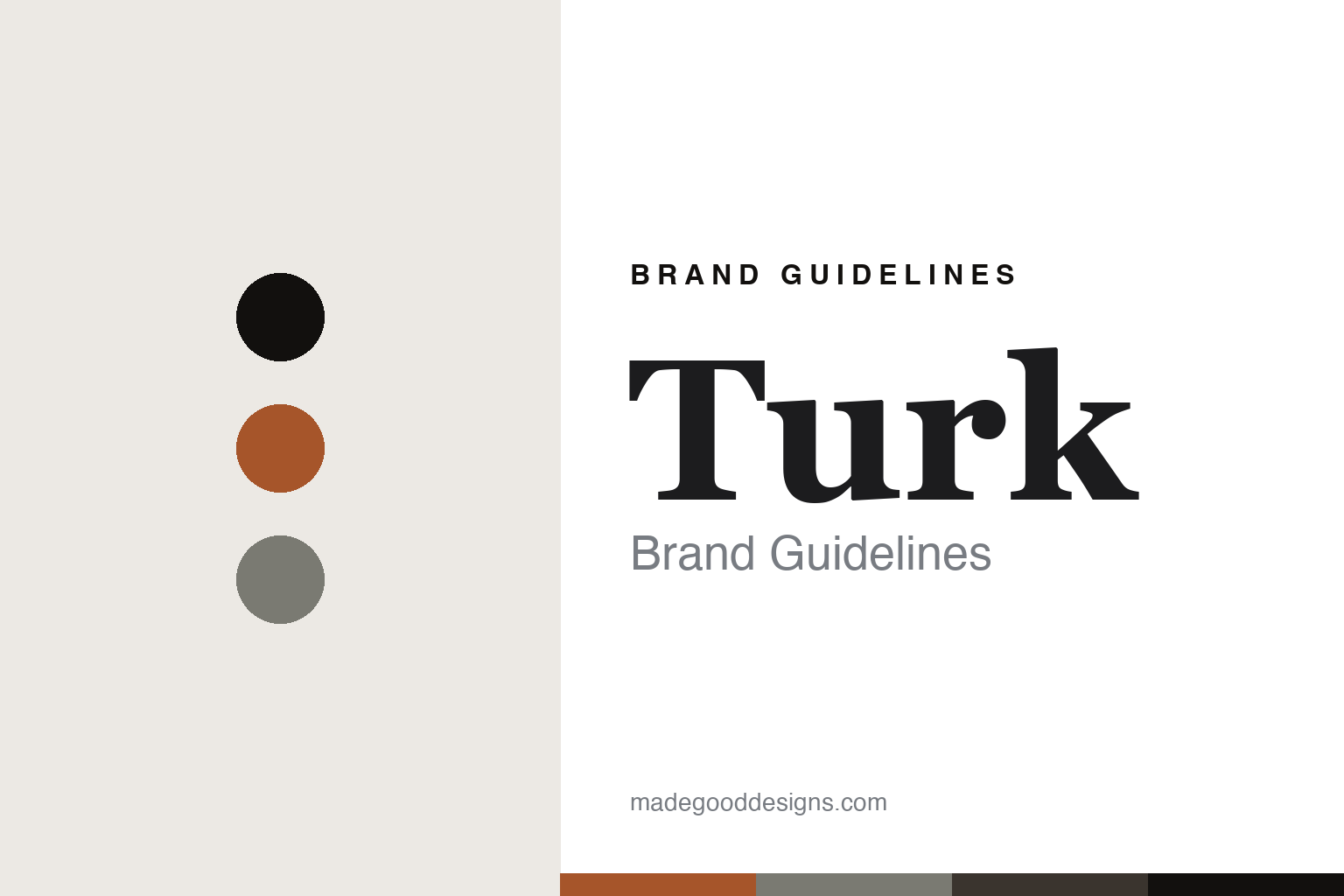
Turk lives in an ember palette. Click a swatch to copy the hex.
Turk’s identity is elemental, heavy and German — an ember, an ink, a forged iron, a char, and a chalk. The palette leans ember and forged iron: the register of hot metal and a hammered iron surface. It signals the forge and the material over finish. The honest caveat: with no published brand hex, these values are an original, unofficial interpretation, not first-party colours.
The lesson is an ember palette signals a forged, made-in-Germany identity. Turk’s world is a one-piece, hand-forged, made-in-the-Sauerland object. For designers, it is a reminder that a hot ember and a cool forged iron can carry a brand built on forging — the ember of the fire and the grey of hammered metal. Because these tones can fail as small text, keep type dark and let the colour live in the accents, palette and band. The takeaways: forge it in one piece; keep the forge at home; scope the hand-forged claim; and treat any single hex as unofficial.
Typography
The register is a forge slab — heavy, plain, elemental.
Turk’s identity carries a heavy, plain, elemental spirit — a forged object, not a delicate one. A slab serif captures the mood: solid, blunt and industrial, the register of a working forge. Set in an ember palette, the forge slab feels heavy and plain — exactly the personality Turk carries. It is elemental rather than refined, mirroring a one-piece iron pan. (Turk’s real designs and marks are things we describe but do not reproduce, and the exact typeface is not ours to use.) Because it is not ours to use, the honest description is “a forge-slab spirit,” shown here in a stand-in. The type behaves like the maker: heavy, plain and elemental.
Aa
A forge-slab spirit — heavy and plain. (Specimen set in Zilla Slab, a slab-serif STAND-IN; NOT the Turk wordmark or any pan design.)
How a pan is made
Turk stands for the single piece of forged iron.
Turk is a lesson in making one-piece forging the identity. An ember palette, a forge slab and a hammered iron surface make one thing — a pan forged from a single billet — the whole maker: elemental, heavy and German. The one-piece forging is the differentiator. The differentiator is the most basic possible construction: no rivets, no joins, just iron hammered into a pan and handle in one continuous piece, so there is nothing to loosen or break.
Put to work, the identity is forging as design. A maker building in this spirit would reduce an object to a single material worked by a single process, keep the forge at home, and let indestructibility be the promise. It would treat the hand-forged range as the real story and be honest that a cheaper machine-made line exists alongside it. A brand learning from it would see that the oldest method — one piece, forged — can be the strongest modern claim, because a pan with no joints is a pan that outlives its owner. It would say plainly which pans are hand-forged in the Sauerland. A brand learning from it would notice that permanence is its own kind of luxury: an object with no joint to fail, backed by a lifetime-plus guarantee, quietly rejects the whole logic of replacement. It would let the weight and the forged surface tell the buyer this is a tool to keep, not to upgrade. The lesson Turk teaches is that a single forged piece can build a brand: the forging gives it strength, and the German making gives it substance. The forging is the personality, and the one-piece pan is the proof.
For designers and brand-builders, Turk opens this round about how a pan is made on the forged pole: work one material in one piece, and let that be unbreakable. The lessons: forge in one piece; keep the forge home; scope the hand-forged claim honestly; and never reproduce a protected design. It is also a reminder to stay precise: Turk is a sixth-generation German forge founded in 1857, hand-forging one-piece iron pans in the Sauerland — with the palette here an unofficial interpretation. Turk made one-piece forging the maker — proof that the metal can be the difference.
Explore & save
Keep Turk’s identity on hand — save it to a board in the Made Good inspiration library.
Turk identity set
Pin the ember palette and the forge-slab register to your own board.