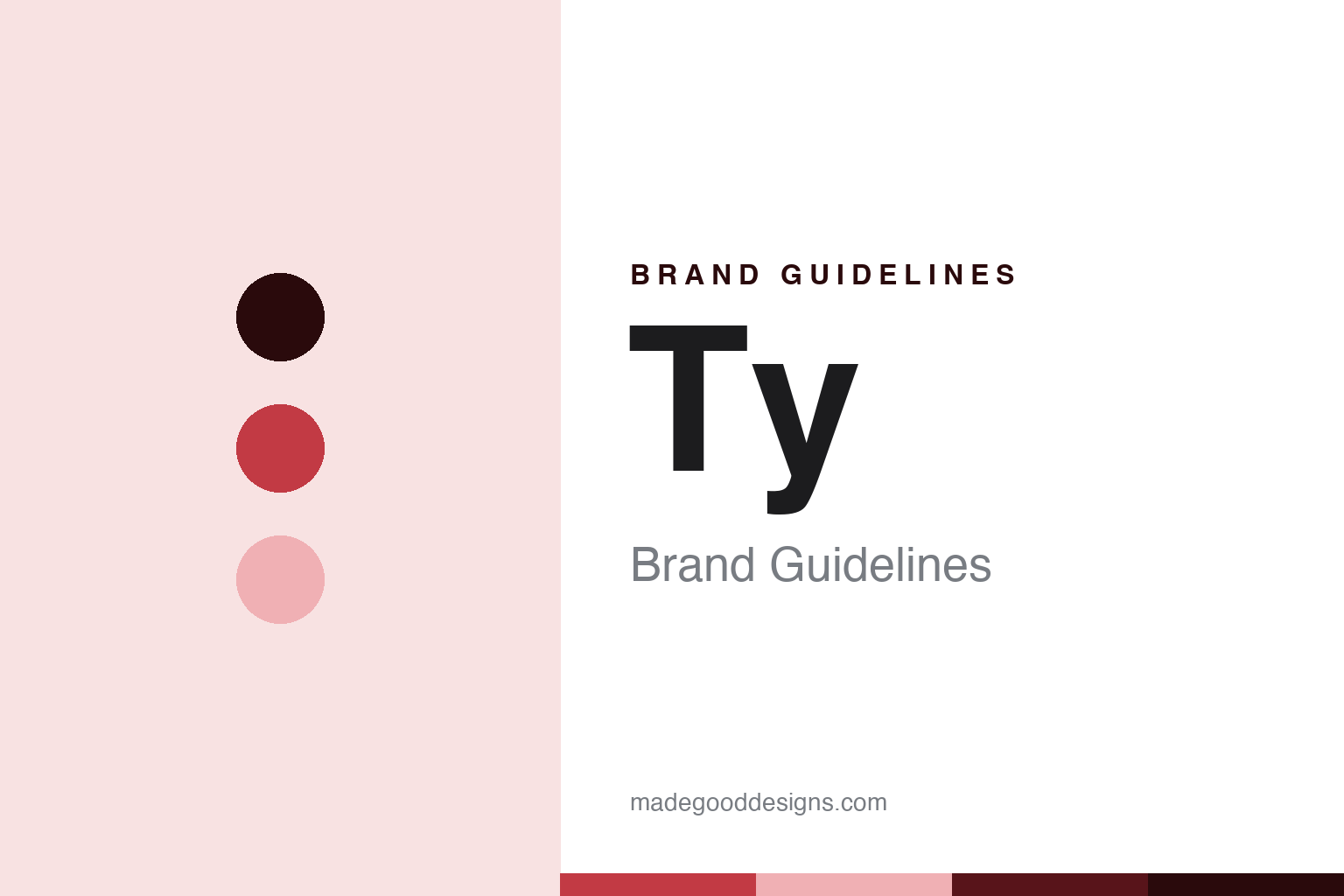
Ty Brand Guidelines
The Beanie Baby billionaire.
Aa
Two constants: a heart-red palette and a collector-sans register. Abstract homage — not a Ty product or mark; no Beanie, heart tag or logo is reproduced.
The Beanie Baby billionaire
Ty is the maker of the 1990s Beanie Babies craze — still solely owned by billionaire founder Ty Warner, who pleaded guilty to tax evasion in 2013.
Ty follows Squishmallows as the round’s craze node — the company behind the Beanie Babies phenomenon of the 1990s, still solely owned by the billionaire who founded it, whose story includes a documented tax-evasion plea. Its answer to a round about who owns the soft toys and where they are made is a founder one: a private company, wholly owned by one man, made in China.
Its identity is the Beanie Baby billionaire. The 1990s craze, the sole billionaire owner and the tax-evasion record are the story here. One craze, one owner. The Beanie Baby billionaire.
(Honest notes, so the founding, the ownership and a documented episode are framed accurately and precisely. Ty sells plush as its heroes — the Beanie Babies, the big-eyed Beanie Boos and the heart-shaped swing tag; we report its language as the brand’s own. On origin: Ty Inc. was founded in 1986 by H. Ty Warner, and the Beanie Babies debuted at the 1993 World Toy Fair and reached stores in early 1994, becoming a 1990s speculative collecting craze driven by retirements and scarcity, an early internet sensation. On headquarters: Oak Brook, Illinois, though a 2013 filing described the company as Westmont-based. On ownership: Ty Inc. is privately owned by its founder, H. Ty Warner, its sole owner and a billionaire, with no parent. On where it is made: China, reported and standard for the category. On a documented, dated, attributed episode: in October 2013 Ty Warner pleaded guilty to one count of federal tax evasion for hiding income in a secret Swiss account, concealing over three million dollars of foreign income; he agreed to a civil penalty of about fifty-three million dollars; in January 2014 a federal judge sentenced him to two years’ probation and community service and he paid about twenty-seven million dollars in back taxes; and in 2015 an appeals court upheld the probation, which we attribute to the Department of Justice, keep dated and bounded, and do not sensationalise. Its heart tag and Beanie names are IP we describe but do not reproduce; there is no official brand hex; these tones are an unofficial interpretation.)
Colour
Ty lives in a heart red. Click a swatch to copy the hex.
Ty’s identity is craze-making, founder-owned and China-made — a heart red, an ink, a pale rose, a deep crimson, and a paper. The palette leans heart red and deep crimson: a bold, collectible register that nods to the heart-shaped swing tag rather than reproducing it or a loud logo colour. It signals the Beanie Baby billionaire — craze-making, founder-owned and China-made. The honest caveat: with no official brand hex, and the red heart tag its protected mark, these values are a bold, unofficial interpretation, not first-party colours.
The lesson is a heart red signals a collectible, phenomenon identity. Ty’s world is the collectable Beanie. For designers, it is a reminder that a bold red and a pale rose can carry a collectable, craze-making brand — a bold tone held as an accent, not a reproduced tag. Because a bright hue can fail as small text, keep type dark and let the colour live in the accents, palette and band. The takeaways: date the founding to 1986 and the Beanie craze to 1993 and 1994; describe ownership as sole billionaire founder Ty Warner; say made in China; and keep the 2013 tax-evasion plea documented, dated, attributed and bounded.
Typography
The register is a collector sans — craze-making, founder-owned, China-made.
Ty’s identity carries a craze-making, founder-owned, China-made spirit — a phenomenon owned by one man. A collector sans captures the mood: clean, exact and a little nostalgic, the register of a 1990s collectable. Set in a heart-red palette, the collector sans feels bold and precise — exactly the personality Ty carries. It behaves like a made, tagged thing rather than a loud logo, mirroring a pile-band and a plush-nap. (Ty’s real products, the heart tag and the Beanie names are things we describe but do not reproduce, and the exact typeface is not ours to use.) Because it is not ours to use, the honest description is “a collector-sans brand,” shown here in a stand-in. The type behaves like the brand: craze-making, founder-owned and China-made.
Aa
A collector-sans brand — bold and precise. (Specimen set in Space Grotesk, a collector-sans STAND-IN; NOT the Ty logo, heart tag or Beanie designs.)
The soft-toy node
Ty stands for the Beanie Baby billionaire.
Ty sits sixth in the round as its craze node. A heart-red palette, a collector sans and a 1986 founding make one thing — the Beanie Baby billionaire — the whole identity: craze-making, founder-owned and China-made. The 1990s craze is the pitch, the sole billionaire owner is the frame, and the tax-evasion record is the documented complication. The point is a phenomenon owned by one man, in a round about who owns the soft toys and where they are made.
Put to work, the identity is the brand told straight, the ownership described and the episode kept precise. A brand in this spirit would date the founding to 1986 and the craze to 1993 and 1994, describe ownership as the sole billionaire founder, say made in China, and keep the 2013 tax-evasion plea documented and dated. A reader in this spirit would keep the facts right: Ty makes the Beanie Babies, Beanie Boos and the heart-tag plush; it was founded in 1986 by H. Ty Warner, the Beanie Babies debuting in 1993 and reaching stores in 1994; it is privately and solely owned by Ty Warner, a billionaire; it is made in China; and in 2013 Warner pleaded guilty to federal tax evasion, receiving probation in 2014, upheld in 2015. Ty sits after Squishmallows and before Moulin Roty. The honest editorial moves are to date the founding, to describe the ownership, to say the making, and to keep the episode precise.
For designers and brand-builders, Ty carries the soft-toy node: tell a phenomenon straight — and keep a documented episode precise. The lessons: a brand can be a cultural phenomenon owned by one person, here Ty and the Beanie Babies craze; a founding is dated to 1986 and H. Ty Warner, with the Beanie Babies debuting in 1993 and in stores in 1994; an ownership is described as the sole, private ownership of the billionaire founder; a making is said plainly as China; and a documented episode, Warner’s 2013 guilty plea to federal tax evasion for a secret Swiss account, the roughly fifty-three-million-dollar civil penalty, the 2014 probation sentence and its 2015 affirmation, is kept precise, dated, attributed to the Department of Justice and bounded rather than sensationalised. It is also a reminder to stay precise: Ty is the founder-owned, China-made maker of the Beanie Babies craze — with the palette here an unofficial interpretation and the heart tag and Beanie designs described rather than reproduced. The hook is that pairing: Ty made the Beanie Babies craze and its founder into a billionaire, the same founder who pleaded guilty to hiding millions in a secret Swiss account in 2013, and who still solely owns the company. Read that way, Ty is less a single Beanie than the Beanie Baby billionaire: craze-making, founder-owned, China-made. The lesson for a brand is that telling the phenomenon straight and keeping the documented episode precise reinforce each other, and dating the founding keeps the story earned. Ty made the-Beanie-Baby-billionaire the identity — proof that an honestly-told phenomenon can anchor a node.
Explore & save
Keep Ty’s identity on hand — save it to a board in the Made Good inspiration library.