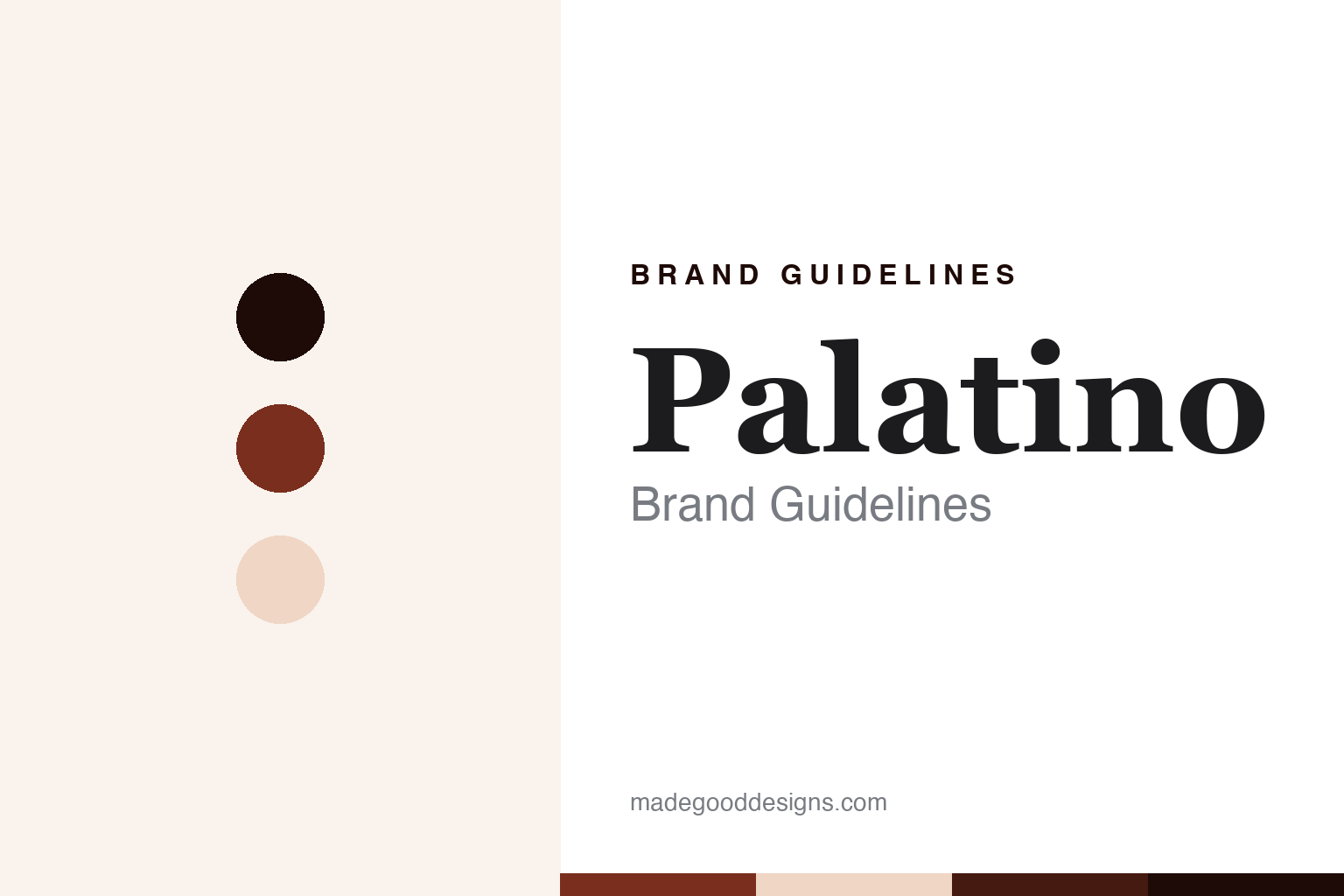
Valentine Clays Brand Guidelines
Dorset ball clay, blended in Stoke.
Aa
Two constants: a Valentine-pink palette and a Potteries-serif register. Abstract homage — not a Valentine product or mark; no clay, bag or logo is reproduced.
A father and son in 1979
Valentine is a family clay house of the second wave.
Valentine Clays dates itself to 1979: the company was, it says, “emerging onto the scene in 1979, by visionary founders, and father and son team, Alan and Alfred Ault.” Its homepage line is “Crafting Excellence Since 1979.” The present company, Valentine Clays Ltd, was incorporated in December 2002, and Companies House lists Alan Valentine Ault and Linda Ault as its controlling owners, with Hannah Ault — a director since 2015 — Keith Evans and Joanne Mellor among the directors. The company describes Hannah as “the Valentine family’s third generation.”
It trades from Valentine Way in Stoke-on-Trent, at the heart of the Potteries; its registered office is in nearby Newcastle-under-Lyme. Its online catalogue runs to more than 400 products, from clays and glazes to tools. It calls itself “one of the largest producers of clay globally” and a “World-leading manufacturer of clay” — its own claims, which we report as such.
Valentine arrived in the Potteries half a century after the district’s older clay houses. Potclays, a few miles away in Etruria, traces itself to a fireclay-mining company of 1932; Valentine is a family firm of the late 1970s that grew into a large clay supplier. Between them, the two companies show how much of the British studio-clay trade still comes from Stoke.
Colour
Named ingredients.
Valentine’s most unusual habit is to name where its materials come from. Its catalogue sells an AT powder described as “This Dorset ball clay,” and a quartz sand “Sourced from Lochaline based on the west coast shores of Scotland.” It sells a French stoneware, MJ Originale, “sourced from Moutiers en Puisaye in the renowned Burgundy region,” and describes its ES 170 Glacier Porcelain as made with “low iron-bearing China clays.” It even explains a substitution: its Cornish Stone — a feldspathic stone long used by British potters as a flux — is synthetic, because, it says, the “Cornish Stone mine closed 20 years ago.” Moutiers-en-Puisaye, for its part, lies in one of France’s historic stoneware districts, so even the imported clay comes with a pottery pedigree.
Its clay bodies carry names a potter can choose by: B17C stoneware, ES 109 speckled stoneware, Bistro Porcelain — sold as “Porcelain without the fear” — and PF 500, a salt-glaze body by the potter Peter Meanley made with, the company says, “four different ball clays.” Its LoStone, which it calls “The UK’s First Low Fire Stoneware,” comes with its own range of mid-fire glazes, for firings between 1080 and 1220°C. Its glaze pages link to advice on glaze and food safety.
For a buyer, those details are the brand. A clay house cannot design its raw materials; it can only choose, blend and disclose them, and Valentine discloses more than many.
Typography
Where ball clay comes from.
The Dorset ball clay in Valentine’s catalogue comes from one of Britain’s three small sources. The British Geological Survey says ball clay in the UK “is confined to three relatively small areas, all located in south west England” — the Bovey and Petrockstowe basins in Devon and the Wareham basin in Dorset, which contributed about a quarter of sales in 2010. The trade is large: UK ball-clay sales ran at about a million tonnes a year between 2005 and 2010, the BGS says, and 83 per cent was exported in 2008. In 2011 it named two producers, Sibelco and Imerys; Imerys says its Dorset operation at Wareham can be traced to the late 1700s, and that its two ball-clay sites today focus on “rare ball clays valued for their plasticity as a base material in the manufacture of sophisticated sanitaryware and white ceramic tableware.” Sibelco, the other producer, says its Devon ball-clay business can be traced back to 1710, and that its clays were “Originally used by pioneering UK potters such as Wedgwood and Spode.” We do not say which company supplies Valentine; the company names the county, not the miner.
Ball clay matters to potters because, the BGS says, it is “fine-grained, highly plastic” and fires “to a light or near white colour,” and it is “rarely used alone” — it is combined with china clay, silica sand and a flux. That is what a clay house does: blend. The BGS explains why: blending “is very important as it reduces the natural variability of the clays.” Britain’s china clay, the other main ingredient of white bodies, comes overwhelmingly from Cornwall: the BGS put the St Austell granite at about 88 per cent of UK kaolin sales in 2008, when Imerys was “by far the largest producer.” The name ball clay itself, a 1975 government dossier says, is “believed to be derived” from the old practice of cutting the clay in pits into cubes, or “balls,” of about 15 to 17 kilograms.
Staffordshire’s potters learned the value of ball clay early: the BGS records that it “became important during the late 17th and early 18th centuries when Staffordshire potters, notably Josiah Wedgwood, recognised the attributes of ball clay for the manufacture of whiteware pottery.” Valentine’s catalogue is a modern continuation of that trade.
Aa
A Potteries serif — the lettering of a Stoke clay house. (Specimen set in Fraunces, a serif STAND-IN; NOT the Valentine logo.)
Crafting Excellence Since 1979
A pink and plum mark for a clay house.
Valentine’s logo pairs a near-black plum with a bright pink — an unexpected palette for a clay house, and a memorable one in a trade dominated by earth tones. Its tagline is plain: “Crafting Excellence Since 1979,” which keeps the founders’ year in front of every customer. We could not find an explanation of the Valentine name in the company’s own pages, and we do not offer one.
For a design guide, Valentine shows how disclosure can be a brand asset. Naming Dorset, Lochaline and Burgundy in product copy tells potters that the company knows where its materials come from, and invites them to care about it too. It also sets an expectation: a clay house that names one source will be asked about the others, and the habit of answering is what builds trust in a material nobody can see inside the bag.
For this guide we use the pink and plum from the company’s logo file with a traditional serif. Nothing of the Valentine logo is reproduced.
Explore & save
Keep Valentine Clays’s identity on hand — save it to a board in the Made Good inspiration library.
Valentine identity set
Pin the Valentine-pink palette and the Potteries-serif register to your own board.