West of England Brand Guidelines
A Topsham club of 1870 that sailed to London, Luxembourg and Hong Kong.
Aa
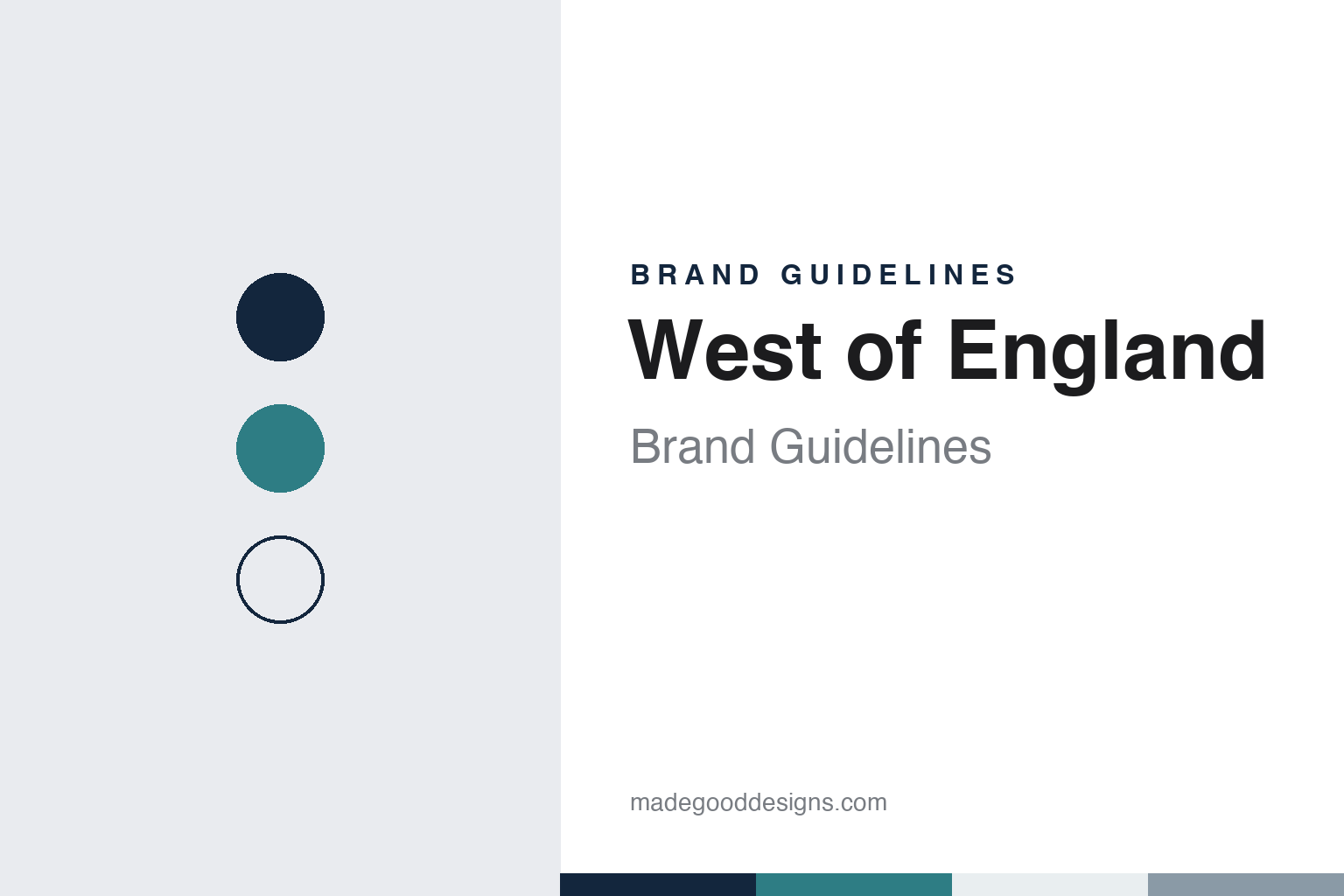
Two constants: a navy, teal and slate palette and a plain maritime sans register. Abstract homage — not a West of England asset or mark; no logo, flag or document is reproduced.
A Devon Club for Steamships
Holman, Topsham and the move to Lime Street.
West of England began in 1870 in the port of Topsham, in the south-west of England. The club’s own history says a mariner turned shipowner and shipbuilder, John Bagwell Holman, set up The West of England Steamship Owners Protection & Indemnity Association Ltd that year as a mutual for steam-powered ships and their third-party liabilities. The club places itself in a wider story: hull mutuals had spread around British ports in the nineteenth century, and protection clubs followed for risks that the Lloyd’s market would not write. The first of those, the club notes, was set up in 1855.
The Holman family ran the business through John Holman & Sons, then the club’s managers. In 1873 they moved the managers’ offices from Devon to Lime Street in the City of London, to be closer to the shipping and insurance markets, and the managers are still based in the City. In 1956 John Holman & Sons was replaced by a management company wholly owned by the association, an arrangement the club still describes on its website: the managers belong to the club, so there are no outside shareholders to satisfy.
The name points to the south-west of England, but the membership did not stay there. The club says Greek shipowners joined in growing numbers from the start of the twentieth century, and that after the Second World War the share of British owners fell while more foreign-flagged ships joined, first from Europe and later from North America, East Asia and the Pacific Rim. In 1969 the club moved its domicile to Luxembourg, where its formal name today is the West of England Ship Owners Mutual Insurance Association. Both the club and its managers are authorised by the Luxembourg insurance regulator, the Commissariat aux Assurances, the club says.
Colour
Piraeus, Hong Kong and a group of thirteen.
Offices abroad came from 1969, when the club opened a claims office in Piraeus under the name PPD Holman; it became West of England (Hellas) in 1978. A Hong Kong office followed in 1982, which the club describes as the first such office in the territory and still the largest among the International Group clubs there. It added service centres in Singapore in 2017 and New York in 2018, and its website now lists London, Piraeus, Hong Kong, Singapore and New York as its regional hubs. The site also runs in English and Chinese.
West of England is one of the thirteen members of the International Group of P&I Clubs, which share larger claims through a pool and buy reinsurance together. The club says the group covers around 90 per cent of the world’s ocean-going tonnage, and that it insures over 4,800 ships of about 100 million gross tonnes, according to its website in November 2026. Its standard range covers mutual P&I, fixed-premium P&I, defence, hull, charterers and traders, offshore and renewable energy, and war risks, with extended covers for towage, deck cargo and crew.
Diversification has a dated step. In January 2025, Reinsurance News reported that West had fully acquired Nordic Marine Insurance, a fixed-premium specialist in delay insurance, loss of hire and hull and machinery, after first taking a significant stake in 2020. Nordic keeps its own brand and its teams in Stockholm and Piraeus, and it continues to manage West’s hull book, the report said, quoting Tom Bowsher as Group CEO of the West Group.
A rating agency release carried by Business Wire on 27 October 2026 affirmed the club’s financial strength rating of A- (Excellent) with a stable outlook, describing West as a specialist marine insurer focused on mutual P&I with growing diversification into other marine lines.
Typography
How P&I clubs present themselves.
P&I clubs are mutual associations: the shipowners and charterers they insure are also their members, and so, in effect, their owners. Store norske leksikon, the Norwegian encyclopedia, dates the first British club to 1855; clubs such as Gard and Skuld are members of the International Group of P&I Clubs, whose members work together on reinsurance and shared industry matters. Their core product is liability cover, written alongside hull cover and freight, demurrage and defence cover.
Because their customers are their members, the clubs present themselves less like retailers and more like institutions. Their websites are built around working documents: rules and statutes, guidance to the rules, member circulars, lists of entered vessels, correspondents and ports, and office maps that show where claims handlers sit, from Oslo and London to Piraeus, Hong Kong and Tokyo. Annual reports and renewal pages carry the financial side of the story, and loss-prevention guides, posters and articles are offered to members as guidance.
Photography in this category tends to show ships, harbours and ports as the clubs publish them, while names and symbols lean on the sea and on long histories. Some clubs explain their marks in public: Skuld, for example, sets out its anchor, its horizon line and its red on its own website. Where a club publishes no such details, and in every case for colour values, the palettes in these guides — navies, teals, greys, reds and golds — are our own interpretations rather than official codes.
This guide sets out what can be checked about each club: when and where it was founded, how it is owned and governed, what it says about its cover and its offices, and which mergers or acquisitions have shaped it, with dates. Claims that rest only on a club’s own pages are marked as the club’s own word.
Aa
A plain maritime sans — the register of a member club that writes for shipowners in two languages. (Specimen set in Libre Franklin, a sans STAND-IN; NOT the West of England logo.)
West P&I
From West of England to West.
The long name survives in law, but the club’s public face has shortened. Its website title tags read West P&I Club, news reports quote “West” and “the West Group”, and the October 2026 rating release used “West or the Club” as its short form, while the website footer still reads West of England. For a guide, that gives two registers to keep apart: the formal association name for legal and regulatory pages, and the short West name for news, products and service pages.
The website gathers the club’s publishing in one place. A News & Resources section holds bulletins, guides, reports, brochures and P&I guidelines, a notice-to-members series, sanctions pages by country, a short “In a nutshell” series on defence questions and Waypoints, the club’s magazine. Its Neptune portal, which members, brokers and correspondents can register for, is described as a map-based service showing storm systems, sanctions and maritime security charts, port information and the club’s own claims data for each port. A link to WestNet sits beside it in the site’s top bar.
The name also needs care. The West of England Combined Authority is a separate public body, and many unrelated companies on the UK register use the words West of England. Companies House lists the club under the full West of England Ship Owners name, including the Luxembourg association, which is the clearest way to tell them apart.
For a design guide, West of England shows how a club named after a home port can keep that name for its legal identity while trading on a short, international one. Compare NorthStandard, a club formed by a 2023 merger, and Steamship Mutual, another London-managed club. For this guide we use a harbour navy, an estuary teal and a slate grey with a sans, an unofficial interpretation; no product or logo is reproduced.
Explore & save
Keep West of England’s identity on hand — save it to a board in the Made Good inspiration library.
West of England identity set
Pin the West of England navy, teal and slate palette and the plain maritime sans register to your own board.