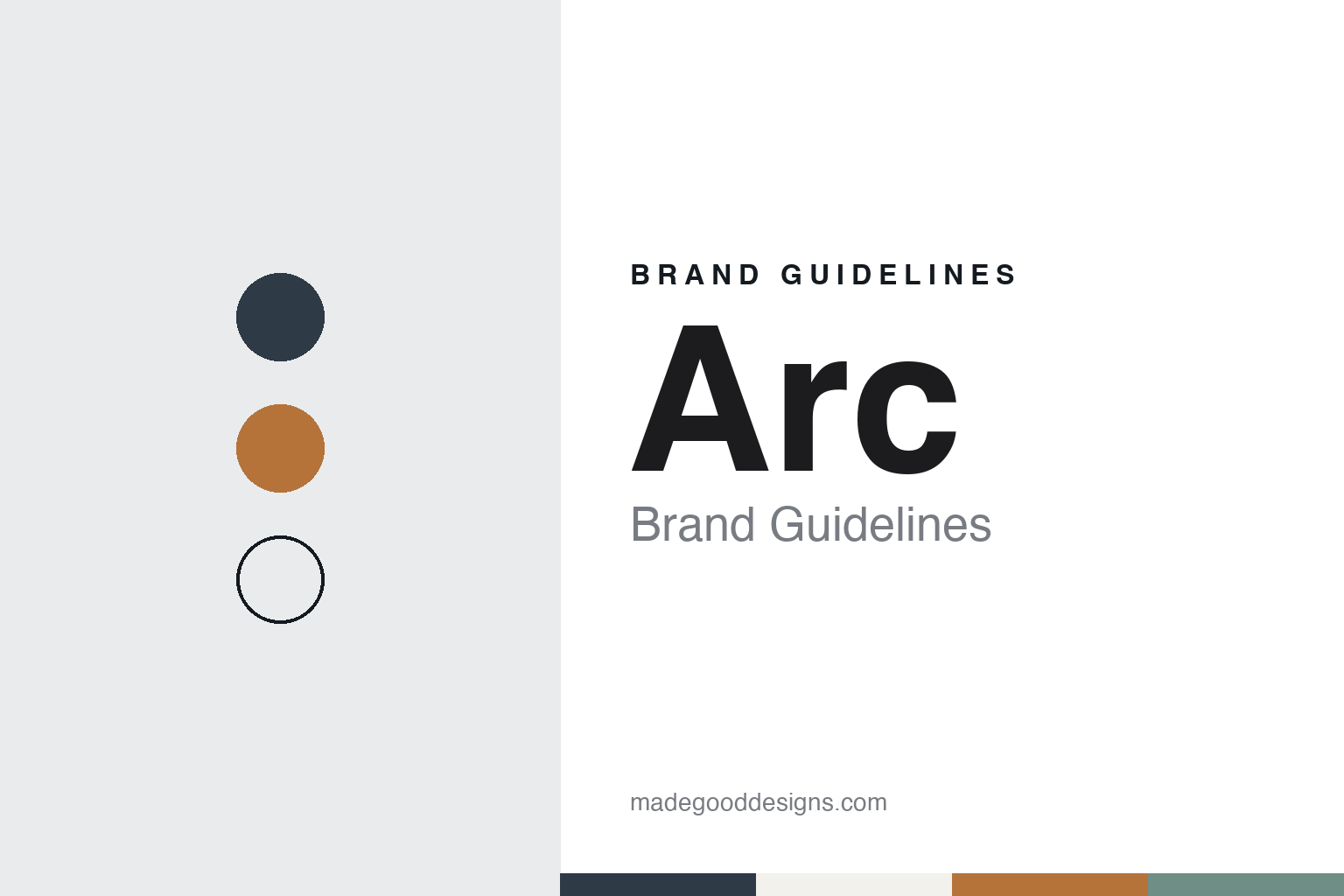
Arc Brand Guidelines
The Arques glassworks of 1825 and its family of tableware brands.
Aa
Two constants: an Arques slate, opal and amber palette and a geometric sans register. Abstract homage — not an Arc product or mark; no glass, logo or label is reproduced.
Arques, 1825
A glassworks at Arques, then a family business.
Arc’s story starts in 1825 at Arques, in the Pas-de-Calais, where Alexandre des Lyons de Noircarme founded a glassworks under the name Verrerie des Sept Écluses, French and English Wikipedia say. In April 1826 it joined forces with the Carpentier-Mancel glassworks, set up in 1823 at Saint-Martin-au-Laërt by Charles Carpentier, who ran the combined works. The decades that followed were a series of changes of hands: Allard and Ladey took over in 1853, and the works passed to Ladey et Bléchet in 1863, later renamed Bléchet et Collette and then Bléchet et Compagnie. Production stopped in April 1887.
It restarted in 1893, after the founding of the Société anonyme Verrerie et Cristallerie d’Arques in November 1892. Prudent Avot bought the works in July 1897 and made Georges Durand, who had spent three years at the Sèvres crystal works, its director. Durand became a partner in Avot Durand in 1900 and took sole control in December 1916, founding G. Durand et Cie. From the 1930s until 2015 the company stayed in the hands of the Durand family, French Wikipedia says.
The modern factory came from Georges Durand’s second son, Jacques Durand, who joined in 1927. In 1930 he travelled to the United States to study glassworks already fitted with tank furnaces and automatic machines; the first tank furnace and the first presses were installed at Arques in 1934. The sources used for this guide do not say how the company operated during the occupation of 1940–1944. After the war Jacques Durand, co-owner with his father from 1946, used low-interest Marshall Plan loans to equip the plant with American-designed machines. By 1950, Wikipedia says, the works made 15,000 tonnes of glass a year with 993 staff.
Colour
Five brand names from one factory town.
Arc’s identity is a set of brand names rather than one. On the consumer side, French Wikipedia lists Luminarc, created in 1948 as the group’s first brand, for everyday clear or decorated glass tableware; Arcopal, launched in 1958, for tableware in opal glass; and Cristal d’Arques Paris, created in 1968, which it calls the group’s emblematic brand, with collections inspired by the French art de vivre. For professionals there is Arcoroc, set up in 1958 for glassware and crockery made for intensive use in bars, hotels, restaurants and canteens, and Chef & Sommelier, created in 2008 for hotel-restaurant glassware, tableware and cutlery. AFP, in March 2026, named four main brands — Luminarc, Cristal d’Arques Paris, Arcoroc and Chef & Sommelier — alongside retailers’ own-label ranges.
The products grew out of automation. From 1958, French Wikipedia says, a stemmed “ballon” glass was made automatically at Arques; English Wikipedia describes it as the first stemware produced automatically. By 1980 the glassworks made 250,000 tonnes of glass a year and employed 9,000 people in France, most of them at Arques; French Wikipedia traces the workforce from 315 in 1930 to 11,514 in 1990. In 2019, after two years of research, Arc introduced two new glasses, a culinary opal and a coloured opal, which made through-coloured opal collections possible.
Production also spread abroad. Durand Glass Manufacturing Company was set up at Millville, New Jersey, in 1979 and began production in 1982; a plant was created at Nanjing in China in 2003, another was acquired in Ras al-Khaimah in the United Arab Emirates in 2004, and a third followed in Russia in 2011, Wikipedia says. AFP described the group in March 2026 as having three factories outside France, in the United States, China and the Emirates.
The newest ranges belong to the Verrerie Arc 1825 era. In September 2026 ici, the Radio France network, reported two tasting-glass lines presented as premium, Mylla and Galéa, made in extra-thin cristallin glass with a thinner rim and a slimmer stem than the company’s usual cristallin glasses, and developed with restaurant professionals.
Typography
How tableware makers present themselves.
Tableware and glassware makers mostly present themselves through the table rather than the logo. Their catalogues and websites lean on collection photography: a single glass against a plain ground, a stack of plates, or a full place setting with cutlery, napkins and food. The setting does much of the work, signalling whether a range is meant for a family kitchen, a formal dinner or a busy restaurant, and the same pieces are often shown in more than one of those roles.
Names carry a large share of the identity. Ceramic makers mark the underside of a plate with a backstamp that gives the maker’s name, often with a pattern name and a place, and collectors and buyers use that mark to identify a piece. Patterns and shapes are usually given their own names, so that a single company may sell dozens of named ranges, each with its own photography and description, while the company name stays small.
Many makers also split their identity between home and trade. Arc, for example, keeps separate brand names for consumer tableware and for bars, hotels and restaurants, according to French Wikipedia. Hospitality catalogues tend to be practical documents, organised by shape, capacity and use, with product codes and packing details, while the consumer side is closer to a lifestyle magazine. Some makers add their own shops: Paşabahçe, the Turkish glassware brand, runs a chain of stores under its own name.
Behind the products sits a corporate layer. Company pages describe factories, founding dates and owners, and in this sector those stories often involve old works, family control, takeovers and court-supervised restructurings, as the profiles in this guide show. For a designer, the useful lesson is how these makers keep a recognisable voice across a long range of named collections, a trade catalogue and a corporate history at once.
Aa
A geometric sans for a factory-town brand family. (Specimen set in Jost, a sans STAND-IN; NOT the Arc logo.)
Arc
Receivership in 2026 and a name that carries the founding year.
The name and the owners changed in the 2000s. The Verrerie Cristallerie d’Arques became Arc International, and from the early 2000s the group faced difficulties: a first redundancy plan led to almost 3,000 voluntary departures from Arques between 2004 and 2008, and by the end of 2012 the site’s workforce had halved from its 2004 level, Wikipedia says. In 2014 Arc sold Arc International Cookware, which made Pyrex products, to the American investment fund Aurora Capital Group; an agreement announced with HIG Capital France in August 2014 did not go through. On 16 March 2015 the Boulogne-sur-Mer commercial court approved a takeover by the American firm Peaked Hill Partners, ending the Durand family’s control.
Pressure returned. In September 2022, French Wikipedia says, Arc announced it would shut three to five furnaces over the winter as energy costs rose and demand for tableware fell, and placed 1,600 staff on short-time work. In early January 2026 Arc France was placed in redressement judiciaire, a French court-supervised receivership, AFP reported. On 20 March 2026 the commercial court in Tourcoing approved the only bid, from a member of the Durand family that had run the company for a century until 2015. The plan, AFP said, involved 704 job cuts at Arques, which then employed 3,500 people, and the business was renamed Verrerie Arc 1825. French Wikipedia adds that the former company, Arc France, was placed in liquidation on 5 May 2026, after the sale. In September 2026 ici reported that the new owner held all of the shares and that the plan set a ceiling of 2,700 staff at Arques.
For a design guide, Arc shows how one factory town can carry several brand voices at once — an everyday consumer name, an opal-glass line, a Paris-named label and two professional ranges — and how a founding year can become part of the company name itself. Compare Duralex, another French glass maker, and Bormioli Rocco, an Italian glassware group with its own professional and household ranges. For this guide we use Arques slate, opal white, furnace amber and glass green with a geometric sans, an unofficial interpretation; no product or logo is reproduced.
Explore & save
Keep Arc’s identity on hand — save it to a board in the Made Good inspiration library.
Arc identity set
Keep the Arques slate, opal and amber palette and the geometric sans register for your own reference.