Paşabahçe Brand Guidelines
Şişecam’s Beykoz glassworks of 1935 and the stores that carry its name.
Aa
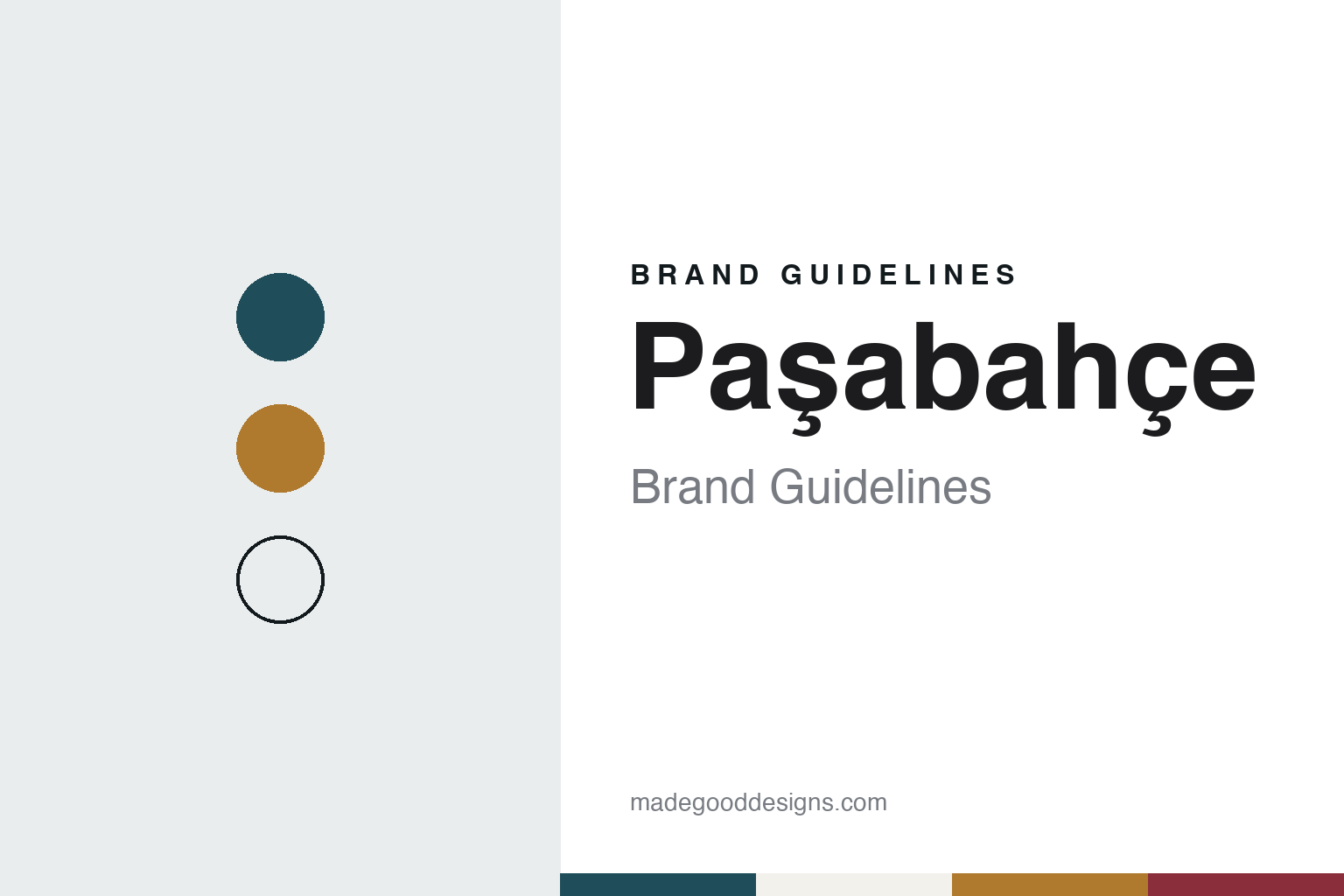
Two constants: a Bosphorus teal, tea amber and garnet palette and a bookish serif register. Abstract homage — not a Paşabahçe product or mark; no glass, logo or store sign is reproduced.
Pasha’s garden
A glass village in Beykoz and a works of 1935.
Paşabahçe takes its name from a neighbourhood of Beykoz, in Istanbul, a village historically known for its glass furnaces, English Wikipedia says; the name means “pasha’s garden.” Turkish Wikipedia records earlier bottle making there: a large bottle factory set up by Modyanu in 1885, which closed after a short time.
The present business began with a decision of Turkey’s Council of Ministers on 17 February 1934, taken at Mustafa Kemal Atatürk’s instruction, which tasked Türkiye İş Bankası (İşbank) with developing a glass industry, Turkish and English Wikipedia say. The foundation stone of the Paşabahçe works was laid in 1934 by Prime Minister İsmet İnönü and economy minister Celâl Bayar. The company Türkiye Şişe ve Cam Fabrikaları Anonim Sosyetesi was founded in 1935, and the factory began production on 4 July 1935. At its opening, English Wikipedia says, it employed about 400 people and could make 25,000 glass bottles a day.
The first household glassware was hand-made soda glass. Machine production came in 1955, which Turkish Wikipedia describes as the first stage of the company’s automated production, and heat-resistant glassware followed in 1974. In 1957 two shops opened in Istanbul and Ankara to sell glassware directly — the start of today’s Paşabahçe store chain. Exports began in 1960 with a shipment to the United States, Turkish Wikipedia says; English Wikipedia dates the start of the export business to 1961.
The original works did not survive as a factory. Production at the Beykoz plant ended in January 2002, and the site was discussed for years as a hotel and marina project; the demolition of warehouse and staff-housing buildings was reported in 2016, Turkish Wikipedia says. In February 2026 Şişecam filed a notice on Turkey’s public disclosure platform about selling plots it held at İncirköy, in Paşabahçe, Yeni Birlik reported; the sale was not completed at the time of writing.
Colour
Machine-made, hand-made and sold in its own shops.
Paşabahçe is the household glass brand of Şişecam, the present-day name of Türkiye Şişe ve Cam Fabrikaları, and Turkish Wikipedia calls it the group’s most widely known brand. English Wikipedia describes a range of glass art, glassware, crystal and homeware, with many designs inspired by Ottoman-era glasswork. Şişecam’s glassware business, it says, serves household, catering and industrial customers with more than 20,000 products, made both by automated lines and by hand, and sells in 140 countries. Its sister brands include Nude, Borcam and Zest Glass.
The factories are spread out. In Turkey, Turkish Wikipedia lists automated soda-glass, crystal-glass and heat-resistant glass production at Kırklareli, Mersin and Eskişehir, and hand-made soda-glass and crystal pieces at Denizli. Abroad, Paşabahçe became a producer in 2003 by buying the Russian glassware factory Posuda, and in mid-2004 began production in Bulgaria through Trakya Glass Bulgaria; English Wikipedia adds Egypt to the list of countries where Şişecam makes glassware.
The shops are part of the identity. As of June 2024, English Wikipedia counts 50 Paşabahçe stores, 47 of them in Turkey and 26 in Istanbul, including branches at Istanbul Airport and on Bağdat Avenue, with two in Qatar and one in Riyadh. In April 2024 a store opened in the Atatürk Cultural Center near Taksim Square that, unlike the other branches, sells only hand-made products.
The brand also appears at official tables. In November 2026, Ekonomi Gazetesi reported, Şişecam said Paşabahçe and Nude glass would be used for drinks service at the COP31 United Nations climate conference, including the gala dinner, the VIP areas and servings of Turkish tea and coffee, with Paşabahçe represented by products that, in the company’s words, reflect Turkish hospitality culture.
Typography
How tableware makers present themselves.
Tableware and glassware makers mostly present themselves through the table rather than the logo. Their catalogues and websites lean on collection photography: a single glass against a plain ground, a stack of plates, or a full place setting with cutlery, napkins and food. The setting does much of the work, signalling whether a range is meant for a family kitchen, a formal dinner or a busy restaurant, and the same pieces are often shown in more than one of those roles.
Names carry a large share of the identity. Ceramic makers mark the underside of a plate with a backstamp that gives the maker’s name, often with a pattern name and a place, and collectors and buyers use that mark to identify a piece. Patterns and shapes are usually given their own names, so that a single company may sell dozens of named ranges, each with its own photography and description, while the company name stays small.
Many makers also split their identity between home and trade. Arc, for example, keeps separate brand names for consumer tableware and for bars, hotels and restaurants, according to French Wikipedia. Hospitality catalogues tend to be practical documents, organised by shape, capacity and use, with product codes and packing details, while the consumer side is closer to a lifestyle magazine. Some makers add their own shops: Paşabahçe, the Turkish glassware brand, runs a chain of stores under its own name.
Behind the products sits a corporate layer. Company pages describe factories, founding dates and owners, and in this sector those stories often involve old works, family control, takeovers and court-supervised restructurings, as the profiles in this guide show. For a designer, the useful lesson is how these makers keep a recognisable voice across a long range of named collections, a trade catalogue and a corporate history at once.
Aa
A bookish serif for a brand named after a place. (Specimen set in Lora, a serif STAND-IN; NOT the Paşabahçe logo.)
Paşabahçe
An İşbank-backed group and a brand named after a district.
Ownership runs through Şişecam. English Wikipedia describes the group as listed on Borsa Istanbul and part of the BIST 100 index, with about half of its shares owned by İşbank, the bank that founded it; it reports 43 plants in 14 countries in the 2020 financial year and names Şişecam as owner of the Paşabahçe store chain. In 2014 Şişecam sold a 15.45 percent stake in Paşabahçe to the European Bank for Reconstruction and Development, and in November 2019 it told Turkey’s public disclosure platform that it had decided to use its option to buy back 14.85 percent, Bigpara reported.
The brand name carries a place and a date. The same word names an Istanbul neighbourhood, the 1935 factory that once stood there, the household glass made today in other cities and countries, and the shops that sell it. Turkish Wikipedia describes the old works as a building that reflected the architecture of the early Republic and the social life of the district, and records calls from architects and others for it to be kept as industrial heritage. The site covered about 117,000 square metres, and many of its workers came from families living around it. When the factory was planned, the same article says, Turkey used about 3,500 tonnes of glass a year, and the new works was meant to make about 3,000 tonnes of it at home.
For a design guide, Paşabahçe shows how a glassware maker can let one place name hold together factory history, Ottoman-inspired designs, hand-made pieces and a chain of its own stores. Compare Arc, the French glassworks of Arques, and Krosno, the Polish glass maker. For this guide we use Bosphorus teal, clear glass, tea amber and garnet with a serif, an unofficial interpretation; no product or logo is reproduced.
Explore & save
Keep Paşabahçe’s identity on hand — save it to a board in the Made Good inspiration library.
Paşabahçe identity set
Keep the Bosphorus teal, tea amber and garnet palette and the bookish serif register for your own reference.