Crisa Brand Guidelines
Monterrey glassware since 1936, owned by Libbey since 2006.
Aa
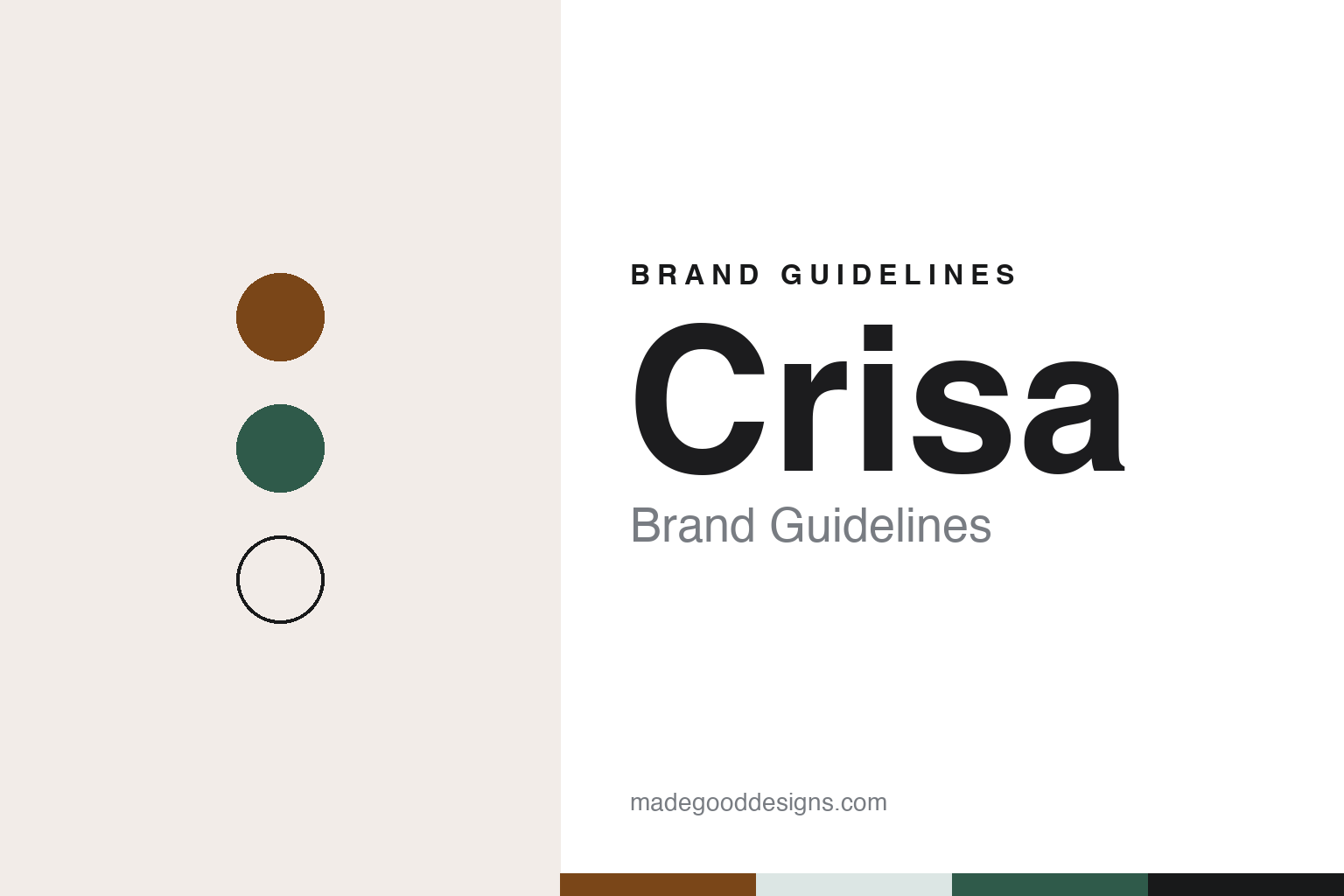
Two constants: an amber, glass green and opal palette and a warm serif register. Abstract homage — not a Crisa product or mark; no glass, logo or label is reproduced.
A Monterrey glassworks
Born inside Vidriera Monterrey.
Crisa is a glassware maker of Monterrey, in the Mexican state of Nuevo León, and since 2006 it has been wholly owned by the American glass company Libbey. Libbey’s Mexican business tells the story on its own history page: a Monterrey family founded Crisa in 1936 as part of Vidriera Monterrey, the glass company that later became Vitro. Its first plant, known as Planta C, began work in 1938; the company says production was by hand at first and the range ran to about fifty items.
The 1940s brought new plants, the timeline says. A second works, Planta M, was built in 1940 around a small furnace making tumblers; the first continuous furnace followed in 1942, and by 1948 there were three. The first factory shop opened in the 1950s, and in 1956 Crisa bought the Monterrey dinnerware plant of Cristales Mexicanos, known as Crimesa. Libbey Mexico adds that Crisa glasses have appeared in classic Mexican films.
Ownership changed in two steps. Libbey bought 49 percent of Crisa in 1997 and took full ownership in 2006, according to the same timeline, and Libbey’s US website lists Crisa among the businesses it has acquired over the past 25 years, alongside World Tableware, Syracuse Tableware and Crisal. Between 1992 and 1994, the timeline says, Crisa also had a strategic alliance with Corning.
Libbey itself traces its roots to the New England Glass Company, founded in 1818 in Cambridge, Massachusetts. It moved to Toledo, Ohio, in 1888, was part of Owens-Illinois from 1935 until it became independent in 1993, and went through a Chapter 11 reorganisation in 2020, emerging that October, English Wikipedia says.
Colour
Opal glass, ovenware and crystal.
Crisa built its name on a family of house brands. The timeline says Crisa and Termocrisa came first, for glass and opal glass respectively; Pyr-o-Rey ovenware followed in 1962; and in 1975 a new plant, K2, began making lead crystal under the Kristaluxus name. Libbey Mexico now sells under three names, Libbey, Crisa and Pyr-o-Rey, and arranges its range by channel: foodservice, the home and industrial customers.
Colour and decoration came early. The company says a champagne tint was the first colour it developed for a dinner service, Lustre Shell, which did well in Middle Eastern markets and grew to sets of up to 97 pieces. In 1966 Crisa built machines to decorate plates and tumblers, and in the 1990s it added equipment able to print in six to eight colours. It began showing at the Ambiente trade fair in Frankfurt in 1972, and in 1987 opened a distribution centre, Intercrisa. In 1988 it began automatic production of glass jars for kitchen blenders, the timeline says.
The Monterrey plants remain central. In April 2013 the Monterrey broadcaster Multimedios reported that Crisa Libbey México would build and enlarge a furnace at its Monterrey plant, raising production capacity by 50 percent, and described that furnace as the largest and most important in the Libbey business; the company said its products reached more than 60 countries. In July 2019 El Financiero described Libbey México, based in Monterrey, as the country’s main producer of glass and glassware for the home, and reported that it had set up a design laboratory at its Monterrey plant to develop glass for people who eat and drink away from home, such as the Drink Up & Go bottle with silicone sleeves. Libbey’s US site now calls it the Libbey DesignLab in Monterrey.
The 2019 report also gave a rare account of how the company designs. Its marketing director told El Financiero that the laboratory had begun about two years earlier, when the company started adding deeper consumer research and global trend studies to its work; before that, she said, it had innovated mainly through finishes, colours and shapes. Designers work with packaging, mould and plant teams, and a new product takes at least six months, according to the report.
Typography
How tableware makers present themselves.
Tableware and glassware makers mostly present themselves through the table rather than the logo. Their catalogues and websites lean on collection photography: a single glass against a plain ground, a stack of plates, or a full place setting with cutlery, napkins and food. The setting does much of the work, signalling whether a range is meant for a family kitchen, a formal dinner or a busy restaurant, and the same pieces are often shown in more than one of those roles.
Names carry a large share of the identity. Ceramic makers mark the underside of a plate with a backstamp that gives the maker’s name, often with a pattern name and a place, and collectors and buyers use that mark to identify a piece. Patterns and shapes are usually given their own names, so that a single company may sell dozens of named ranges, each with its own photography and description, while the company name stays small.
Many makers also split their identity between home and trade. Arc, for example, keeps separate brand names for consumer tableware and for bars, hotels and restaurants, according to French Wikipedia. Hospitality catalogues tend to be practical documents, organised by shape, capacity and use, with product codes and packing details, while the consumer side is closer to a lifestyle magazine. Some makers add their own shops: Paşabahçe, the Turkish glassware brand, runs a chain of stores under its own name.
Behind the products sits a corporate layer. Company pages describe factories, founding dates and owners, and in this sector those stories often involve old works, family control, takeovers and court-supervised restructurings, as the profiles in this guide show. For a designer, the useful lesson is how these makers keep a recognisable voice across a long range of named collections, a trade catalogue and a corporate history at once.
Aa
A warm serif for a mid-century glass name. (Specimen set in Fraunces, a serif STAND-IN; NOT the Crisa logo.)
Crisa
A house brand inside Libbey Mexico.
Today Crisa is presented as one of Libbey Mexico’s brands rather than as a separate company. Its products appear on Libbey Mexico’s website, libbey.mx, which also lists Crisa factory shops; the timeline records a new factory shop opening in Monterrey in December 2013. Several other web addresses built on the Crisa name belong to unrelated businesses. Alongside its shop, the Libbey Mexico site carries a section on the history of glass, with pages explaining what glass is, how it is made, its composition, its types and its recycling.
The timeline also sets out how the works changed after Libbey took full control: lean manufacturing was introduced in 2007, and by 2010 the company says it was making more than a thousand different items. Libbey’s 200th anniversary in 2018 was marked with regional events for staff in Mexico as well, the page says.
For a design guide, Crisa shows how a regional glassworks can keep its own name, and its family of sub-brands, inside a larger group: opal glass, ovenware and tumblers sold under its own family of names. Compare Libbey, its owner since 2006, and Duralex, another maker of everyday glass tableware. For this guide we use an amber, a pale glass green and an opal white with a serif, an unofficial interpretation; no product or logo is reproduced.
Explore & save
Keep Crisa’s identity on hand — save it to a board in the Made Good inspiration library.
Crisa identity set
Pin the Crisa amber, glass green and opal palette and the warm serif register to your own board.