Jinya Brand Guidelines
A Tokyo ramen name turned Los Angeles franchise group.
Aa
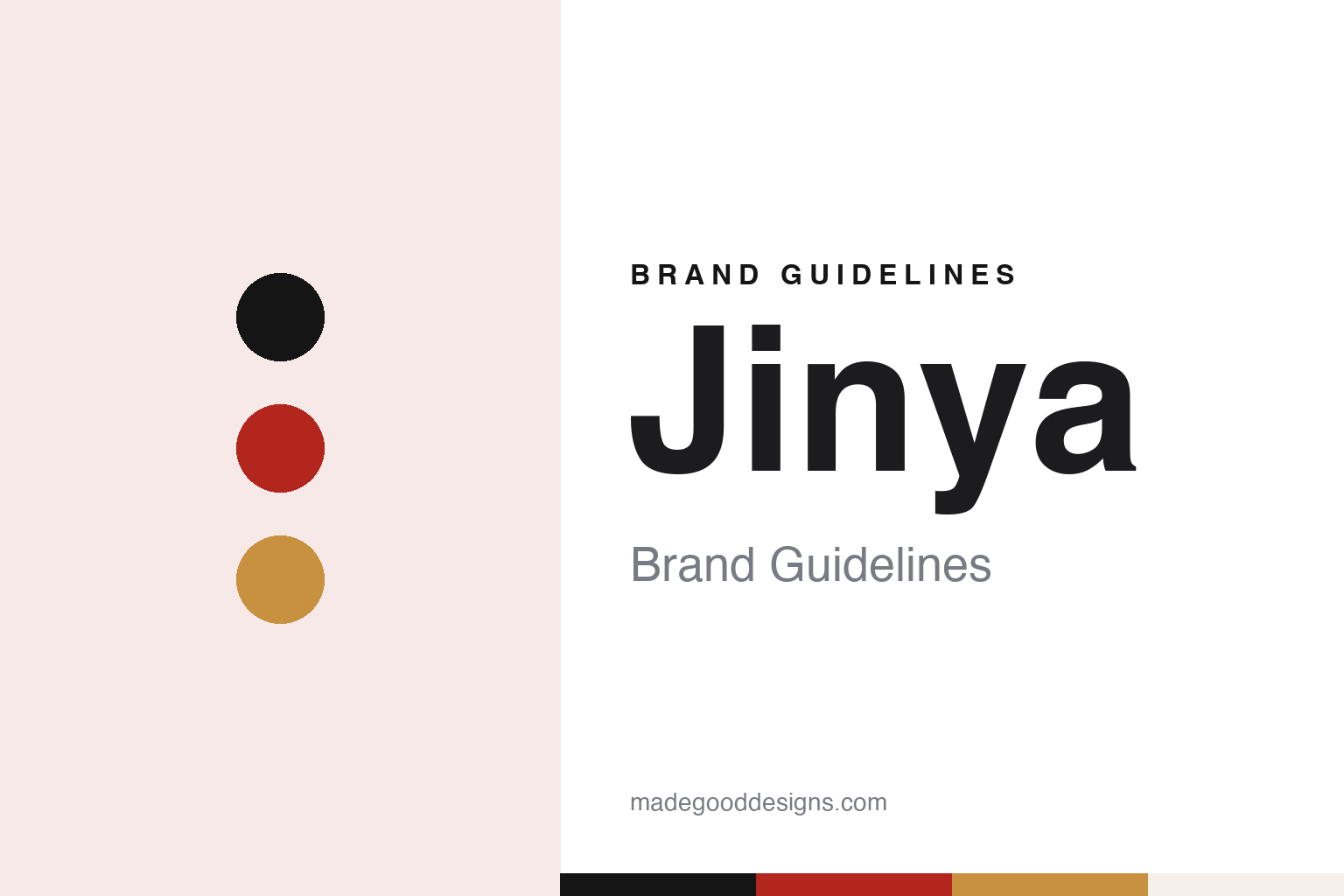
Two constants: a black, chilli red and broth amber palette and a condensed sans register. Abstract homage — not a Jinya product or mark; no bowl, logo or shop front is reproduced.
Tokyo to Studio City
A family restaurant name carried across the Pacific.
Jinya began in Tokyo in 2000. In August 2026 the Los Angeles Business Journal’s Inside The Valley reported that Tomonori “Tomo” Takahashi, the son of a restaurateur, opened the first Jinya Ramen Bar in Tokyo that year, and came to Studio City, in Los Angeles, in 2010 to bring a piece of Japan to the United States. English Wikipedia gives the same two dates: founded in Tokyo in 2000, in the US market from 2010.
The company’s own account fills in the family story. Its About page says Takahashi’s father ran an izakaya-style restaurant called Jinya, built on three values — good food, reasonable prices and access for everyone — and that his son opened the Tokyo restaurant to carry that on. The company says the name refers to a samurai who stayed close to his community and owned a small property; that is its own explanation of the word. It also says that when Takahashi arrived in the United States in 2010 the ramen he knew from home was hard to find, and so he decided to make it himself in California.
The US business grew from that Los Angeles base. English Wikipedia describes Jinya Ramen Bar as a chain based in Los Angeles, with restaurants across the contiguous states, Washington, DC and Hawaii, and in Canada in Burnaby, Calgary, Edmonton and Vancouver. Inside The Valley placed the corporate headquarters of Jinya Holdings, Inc. in Woodland Hills, Los Angeles, and reported that the group ran more than 73 ramen bars across 23 states and in Canada. The Jinya Holdings name also appears in the footer of the ramen bar’s website.
Colour
Bowls named by broth and colour.
The menu is built around broth and noodles. The company says each of its six signature broths simmers for more than twenty hours, combining whole pork bones, chicken and vegetables with bonito, dashi, miso and kombu, and that its noodles go through an ageing process before they are cooked; those are its descriptions. The ramen list names bowls by broth and colour: Jinya Tonkotsu Black, a pork broth with garlic chips, garlic oil and kikurage mushroom; Premium Tonkotsu Red, with red chilli oil and a spice level the diner picks on a scale of one to ten; and Jinya Tonkotsu Original 2010, whose name carries the year the chain reached the United States. Chicken and vegetable broths sit beside them, among them the vegetarian Flying V, made with a vegetable miso broth.
The company presents the format as a social one. Its homepage speaks of a customisable menu, sleek interiors and a contemporary Japanese setting for gatherings of all ages. The menu runs well beyond noodles, to small plates, sushi, rice bowls and a bar list of Japanese-inspired cocktails, and the house line printed on its About page is “No ramen, no life.”
Restaurant design is part of the pitch to partners. The franchise page lists distinctive restaurant design among its selling points and names kaizen, the Japanese idea of continuous improvement involving everyone from the chief executive to the kitchen line, as a working principle, alongside core values it lists as authenticity, creativity, hospitality, integrity and teamwork. The company writes its own name in capitals, JINYA, throughout its website and menus, and names two of its tonkotsu bowls by colour, black and red.
Typography
Ramen chains and their shops.
Ramen chains often present themselves through the room before the bowl. Ichiran, the Fukuoka chain, seats diners in what Brooklyn Magazine described in October 2016 as “flavor concentration booths”: single stools walled on three sides, with each bowl passed through a rolled bamboo blind. Other chains publish photographs of wooden counters, open kitchens and shop fronts hung with noren, the short split curtains that hang across a doorway.
Menus are usually named plainly. Many chains build their offer around one broth and say so: tonkotsu, the pork-bone broth associated with Hakata in Fukuoka, or the shio, shoyu and miso styles. Bowls often carry short house names; Ippudo, for example, names its two main tonkotsu bowls after white and red circles. Order forms or ticket machines may let diners choose the firmness of the noodles, the richness of the soup and the amount of garlic or chilli sauce, as Ichiran’s paper form does.
The corporate side is published separately. Company pages list founding years, founders and head offices. Some chains are private firms run from their home city; others sit inside listed holding companies that also run udon, soba or other restaurant brands. Overseas branches can be run by the company itself or by local partners, and shop counts change, so the figures in this guide are given with their date and source.
Packaging has become a second shop front. Chains sell boxed noodles, sauces and cup noodles under their own names, some made for them by instant-noodle manufacturers, and those products carry the restaurant names and colours onto shop shelves far from the restaurants.
Aa
A condensed sans for colour-coded bowl names. (Specimen set in Oswald, a sans STAND-IN; NOT the Jinya logo.)
Jinya Holdings
A ramen bar at the centre of a restaurant group.
Franchising carries much of the growth. Restaurant Business reported on 30 June 2026 that the Jinya Ramen concept had grown to roughly 80 units across the country with the help of franchising. The company’s franchise page addresses multi-unit developers, asks for a minimum of three locations, and in November 2026 gave a figure of more than 75 restaurants open.
Around the ramen bar, Takahashi has built a family of other names. Inside The Valley listed the fast-casual chain bushi by Jinya, the ramen izakaya chain Robata Jinya and Jinya Saijo, which focuses on hand rolls and skewers, and reported that the group opened Jinya WeHo, its first fine-dining restaurant, in West Hollywood in April 2026. Restaurant Business reported that in the last week of June 2026 the group launched Mikan Bakery & More, a fast-casual Japanese-style bakery, in the Los Angeles neighbourhood of Encino. Its name is the Japanese word for a mandarin orange, a nod, the magazine said, to Takahashi’s home prefecture of Ehime, known in Japan as the “Citrus Kingdom.”
In the Inside The Valley interview, Takahashi described each of these concepts as a way of sharing a different part of Japanese food culture with American guests, from everyday ramen to neighbourhood bread. The ramen bar remains the flagship, and its name, written in capitals, is the thread that ties the group’s brands together: bushi, Robata and Saijo all carry Jinya in their names, while Mikan stands apart with a name of its own.
For a design guide, Jinya shows how a Tokyo restaurant name can become a North American franchise system with a family of sister brands. Compare Ippudo, another Japanese ramen chain, and Santouka, the Asahikawa chain with shops across the United States and Canada. For this guide we use a near-black, a chilli red and a warm broth amber with a condensed sans, an unofficial interpretation; no product or logo is reproduced.
Explore & save
Keep Jinya’s identity on hand — save it to a board in the Made Good inspiration library.
Jinya identity set
Pin the Jinya black, chilli red and broth amber palette and the condensed sans register to your own board.