Xebio Brand Guidelines
The Iwaki menswear shop that became a Kōriyama sports chain.
Aa
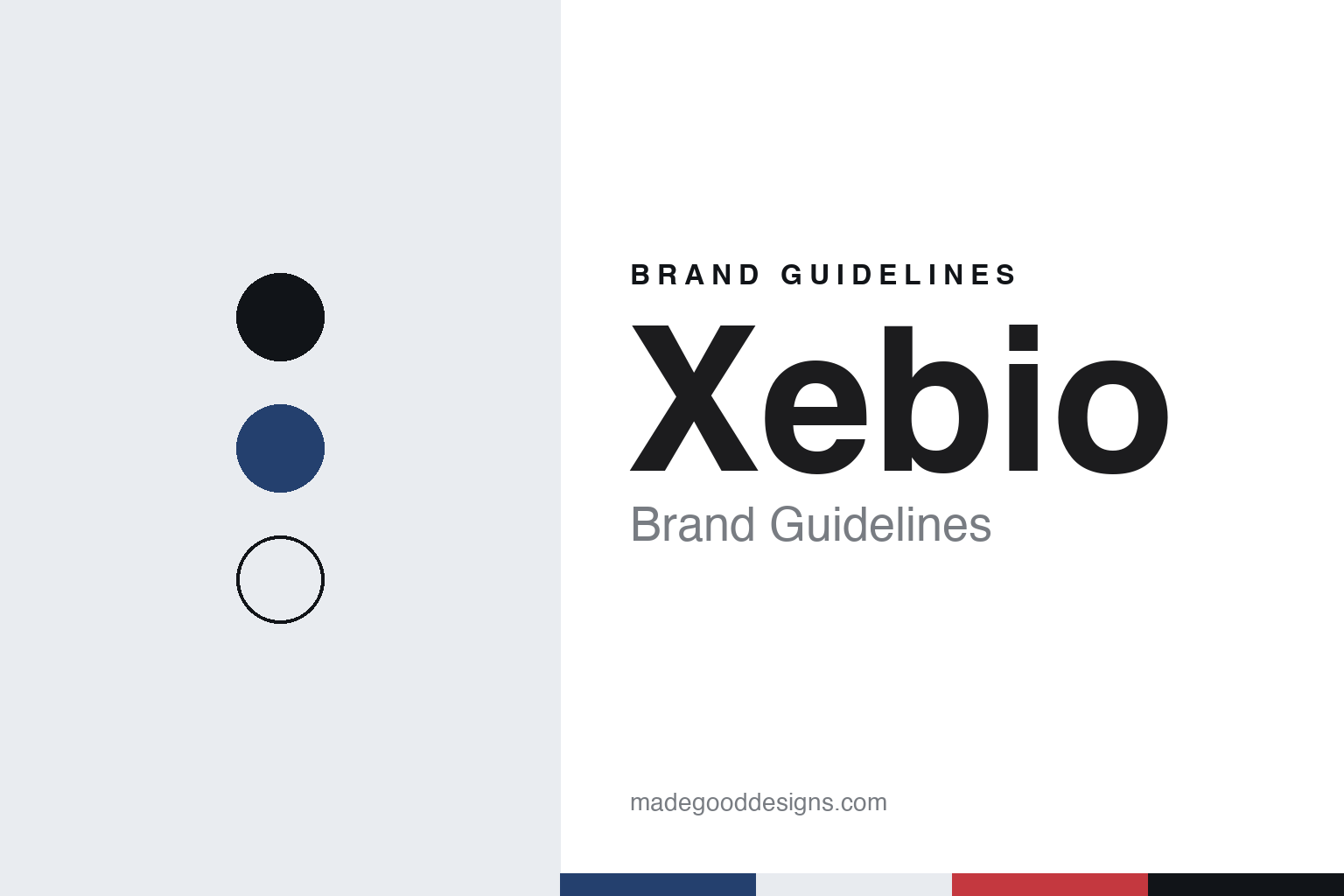
Two constants: a Xebio court blue and track red palette and an Athletic sans register. Abstract homage — not a Xebio product or mark; no store sign, logo or label is reproduced.
Sun Suits to Xebio
A menswear shop in Iwaki.
Xebio began as a menswear shop. The group’s own history says a men’s clothing shop opened in Taira, in Iwaki, on the Pacific coast of Fukushima Prefecture, in December 1962; Japanese Wikipedia, citing the company’s annual securities report, gives August 1962 and names the founder as Teizō Morohashi, a native of Iwaki. The company that became today’s holding company was incorporated in Iwaki on 5 July 1973 as Sun Suits, to sell menswear, so 1973 is the date of the company and 1962 the date of the business.
The move inland came in August 1979, when Sun Suits was renamed Sankyo and moved its head office to Kōriyama, in central Fukushima. That November it opened its first large store, themed on fashion and sport, in a former Nagasakiya building in Fukushima city, according to the company. Suburban formats followed in Kōriyama: a sports shop, Top Sports Namiki, in 1983, a Sankyo menswear store in 1984 and a casual-clothing shop, Men’s Capa, in 1985.
In November 1987 the company took the name Xebio. Japanese Wikipedia says the rename brought the separate chains under one name: the Sankyo menswear shops became Xebio Mens, the Top Sports stores became Xebio Sports and the casual shops became Xeby. Xeby was folded into the sports business in March 2002, and in September 2005, Japanese Wikipedia says, the menswear division was transferred to AOKI International, now AOKI Holdings, leaving Xebio as a sports retailer.
The shares followed the stores. Xebio registered its stock for over-the-counter trading in April 1988, listed on the second section of the Tokyo Stock Exchange in May 1990 and moved to the first section in September 1995; since April 2022 it has been on the exchange’s Prime Market, the company says. Its head office has stood in Kōriyama’s Asahi district since 1990.
Colour
Super Sports Xebio.
The format that carries the name in most Japanese towns arrived in December 1992, when Super Sports Xebio, a large suburban sports store, opened its Sendai Izumi-Chūō branch in Miyagi Prefecture on a single floor of about 1,000 tsubo, roughly 3,300 square metres, according to the company. The stores grew larger: the company describes its Super Sports Xebio Dome at Tsukisamu, in Sapporo, opened in November 1999, as a nature-themed store of about 2,500 tsubo, and a second dome store opened in June 2010 in Tsuchiura, Ibaraki. Its first golf specialist shop, Xebio Sports Katsuta, had opened in July 1990 in what is now Hitachinaka, Ibaraki.
The trade press has followed the format’s changes. In January 2022 Ryūtsū News reported that the Super Sports Xebio store at Tamasakai, in Machida on the western side of Tokyo, had been rebuilt at the end of 2021 as the group’s first warehouse-style store, with simple fixtures, self-service shopping and about 20,000 pairs of shoes; at that time it put Super Sports Xebio at about 170 stores across Japan. In March 2023 TV-U Fukushima, writing for TBS News Dig, put the stores run by the core subsidiary Xebio, including Super Sports Xebio, at about 180.
Growth also came through other chains. In April 2005 Xebio bought all the shares of Victoria, a sports retailer that Japanese Wikipedia says was founded in 1972 and now concentrates on city stores such as those in Tokyo’s Kanda-Jimbōchō, a district known for its sports shops. A tender offer in 2008 brought in Golf Partner, a chain that buys and sells golf equipment, which became wholly owned through a share exchange in April 2009. In December 2013 a new subsidiary, Nexus, took over the 23 stores of Takeda Sports, a sports retailer in northern Tōhoku, the company says. More recent additions, according to the company’s history, are the GALLERY・2 sports-shop business of Yokohama Kurokawa Sports in April 2025 and the Baseman baseball shops in February 2026.
Abroad, Xebio set up a Shanghai subsidiary and opened a Super Sports Xebio in the city’s Pudong district in June 2012, followed by a store in Seoul’s Euljiro in March 2013; its Korean company was renamed Golf Partner Korea in 2018 and opened a Golf Partner store in Korea that May. In May 2026, Netshop Impress reported, the Xebio Holdings board approved the terms for buying all the shares of Drummond Golf, a golf retailer with franchised and company-run stores in Australia, although the share purchase agreement had not yet been signed. The deal was agreed in principle in May 2026; not completed at the time of writing.
Typography
Design and documentation.
Japan’s second-hand, hobby, book and sports chains tend to present themselves through the store itself before any logo. Many of them grew from a single shop, and their corporate pages often open with that first branch, the town it stood in and the year it opened, followed by a timeline of new formats, franchise agreements and listings on the Tokyo Stock Exchange.
In second-hand retail, the buying counter is as much a part of the identity as the sales floor. Chains publish what they buy, how customers can bring goods in or send them by post, and which stores take which categories, from books and CDs to trading cards, toys, clothing and electronics. Some run separate buying-only centres or online services alongside their shops, and describe these on the same corporate pages as their stores.
Hobby and collector chains lean on display and naming. Shops are often split into small rooms or annexes, each with its own name and a single subject, such as manga for one readership, vinyl figures or vintage toys, so that a sign at the door tells a visitor what lies inside. Book chains, by contrast, describe long aisles, broad stock and space to browse, and some have used bright lighting and open layouts to make used books look like new retail. Mascots and capitalised store names appear on signs, bags and advertising.
Behind the shop fronts sit corporate structures that the companies set out in plain terms: founders, holding companies, parent groups, franchisees and shareholders, along with overseas stores that opened, moved or closed. The guides in this group follow those published histories, and treat colours and typefaces as an unofficial interpretation rather than an official brand standard.
Aa
An athletic sans — XEBIO in capitals. (Specimen set in Barlow Condensed, a sans STAND-IN; NOT the Xebio logo.)
Xebio
A holding company in Kōriyama.
Since October 2015 the group has been run by a pure holding company, Xebio Holdings, with the retail business passed to a new Xebio Co.; the holding company’s website lists Xebio, Golf Partner and Victoria as its sports retailers, alongside the events and venues company Cross Sports Marketing and card, back-office and staffing companies. It gives the group’s staff as 2,506 as of September 2026, not counting part-time workers. In December 2020 the group made Tokyo Verdy, the J.League football club whose main sponsor it had become in 2010, a consolidated subsidiary, according to the company’s history and Japanese Wikipedia, and in April 2020 Cross Sports Marketing opened FLAT HACHINOHE, an arena built around an ice rink beside Hachinohe station, Japanese Wikipedia says.
Kōriyama remains the base. As of November 2026 the group’s website still lists Xebio’s address in Kōriyama.
The shelves mix outside brands with the company’s own. Japanese Wikipedia lists private labels including X’tyle casual sportswear, XERES sporting goods and HEAT-X, a fabric the company developed that gives off warmth as it absorbs moisture. On the group website the name is set in capitals, as XEBIO; the palette here, a court blue with a track red, is our own interpretation.
For a design guide, Xebio shows how a regional clothing shop can rebuild itself around one large-store format and then gather other chains under a holding company. Compare Alpen Group, the Nagoya sports retailer, and 2nd Street, another Japanese chain built on buying and selling used goods, as Golf Partner does for golf equipment. For this guide we use a court blue and a track red with a condensed sans, an unofficial interpretation; no product or logo is reproduced.
Explore & save
Keep Xebio’s identity on hand — save it to a board in the Made Good inspiration library.
Xebio identity set
Pin the Xebio court blue and track red palette and the Athletic sans register to your own board.