Panda Brand Guidelines
The Riyadh grocer that became Savola’s supermarket chain.
Aa
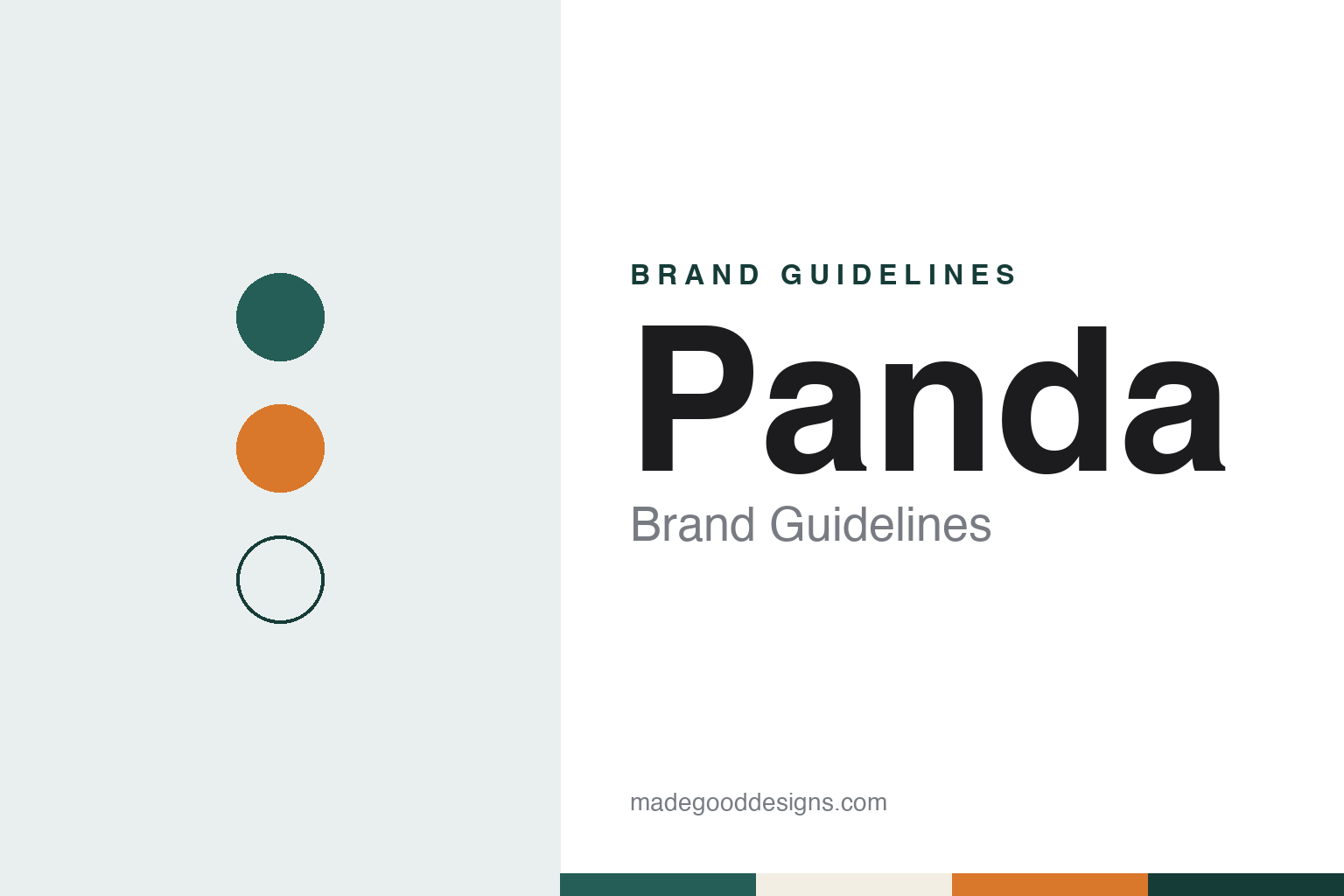
Two constants: a teal, apricot and sand palette and a bilingual grocery sans register. Abstract homage — not a Panda product or mark; no logo, fascia or packaging is reproduced.
United Panda
A Riyadh trading company that became a grocer.
Panda began in Riyadh. English Wikipedia says United Panda Co. was founded there in 1981, and that at first it imported and sold foodstuffs, garments, luxury goods and electrical appliances rather than running a grocery chain alone. The modern business took shape in the 1990s. In September 1993, English Wikipedia says, a new majority investor bought 50.1 per cent of the company, which then had sixteen supermarkets in Riyadh and two in Jeddah, and merged its own retailer, Al-Azizia Markets Co., into it to form Al-Azizia Panda United.
Five years later the chain joined a food manufacturer. The Savola Group, which its website says was established in Saudi Arabia in 1979 to import, refine and distribute vegetable oils, and which has been listed on the Saudi Stock Exchange (Tadawul) since 1992, says it entered the retail sector in 1998 through its merger with Azizia Panda, gaining in the same deal a 70 per cent stake in the burger chain Herfy. English Wikipedia describes the 1998 step as a merger with Saudi Vegetable Oil Co., the company now called Savola, under the name United Azizia Safola Co., which became United Azizia Savola Co. the following year.
Savola says the first significant change after the deal was to bring the Azizia and Panda markets together under the single Panda name. In July 2010, English Wikipedia says, Saudi Arabia’s commerce ministry approved the company’s conversion from a limited liability company to a closed joint stock company; the business is today known as Panda Retail Company.
Colour
Supermarkets, Hyper Panda and a move to Egypt.
Panda has been built around two main store sizes. Savola says that in 2004 Panda launched the larger Hyper Panda format, and English Wikipedia says the same year brought the chain’s first own private-label range. In 2006, according to English Wikipedia, Panda opened its first store outside the kingdom, at Dubai Festival City, which closed about ten years later.
Growth then came by acquisition. Savola’s timeline says Panda acquired Giant Stores in 2008, when it also opened its first central distribution centre in Riyadh, and took over the operations of the Géant stores in 2009, bringing its network to 152 locations. English Wikipedia says the Giant stores were bought from the Al-Muhaidib Group and that the eleven Géant stores had been run as a franchise by the Al Hokair Group. In 2014, English Wikipedia says, Panda introduced small Pandati convenience stores, and in 2016 it closed 51 of them.
Egypt is the chain’s second market. Daily News Egypt reported in February 2025 that Panda had operated in the country since 2015 and had seven branches there, beginning with a store in 6th of October City, followed by two branches in Nasr City in 2016 and a store in Obour City; Savola’s own website gives six stores in Egypt. English Wikipedia adds that Panda opened its first hypermarket in Upper Egypt two years after arriving in the country. In February 2025, the same paper reported, Panda representatives met Egypt’s Ministry of Supply and Internal Trade to discuss food distribution, storage and supply chains in the Egyptian market.
The look of the chain has changed too. English Wikipedia says that in November 2022 Panda Retail Company adopted a new logo and that Hyperpanda became Panda Hyper. Savola’s website describes a customer-experience programme aimed at improving branch appearance and keeping products on shelves, and in February 2025 the company’s chief operating officer told Arab News that Panda was upgrading existing stores through a programme called CXR.
Typography
How Gulf retailers present themselves.
Gulf hypermarket, grocery and electronics retailers are mostly seen from the car park. A hypermarket façade carries one short name in large letters, often in both Latin and Arabic script, and the same name is repeated on trolleys, shelf labels, carrier bags and the delivery app. Many chains run more than one size of store, from a large hypermarket in a mall to a smaller neighbourhood branch, and they often give each size its own version of the name rather than a new one.
The retail calendar shapes how these brands appear through the year. Ramadan and Eid, national-day celebrations and the start of the school term bring seasonal campaigns, special displays and printed or digital offer leaflets, and the companies publish these on their own websites, apps and social channels. Own-label ranges sit beside international brands on the shelves, with their own packaging under the retailer’s name or a separate label.
Not every chain in this group sells food. Bookshop chains combine stationery, school supplies and books with gadget aisles, and electronics retailers fill their stores with phones, laptops, televisions and home appliances. Their store fascias tend to follow the same pattern as the grocers: one name, read from a distance, often in two scripts.
Behind the shopfront, the corporate side is published separately. Listed retailers post annual reports, results and board details on their investor pages and through the Saudi Exchange (Tadawul), the Abu Dhabi Securities Exchange or the Dubai Financial Market, while family-owned and group-owned chains describe their founders, owners and history on corporate “about us” pages. This guide uses those pages and dated press reports, and marks clearly what rests on a company’s own account.
Aa
A bilingual grocery sans that sits beside Arabic on a shelf label. (Specimen set in Cairo, a sans STAND-IN; NOT the Panda logo.)
Panda Retail Company
Wholly owned by Savola since 2023.
Savola tightened its hold on Panda in two steps. Its timeline says that in 2013 it acquired the Al Muhaidib group’s 18.6 per cent of Panda in exchange for new Savola shares, issued through a capital increase, and that in 2023 it bought the remaining minority stake, so that Panda Retail Company became 100 per cent owned by Savola. Panda itself is not separately listed; the listed company is its parent, Savola, on Tadawul. In February 2025 Panda’s chief operating officer told Arab News that, as part of the wider Savola group, the company was still discussing whether and when a listing of its own would make sense.
Store counts depend on the date. In the same Arab News interview, given at a retail conference in Riyadh in February 2025, the chief operating officer said Panda was running more than 200 stores and that its loyalty programme had more than 10 million users. Savola’s website, as read in November 2026, gives 227 stores, including six in Egypt. English Wikipedia records that as of June 2016 the company operated 65 Hyper Panda stores and 156 Panda supermarkets across Saudi Arabia.
On its retail investments page Savola presents Panda as the centre of its retail business, alongside a 49 per cent holding in Herfy, the fast-food company it first came to through the 1998 Panda merger, and describes Panda as serving shoppers in both Saudi Arabia and Egypt.
For a design guide, Panda shows how a merged chain settles on one short name and then renames its formats around it, from Hyper Panda to Panda Hyper. Compare Othaim, another Riyadh grocery chain, and Carrefour, the French hypermarket brand. For this guide we use a deep teal, an apricot and a sand with a sans that works beside Arabic, an unofficial interpretation; no product or logo is reproduced.
Explore & save
Keep Panda’s identity on hand — save it to a board in the Made Good inspiration library.
Panda identity set
Pin the Panda teal, apricot and sand palette and the bilingual grocery sans register to your own board.