Penti Brand Guidelines
The Istanbul hosiery maker that became a lingerie and homewear chain.
Aa
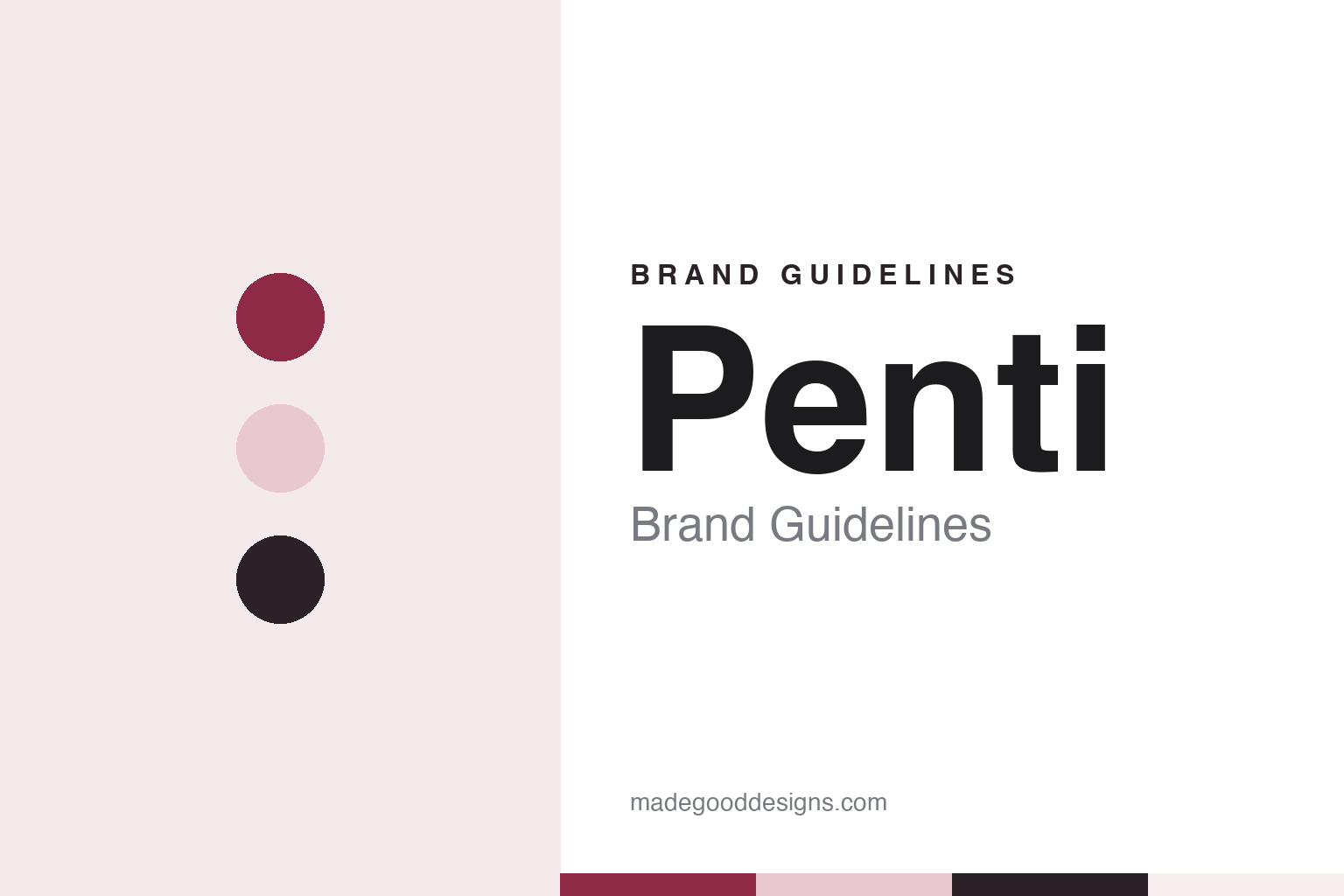
Two constants: a rosewood, blush and charcoal palette and a soft display serif register. Abstract homage — not a Penti product or mark; no garment, logo or packaging is reproduced.
Öğretmen Çorap
Nylon stockings, a teachers’ name and a new one in 1984.
Turkish Wikipedia describes Penti as a Turkish company and chain of stores centred on women’s hosiery and underwear. It began as a stocking business in Istanbul in the early 1950s. Turkish Wikipedia says the brothers Mois and Yasef Kariyo set up a nylon stocking firm in 1952, as nylon hosiery was catching on around the world; Hürriyet Daily News, reporting in September 2012, gave the founding year as 1950, and the business economics magazine Ekonomist placed its foundations in the 1950s in a 2017 interview.
Its early brand name came from its customers. In 1970 the company was named Öğretmen Çorap, “Teacher Stockings,” because at the time fine women’s hosiery in Turkey was bought mostly by teachers, Turkish Wikipedia says. In 1971 it opened its first production plant in Bayrampaşa, a district on the European side of Istanbul.
In the 1980s Sami Kariyo, of the family’s second generation, took over the management of the brand, and the products were aimed more widely at women in Turkey’s cities. In 1984 the brand took the name Penti. Turkish Wikipedia records that the range then widened beyond fine hosiery to children’s and men’s socks, homewear, underwear, bikinis and swimwear, and that in 1994 the company opened a second stocking factory at Çorlu, in Tekirdağ province west of Istanbul, under the Öğretmen Çorap name.
The turning point, Ekonomist wrote in November 2017, was the decision in 1999 to go into retail. The first store in the Penti chain, run by a dealer, opened in Istanbul that year, according to Turkish Wikipedia. It began as a sock-led shop and, as customers asked for more, added underwear, beachwear and homewear, the magazine reported.
Colour
A maker with its own shops.
Penti grew out of a factory rather than a shop. In its 2017 interview with Ekonomist, the company described itself as a producer as well as a retailer, exporting stockings from its own plants, and said it had moved its production to a lean manufacturing system about two years earlier. In 2007 it opened an online store at penti.com, Turkish Wikipedia says.
The shops spread quickly once the retail chain had begun. In September 2012 Hürriyet Daily News reported that the company had 155 stores in Turkey and 39 in 16 other countries, with offices in England, China and Italy. By November 2017 Ekonomist counted 325 stores in Turkey and 138 abroad; in Romania that year the company had opened ten stores of its own and 35 franchised ones, according to the interview.
The most recent count comes from the business newspaper Ekonomi, which in a column published in March 2026 reported that Penti had 411 stores in Turkey and 181 elsewhere, trading in a total of 40 countries. The same column named Mert Karaibrahimoğlu as chief executive.
That column also described a store model the company calls “Body Expert,” in which shop staff are trained in fit and in the technical details of the garments, so that a product developed from customer data can be matched in the store with the person it was designed for. Penti told the paper that it analyses more than 200,000 pieces of customer feedback a year and treats about 15,000 of them as quality data for improving products.
Typography
Design and documentation.
Turkish fashion, denim and footwear chains are mostly met in person, in shopping centres. Trade reports on these companies’ expansion abroad tend to describe the same kind of opening: a new unit in a regional mall, the brand name across the fascia, and a launch event at the door. For a design reader, the store front is where the identity is fixed, and the shopping bag is the version of it that leaves the building.
The names are short and usually written as plain lettering. Some of these chains use a word or an abbreviation rather than a symbol, and where a mascot or emblem once existed, published histories describe it being folded into a typographic logo. Campaign imagery, rather than the logo, carries most of the season-to-season change: model-led photography, designer collaborations and named collections are how the companies present each range.
Collection and store naming is generally descriptive. Sub-brands and formats tend to add a plain word to the parent name, such as Home, Outlet or Baby, so the parent name stays visible on every sign. In this guide we describe those ranges by the names the companies publish, without judging one against another.
The corporate side matters too. Some of these businesses began as small family shops or wholesale labels in Istanbul and later became large groups, some of them listed on Borsa Istanbul. Their corporate pages on founders, owners, board members and listings are part of the brand’s public face, and the guides in this series draw on those pages alongside dated independent reporting. The palettes shown are our own unofficial interpretations, not company colour standards.
Aa
A soft display serif for a hosiery and lingerie register. (Specimen set in Playfair Display, a serif STAND-IN; NOT the Penti logo.)
Penti
A family firm with a private-equity partner.
The family brought in an outside investor in 2012. In September of that year, Hürriyet Daily News reported, Penti signed a partnership agreement with The Carlyle Group, the private-equity firm founded in Washington, D.C., in 1987; Sami Kariyo was chairman of Penti at the time. Ekonomist described the deal as a partnership that followed Carlyle’s interest in the chain’s growth, and wrote that after it the company opened stores rapidly both in Turkey and abroad.
Five years on, the question of an exit came up. In the November 2017 interview, Sami Kariyo told Ekonomist that Goldman Sachs and the Dome Group had been mandated to study market conditions, that no decision on a sale process had been taken, and that Carlyle was in no hurry to leave. A year after the deal, in 2013, Penti changed its logo and its corporate colour, Turkish Wikipedia says.
The brand today is built around four kinds of product: hosiery, underwear, beachwear and homewear, the categories the company listed in 2017. The March 2026 column in Ekonomi quoted the chief executive describing a “76-year journey” centred on women customers. Its shop site at penti.com, which also runs a separate Romanian version, groups its collections by occasion and use, with plus-size, travel, wedding and maternity lines among them.
The story is one of a manufacturer that learned to sell to the public. A stocking maker named after its first loyal buyers became a mall chain with stores across Turkey and in dozens of other countries, with a family chairman still in place in 2017, five years after a private-equity partner arrived.
For a design guide, Penti shows how a factory brand can become a retail brand without dropping its original product. Compare Koton and İpekyol, two other Istanbul fashion chains. For this guide we use rosewood, blush and charcoal with a serif, an unofficial interpretation; no product or logo is reproduced.
Explore & save
Keep Penti’s identity on hand — save it to a board in the Made Good inspiration library.
Penti identity set
Pin the Penti rosewood, blush and charcoal palette and the soft display serif register to your own board.