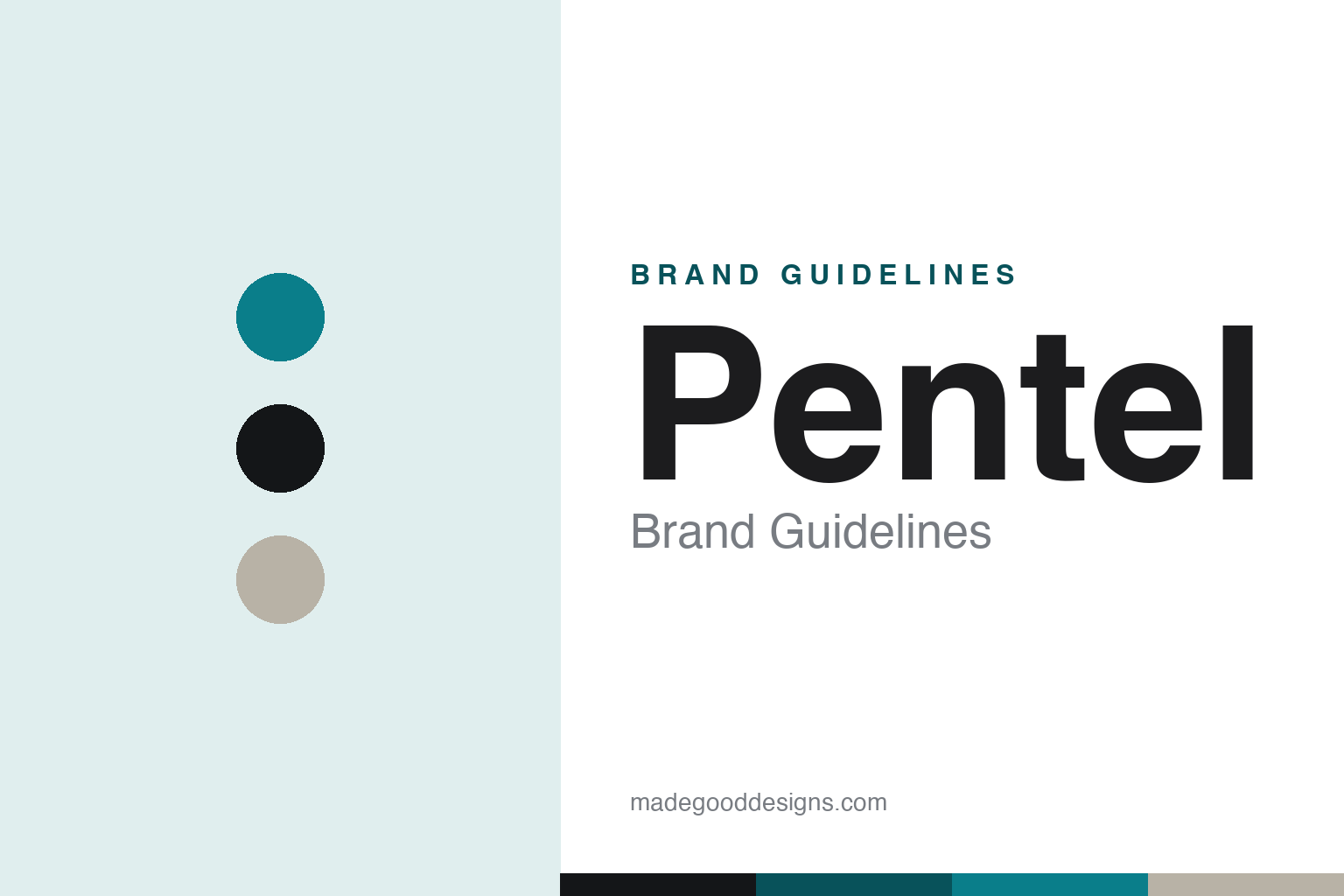
Pentel Brand Guidelines
The Sign Pen, EnerGel and the modern mechanical pencil — from a 1946 Tokyo house.
Aa
Two constants: a teal and ink palette and a technical condensed sans. Abstract homage — not the Pentel wordmark or logo.
The pen that reached the White House
Pentel’s Sign Pen pioneered the fibre-tip.
Pentel is a lesson in a single breakthrough product carrying a brand. Pentel Co., Ltd. was founded in 1946 in Tokyo (as Dai Nippon Bungu) by Yukio Horie, and renamed Pentel in 1971 after its hit product line — the name a blend of “pen” and “pastel”/”tell” (we hold the exact gloss loosely). Its landmark is the Sign Pen (1963): a pioneering fibre-tipped, water-based-ink pen (a real advance over the era’s oil-based felt tips). The famous story is verified: samples handed out at a Chicago stationery show reached the office of US President Lyndon B. Johnson, whose staff reportedly ordered them by the gross — a publicity coup that made the Sign Pen a hit. (A related claim, that the Sign Pen flew on Gemini spaceflights because its capillary feed doesn’t need gravity, is widely reported but hard to source — we hedge it.)
Pentel’s other great contribution is to the mechanical pencil: its 1960s work on polymer-binder leads helped make thin, strong leads practical, and the P200 series became a design classic (with Ain / Ain Stein leads). Its EnerGel liquid-gel rollerball is a global bestseller, alongside the Hybrid gel line, the Pocket Brush Pen and a broad range of art materials — Horie’s original ambition.
One thing to correct carefully: Pentel’s ownership. In 2019 Kokuyo (also in this gallery) bought a large stake and launched a hostile bid that Pentel’s management resisted, allying with Plus Corporation as a “white knight.” In 2022 Kokuyo sold its stake to Plus, giving Plus a majority (reported over 76%). So today Pentel is majority-held by Plus — not owned by Kokuyo, and no longer independent. (Honest notes: don’t credit Pentel with inventing the gel pen — that’s Sakura; hedge the space story and “first mechanical pencil” claims; and no official brand hex is published.)
Colour
Pentel lives in a teal-and-ink palette. Click a swatch to copy the hex.
Pentel’s identity is clean, technical and approachable — a fresh teal, ink black, and a warm grey. The palette reads as the products: the bright ink of a Sign Pen, the black of a fine rollerball, and the neutral of a mechanical-pencil barrel. It’s a practical, capable world that signals precision, everyday utility and quiet innovation. It’s a teal-and-ink palette that signals a practical Japanese writing house. The honest caveat: Pentel publishes no official brand hex, so the teal, ink and grey here are an original, unofficial interpretation, not first-party values.
The lesson is a teal-and-ink palette signals clean, technical utility. Pentel’s world reads as practical and capable. For designers, it’s a reminder that a fresh, slightly technical accent (teal) with a neutral base can express everyday utility and understated innovation. The takeaways: use a fresh technical accent for practical, innovative products; keep the base neutral; and treat any single hex as unofficial when there’s no published spec.
Typography
The wordmark spirit is a technical condensed sans — practical and modern.
Pentel’s identity carries a practical, technical, modern spirit — a “Pentel” wordmark whose efficient forms match a maker of pioneering pens and precision mechanical pencils. A technical condensed sans captures the mood: it’s efficient and capable, matching a company built on the Sign Pen and the modern mechanical pencil. Set against a teal-and-ink palette, the condensed sans feels practical and modern — exactly the Sign-Pen, EnerGel personality Pentel carries. It’s efficient rather than decorative, mirroring a well-engineered everyday tool. (Pentel’s real wordmark is a trademark we describe but don’t reproduce.) Because the exact mark isn’t ours to use, the honest description is “a technical condensed sans spirit,” not the Pentel logo. The type behaves like the brand: practical, technical and modern.
Aa
A technical condensed sans spirit — practical and modern. (Specimen set in Saira Condensed, a technical condensed sans; NOT the Pentel logo, which is a trademark.)
A breakthrough product as the difference
Pentel led with real innovation.
Pentel is a lesson in leading with a genuine product breakthrough. The Sign Pen wasn’t a marketing story bolted onto a me-too product; it was a real advance — a water-based fibre tip that wrote better than the felt pens of its day — and that substance is what let a lucky sample at a trade show turn into a presidential order and a global hit. Pentel repeated the pattern with the mechanical pencil (its polymer-lead work made fine leads practical) and again with EnerGel. The through-line is that Pentel’s brand rests on doing something first or better, not louder. That’s a durable foundation: products that are genuinely improved don’t need to shout, and they age into classics (the P200 mechanical pencil still looks right decades on).
For designers and brand-builders, Pentel offers a clear takeaway: a real breakthrough is the best brand story there is. The lessons: invest in genuine product advances (a better tip, a better lead) rather than positioning alone; let a single hero (the Sign Pen) define the brand and pull the rest along; and keep the facts precise — Pentel is a 1946 Tokyo house, now majority-owned by Plus after resisting a Kokuyo takeover. It’s also a reminder to keep it honest: Sakura, not Pentel, invented the gel pen; the space story and “first mechanical pencil” claims are hedged; Pentel is no longer independent (Plus majority since 2022); and no official brand hex is published, so the palette here is an interpretation. Pentel led with real innovation — proof that a breakthrough can be the difference.
Explore & save
Keep Pentel’s identity on hand — save it to a board in the Made Good inspiration library.
Pentel identity set
Pin the teal-and-ink palette and the technical-sans spirit to your own board.