Morakniv Brand Guidelines
The Scandi grind, made in Mora.
Aa
Two constants: a Mora-red palette and a Nordic-sans register. Abstract homage — not a Morakniv blade, handle or wordmark.
The Scandi grind, made in Mora
Morakniv is a Swedish knife maker known for a Scandi grind and laminated steel, always made in Mora.
Morakniv is a lesson in an honest working edge as the identity. From Mora, in Sweden’s Dalarna, it is best known for outdoor and craft knives — the Companion and the Basic — with a simple, flat “Scandi” grind and often a laminated carbon blade, made behind bright moulded handles. Its answer to how a knife is made is a plain, functional one: an easy-to-sharpen Scandi bevel, tough laminated or stainless steel, and no fuss — and that same approach carries into its kitchen knives. A knife made to work and to sharpen.
Its identity is the steel and the edge, kept simple and Swedish. Morakniv’s Scandi grind, its laminated steel and its Mora making are the work it is known for. A no-nonsense edge, made a signature. A maker that made a plain, sharp, affordable knife a national object.
(Honest notes, so the story stays precise. Morakniv carries a heritage “since 1891,” the date of the Frost-Erik Ersson (Frosts) knife factory in Mora; a second Mora line, KJ Eriksson, dates to 1912, and the two merged in the mid-2000s to form the company later renamed Morakniv — a date we report generally rather than attribute to the brand’s own timeline, and we frame the house as “heritage since 1891” rather than saying the unified company dates to the 1800s. It is genuinely made in Mora, Sweden — the brand states that “a Morakniv is always made in Mora.” Its core is outdoor and craft knives, with steels including Sandvik 12C27 stainless and laminated carbon, but it does make kitchen knives, including a Classic line that spans both worlds. One honest note: “mora knife” is also a generic term for the regional style, while “Morakniv” is the trademarked brand — we do not imply the style term is exclusively theirs. Its designs and wordmark are its IP, described but never reproduced, and there is no official brand hex — these tones are an unofficial interpretation. This is design commentary and does not promote any product.)
Colour
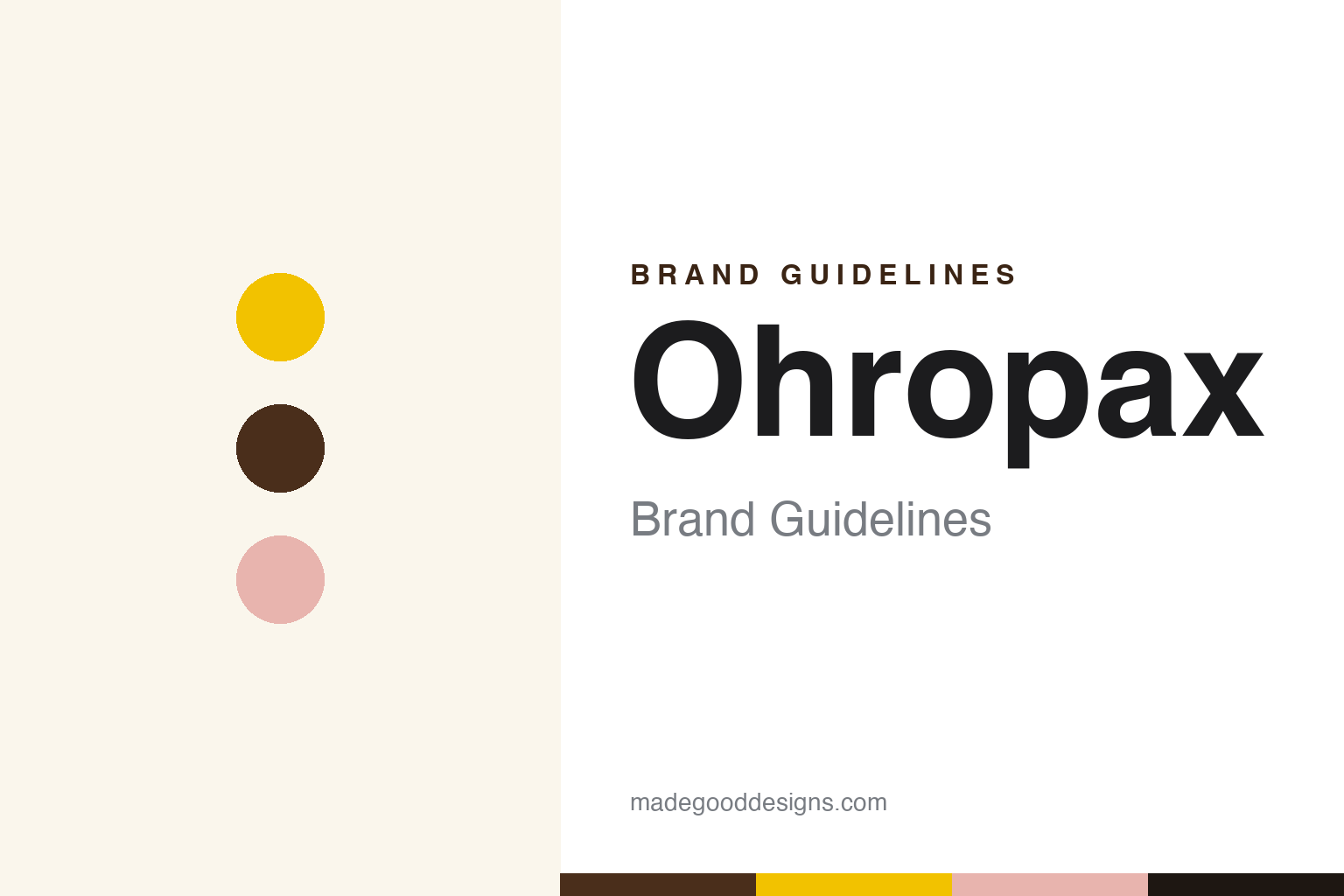
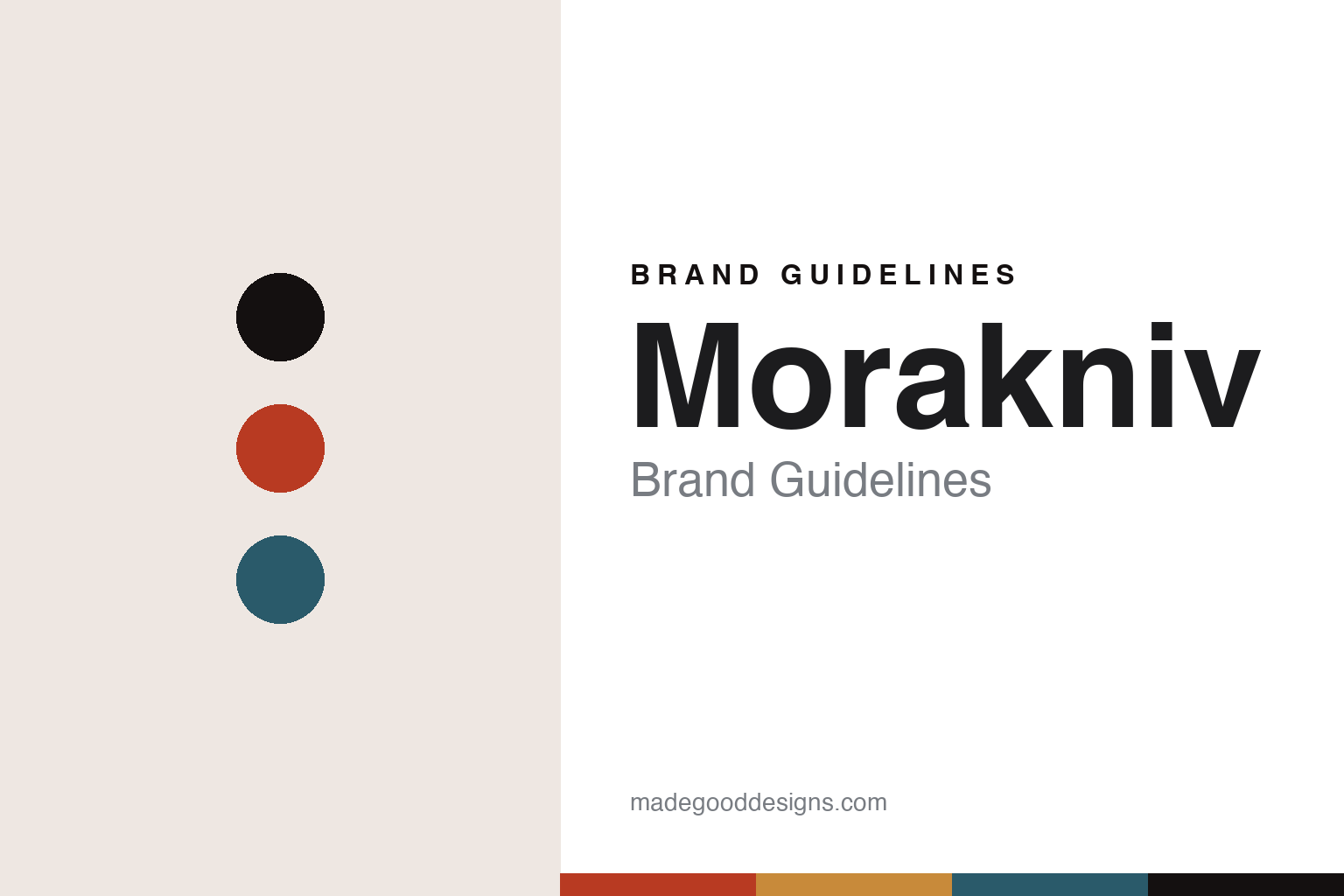
Morakniv lives in a Mora-red palette. Click a swatch to copy the hex.
Morakniv’s identity is practical, bright and Swedish — a Mora red, an ink, an amber, a lake teal, and a chalk. The palette leans Mora red and lake teal: the register of a bright plastic handle and a Dalarna lake. It signals function and cheerfulness over luxury. The honest caveat: with no published brand hex, these values are an original, unofficial interpretation, not first-party colours.
The lesson is a Mora-red palette signals a practical, made-in-Sweden identity. Morakniv’s world is a Scandi-ground, laminated-steel, made-in-Mora object. For designers, it is a reminder that a warm red and a cool lake teal can carry a brand built on an honest working knife — the red of a moulded handle and the teal of Nordic water. Because these tones can fail as small text, keep type dark and let the colour live in the accents, palette and band. The takeaways: keep it functional; make it in Mora; be honest about the heritage dates; and treat any single hex as unofficial.
Typography
The register is a Nordic sans — clean, sturdy, unpretentious.
Morakniv’s identity carries a clean, sturdy, unpretentious spirit — a working tool, not a luxury one. A Nordic sans captures the mood: even, robust and friendly, the register of an everyday Swedish object. Set in a Mora-red palette, the Nordic sans feels clean and sturdy — exactly the personality Morakniv carries. It is unpretentious rather than precious, mirroring a plain, sharp knife. (Morakniv’s real designs and wordmark are things we describe but do not reproduce, and the exact typeface is not ours to use.) Because it is not ours to use, the honest description is “a Nordic-sans spirit,” shown here in a stand-in. The type behaves like the maker: clean, sturdy and unpretentious.
Aa
A Nordic-sans spirit — clean and sturdy. (Specimen set in Hanken Grotesk, a Nordic-sans STAND-IN; NOT the Morakniv wordmark or any blade design.)
How a knife is made
Morakniv stands for the honest Scandi edge.
Morakniv is a lesson in making an honest edge the identity. A Mora-red palette, a Nordic sans and a Scandi-ground blade make one thing — a plain, sharp, easy-to-sharpen working knife — the whole maker: practical, bright and Swedish. The simplicity is the differentiator. The differentiator is a flat Scandi bevel and tough laminated steel: an edge anyone can maintain, on a knife made to be used rather than admired.
Put to work, the identity is function as design. A maker building in this spirit would strip an object to what works, keep the making in one town it is known for, and let affordability and honesty be part of the appeal rather than a compromise. It would put the same plain edge into a kitchen knife as into a bushcraft knife. It would say plainly it is made in Mora, and be careful about its heritage dates rather than rounding them up. A brand learning from it would resist the pull to look more premium than it is, and let an easy-to-maintain edge read as a promise to the user rather than a compromise on quality. The lesson Morakniv teaches is that an honest working edge can build a brand: the function gives it trust, and the Mora making gives it substance. The simplicity is the personality, and the Scandi grind is the proof.
For designers and brand-builders, Morakniv holds the functional pole in this round about how a knife is made: make a plain, sharp, honest edge, and keep it in one place. The lessons: keep it functional; make it at home; be honest about the dates; and never reproduce a protected design. It is also a reminder to stay precise: Morakniv is a Swedish knife maker with a heritage since 1891, always made in Mora, known for a Scandi grind and laminated steel, and it makes kitchen knives too — with the palette here an unofficial interpretation. Morakniv made the honest edge the maker — proof that a plain, sharp knife can be the difference.
Explore & save
Keep Morakniv’s identity on hand — save it to a board in the Made Good inspiration library.
Morakniv identity set
Pin the Mora-red palette and the Nordic-sans register to your own board.