Alesis Brand Guidelines
Keith Barr’s affordable studio gear, from the MIDIverb to the ADAT.
Aa
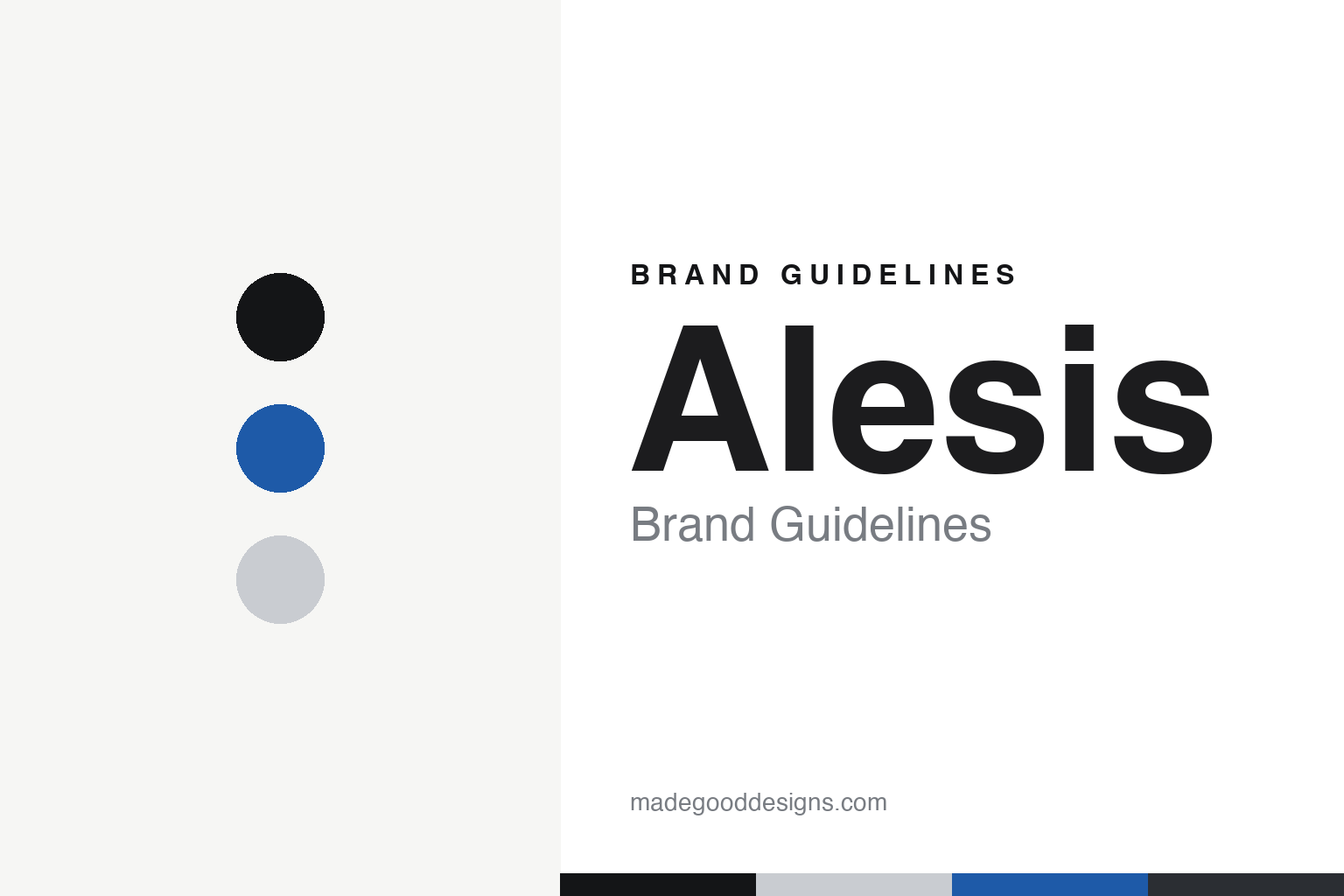
Two constants: an Alesis rack black, tape silver and signal blue palette and an Engineered sans register. Abstract homage — not an Alesis product or mark; no instrument, logo or nameplate is reproduced.
Algorithmic Electronic Systems
An MXR co-founder in a Hollywood guest house.
Alesis was the second company of Keith Barr, the engineer who in 1973 co-founded MXR Innovations in Rochester, New York, with Michael Laiacona and Terry Sherwood, Mix reported in its 2010 obituary of him. After a dozen years of guitar effects pedals and rack units, MXR ceased operations, and Barr moved to California. He told George Petersen, the author of a book on the ADAT, why Los Angeles suited a designer of custom chips: “Moving to Los Angeles and starting Alesis was great because all the larger companies you had to work with were local.”
Sources differ on the start date. Mix says Barr formed Alesis in 1984, working from the guest house of a small home in Hollywood, and English Wikipedia, citing a 1986 interview with Barr in the British magazine Home & Studio Recording, also gives 1984 and Hollywood. The company’s own website says Alesis was “established in 1980.” We give both. Before returning to audio, Mix says, Barr tried making Geiger counters there. The name, Mix explained, came from the phrase “Algorithmic Electronic Systems” — a nod to the calculations a digital reverb repeats thousands of times a second.
The first product was the XT reverb of 1985, priced at $799, which Mix called the least expensive digital reverb built up to that time. Barr brought in a friend, Russell Palmer, a former record promoter, to run sales, and the small business was soon shipping 400 XTs a month from the guest house. The MIDIverb followed in 1986; Mix and the company both call it the first professional 16-bit effects processor priced under $1,000. Cheap custom chips, not cabinets or knobs, were the company’s first advantage.
Colour
Eight tracks on a videocassette.
Drum machines came next. Working with Marcus Ryle — whose design firm, Fast Forward Designs, he had co-founded with Michel Doidic, both veteran Oberheim designers, English Wikipedia says — Alesis released the MMT8 sequencer and the HR-16 drum machine in 1987. The SR-16 drum machine followed in 1990; the company says it is “still in production today.”
The product that changed the company was the ADAT. Barr laid out plans for an affordable studio recorder in 1987, Mix reported, and after a four-year engineering project the machine was unveiled at the Winter NAMM show on 18 January 1991. It recorded eight tracks of digital audio on an ordinary S-VHS videocassette, and up to 16 machines could be linked for 128 tracks. Deliveries began more than a year later — in February or March 1992, according to Petersen’s history as cited by English Wikipedia.
The price did the work. At $3,995 a machine, three ADATs gave 24 tracks for about $12,000, against roughly $150,000 for Sony’s PCM-3324 digital 24-track, Mix calculated. Fostex and Studer adopted the format, and its eight-channel optical connection, known as Lightpipe, is still widely used. In 2004 the ADAT entered the first TECnology Hall of Fame, for “beginning a revolution of affordable recording tools,” according to English Wikipedia.
Through the 1990s Alesis widened its range: the QuadraSynth keyboard in 1993, the Monitor One studio speakers in 1994, the DM5 drum module — dated 1995 by Mix and 1998 by the company — and the Andromeda A6, an analog synthesizer, in 2000. In 1997, English Wikipedia says, it formed Alesis Semiconductor to sell its chips to other audio makers.
Typography
Samplers and digital synthesizers.
Digital sampling and synthesis reached recording studios in the late 1970s and 1980s. Fairlight, founded in Sydney in 1975 by Peter Vogel and Kim Ryrie, introduced its CMI in 1979; New England Digital, founded in Vermont in 1976 by Sydney Alonso and Cameron Jones, built the Synclavier; and Wolfgang Palm’s PPG, in Hamburg, introduced wavetable synthesis in 1979, English Wikipedia says.
American makers brought prices down. E-mu, whose name Dave Rossum coined in 1971 and which he and Scott Wedge formed as a partnership in 1972, moved from modular synthesizers to samplers; Ensoniq, of Malvern, Pennsylvania, launched its Mirage sampler in 1985 at $1,695; Kurzweil, founded in 1982, launched its K250 in 1984; and Alesis, formed in Hollywood by Keith Barr in 1984, Mix reported, launched the ADAT recorder in 1991.
Few stayed independent. PPG closed in 1987, and New England Digital in the early 1990s. Creative Technology of Singapore bought E-mu in 1993 and Ensoniq in 1998, and merged them. The Korean piano maker Young Chang bought Kurzweil in 1990; Hyundai Development Company bought Young Chang in 2006, and the group, renamed HDC Young Chang in 2018, is based in Incheon; Kurzweil’s own website names no parent company today.
Some names returned. Blackmagic Design, the Australian video company, bought Fairlight in 2016 and sells Fairlight consoles. Cameron Jones bought back the Synclavier trademark, and his Synclavier Digital released the Regen synthesizer in 2022. Jack O’Donnell bought Alesis in 2001; it belongs to his inMusic group of Cumberland, Rhode Island.
This guide sets out what can be checked about each brand — who founded it, who owns it, and what it says about where its products are made — and marks clearly what rests only on the company’s own word.
Aa
An engineered sans — the register of rack panels. (Specimen set in Archivo, a sans STAND-IN; NOT the Alesis logo.)
Alesis
From Keith Barr to inMusic.
The expansion was expensive. Alesis filed for Chapter 11 bankruptcy protection on 27 April 2001, English Wikipedia says, and that summer Jack O’Donnell, president of the DJ equipment maker Numark, made the winning bid for the company and all its assets, the trade site Pro-Music-News reported in August 2001. O’Donnell, who said he had spent twelve years running sales and marketing at Stanton Magnetics and Pickering, explained that launching fourteen new products at that winter’s NAMM show, in an economic slowdown, had “exhausted Alesis’ resources.” He also said he had bought Alesis himself: “Actually Jack O’Donnell purchased Alesis, not Numark.” Barr went on to found chip companies, including Spin Semiconductor, and died in 2010, Mix reported.
In 2012 Alesis became part of O’Donnell’s newly created inMusic Brands group, English Wikipedia says; inMusic’s own history says he “purchased Alesis” in 2001, and the Alesis website calls the name a registered trademark of inMusicBrands, LLC. English Wikipedia places both Alesis and inMusic in Cumberland, Rhode Island. The group also owns Akai Professional, M-Audio and, since 2023, Moog, and says Native Instruments joined it in 2026. Today’s Alesis range centres on electronic drums — the Nitro, Strike and Strata kits — alongside digital pianos, MIDI controllers and MultiMix mixers.
We found no statement on the Alesis website about where its products are made, and we make no claim about it. Nor did we find published brand guidelines; the website loads a typeface named Nexa, which we do not take to be the logo.
For a design guide, Alesis shows how a brand built on cheap custom chips became a mass-market name. Compare Oberheim, whose former designers worked on the HR-16, and Moog, now a fellow inMusic brand. For this guide we use rack black, tape silver and a signal blue with a sans, an unofficial interpretation; no product or logo is reproduced.
Explore & save
Keep Alesis’s identity on hand — save it to a board in the Made Good inspiration library.
Alesis identity set
Pin the Alesis rack black, tape silver and signal blue palette and the Engineered sans register to your own board.