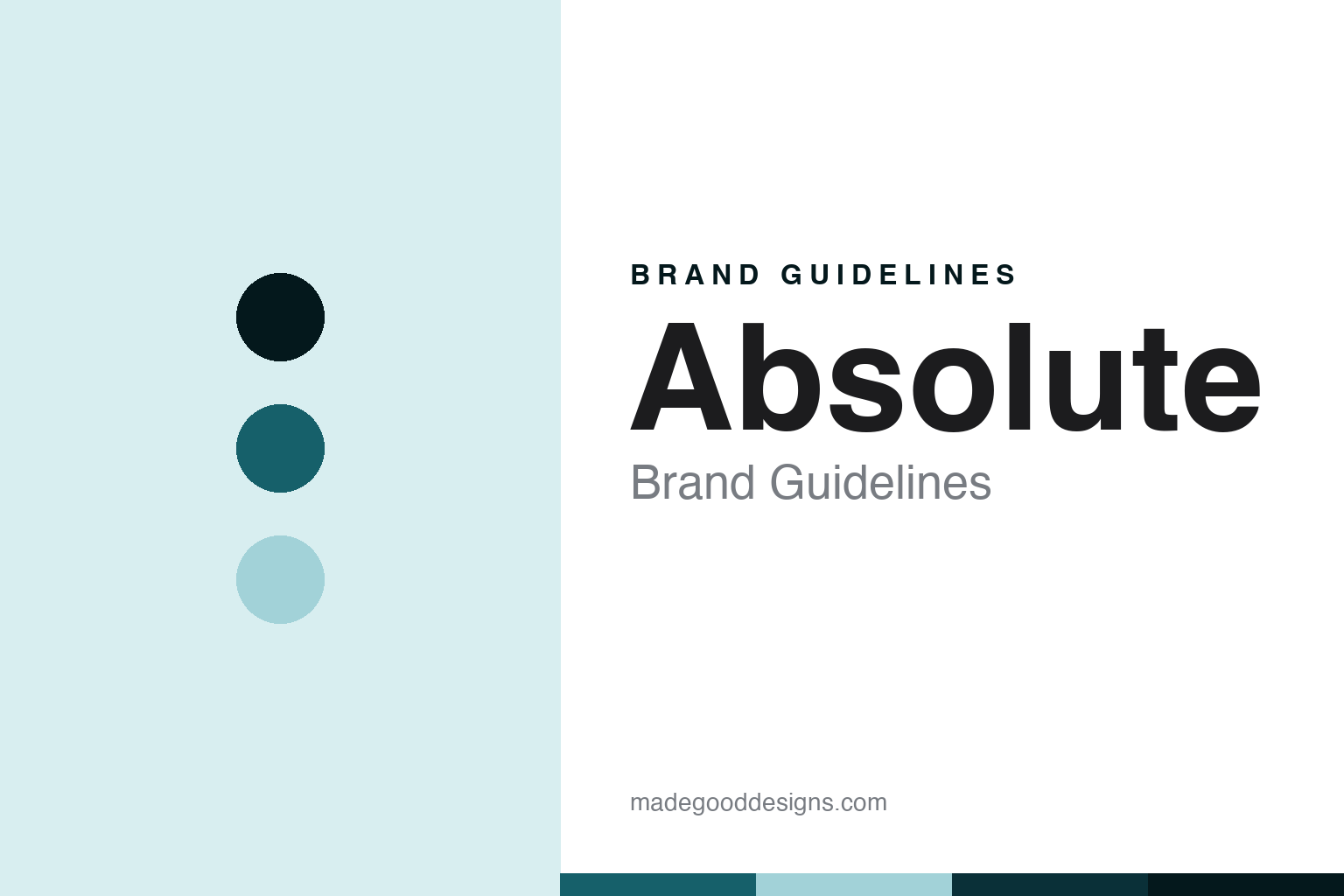
Absolute Brand Guidelines
To the standards of Europe, not in Europe.
Aa
Two constants: an Absolute-teal palette and a catalogue-sans register. Abstract homage — not an Absolute product or mark; no weapon, mask, kit or livery is reproduced.
To the standards of Europe, not in Europe
Absolute Fencing Gear sells almost everything a fencer needs — and the sentence everyone quotes about its premium line says built to European standards, which is a different claim from built in Europe.
Absolute closes the round as its catalogue node, and it offers the most precise wording lesson in a set already full of them. Its premium line is described as designed and manufactured to the highest standards of Europe. Read quickly, that is a European-made product. Read as written, it is a product made to a European specification — and the two are not the same sentence. The company has not claimed anything untrue. It has written a line that a hurried reader will round up. Its answer to a round about who owns and where-makes the fencing house is a catalogue that stocks everyone, including its rivals: to the standards of Europe, not in Europe.
Its identity is to the standards of Europe, not in Europe. The 2004 founding, the breadth of the catalogue and a carefully-read sentence are the story here. The fencing supplier. To the standards of Europe, not in Europe.
(Honest notes, so the founding, the ownership, the making and three easily-confused claims are framed accurately. On founding: the company was incorporated in New Jersey in 2004, and its first blade homologation on the federation’s record follows in January 2006, which is consistent. Its founder and officers are not something we could establish, so we do not name them. On ownership: undisclosed, and we say so rather than guessing. On the making, which is the point: only the specific components whose product names carry a made-in marking have a stated origin; the premium line’s own description says built to European standards, and a lamé is described as heavily tested in Europe — tested, not made. Neither sentence is an origin claim and we do not convert either into one. Import records compiled by a commercial aggregator from United States customs data indicate Chinese manufacture; that is one aggregator, covering sea freight, naming shippers rather than factories, and a second researcher was blocked from corroborating it — so we attribute it to that source and describe it as the best available evidence rather than as confirmed. On three distinctions worth keeping straight: a mask page describing a product as CE certified is not a statement of federation homologation, because the two are different schemes; being listed among a national federation’s partners in an affiliate-shopping context is not the same as appearing in that federation’s separately labelled supplier tier, which this company does not; and the international federation itself separates supplier registration from product homologation, restructuring both during 2026 while the framework was still being implemented. Its marks are IP we describe but do not reproduce; there is no official brand hex.)
Colour
Absolute lives in an Absolute teal. Click a swatch to copy the hex.
Absolute’s identity is American, catalogue-led and price-forward — an Absolute teal, an ink, a pale aqua, a deep marine, and a paper. The palette leans Absolute teal and deep marine: a club-room register that stands in for a warehouse and a web store rather than a loud logo colour. It signals to the standards of Europe — American, catalogue-led and price-forward. The honest caveat: with no official brand hex, these values are an unofficial interpretation, and we could not verify a house kit livery, so none is described.
The lesson is a preposition is a claim. This round has now collected four versions of the same problem, and they line up as a scale. One maker changed made to engineered. Another wrote four verbs — designed, assembled, inspected, packed — where one vague one would have done. A third added two words, of our production, to a footer so it stayed true on a page selling imported shoes. And here the distinction rests on a single preposition: manufactured to the standards of Europe rather than in Europe. Every one of those is legally careful. Every one leaves a different impression on a reader who does not slow down. For anyone writing product copy, that is the whole lesson in miniature — the words that carry origin are small, and the difference between accurate and misleading is often one of them. Because a strong hue can fail as small text, keep type dark and let the colour live in the accents, palette and band. The takeaways: date the incorporation to 2004; call ownership undisclosed; quote the origin wording exactly; and keep certification, partnership and homologation apart.
Typography
The register is a catalogue sans — American, broad, transactional.
Absolute’s identity carries an American, catalogue spirit — a supplier whose proposition is availability and price rather than a workshop story. A catalogue sans captures the mood: neutral, functional and commercial, the register of a business built around a stock list, clearance tiers and school purchase orders. Set in an Absolute-teal palette, the catalogue sans feels transactional rather than crafted — exactly the personality the record supports, and a deliberate contrast with the forges and family workshops earlier in this round. It behaves like a boxed, shipped thing rather than a loud logo, mirroring a piste line and a mesh weave. (Absolute’s real products, its marks and the name itself are things we describe but do not reproduce, and the exact typeface is not ours to use.) Because it is not ours to use, the honest description is “a catalogue-sans brand,” shown here in a stand-in. The type behaves like the brand: American, broad and transactional.
Aa
A catalogue-sans brand — neutral and functional. (Specimen set in Manrope, a catalogue-sans STAND-IN; NOT the Absolute logo or products.)
The catalogue node
Absolute stands for to the standards of Europe, not in Europe.
Absolute closes the round as its catalogue node. An Absolute-teal palette, a catalogue sans and a 2004 incorporation make one thing — to the standards of Europe, not in Europe — the whole identity: American, catalogue-led and price-forward. The founding is the frame, the breadth of the stock list is the substance, and a single preposition is the signature. The point is the other end of this category from a Loire forge: a business whose value is aggregation, and whose origin wording has to work harder because of it.
Put to work, the identity is the wording quoted and the categories kept apart. A brand in this spirit would date the incorporation to 2004 and note the first blade homologation on the federation record in January 2006, decline to name a founder it could not establish, describe ownership as undisclosed, quote the premium line’s description exactly rather than paraphrasing it into an origin claim, attribute import-data findings to the single aggregator that produced them, and keep certification, partnership and homologation as three separate things. A reader in this spirit would keep the facts right: Absolute sells fencing equipment; it dates to 2004; its ownership is not published; and its stated origins are limited to specific marked components. Absolute closes the round, after PBT. The honest editorial moves are to date the founding, to call ownership undisclosed, to quote the wording, and to separate the claims.
For designers and brand-builders, Absolute closes the catalogue node: when you sell everyone’s products, your own words are the only thing that is yours. The lessons: a category can close with an aggregator rather than a maker, here a business that carries a long list of other companies’ brands alongside its own lines, which is a genuinely different proposition from the forges and family workshops that opened the round; a founding is dated to a 2004 incorporation with a first blade homologation recorded in January 2006; an ownership is called undisclosed because it is; an origin is quoted rather than summarised, since the premium line is described as manufactured to the highest standards of Europe and a lamé as tested in Europe — a specification claim and a testing claim, neither of them a manufacturing location, and only components explicitly marked with a country carry a stated origin; a sourcing indication is attributed to its single source, commercial import data compiled from United States customs records, which names shippers rather than factories and could not be independently corroborated; and three schemes are kept apart, because a European conformity marking is not a federation homologation, an affiliate partnership listing is not a place in a federation’s separately labelled supplier tier, and the federation itself restructured supplier registration during 2026 while separating it from product homologation. There is one last contrast worth drawing, because it closes the round cleanly. Earlier brands here offer configurable weapons, national colour schemes, engraving and club ranges; this one’s documented personalisation is a surname of up to twenty characters and a three-letter country code, added to a lamé for a fixed fee and non-returnable. Both are custom-kit programmes. They describe two entirely different businesses. The hook is that precision: Absolute is to the standards of Europe, not in Europe. Read that way, Absolute is less a single product than a catalogue whose care lives in its prepositions: American, broad, transactional. The lesson for a brand is that the smallest words in your copy are the ones carrying your biggest claims. Absolute made the-standards-of-Europe the identity — proof that a preposition can close a round.
Explore & save
Keep Absolute’s identity on hand — save it to a board in the Made Good inspiration library.
Absolute identity set
Pin the Absolute-teal palette and the catalogue-sans register to your own board.