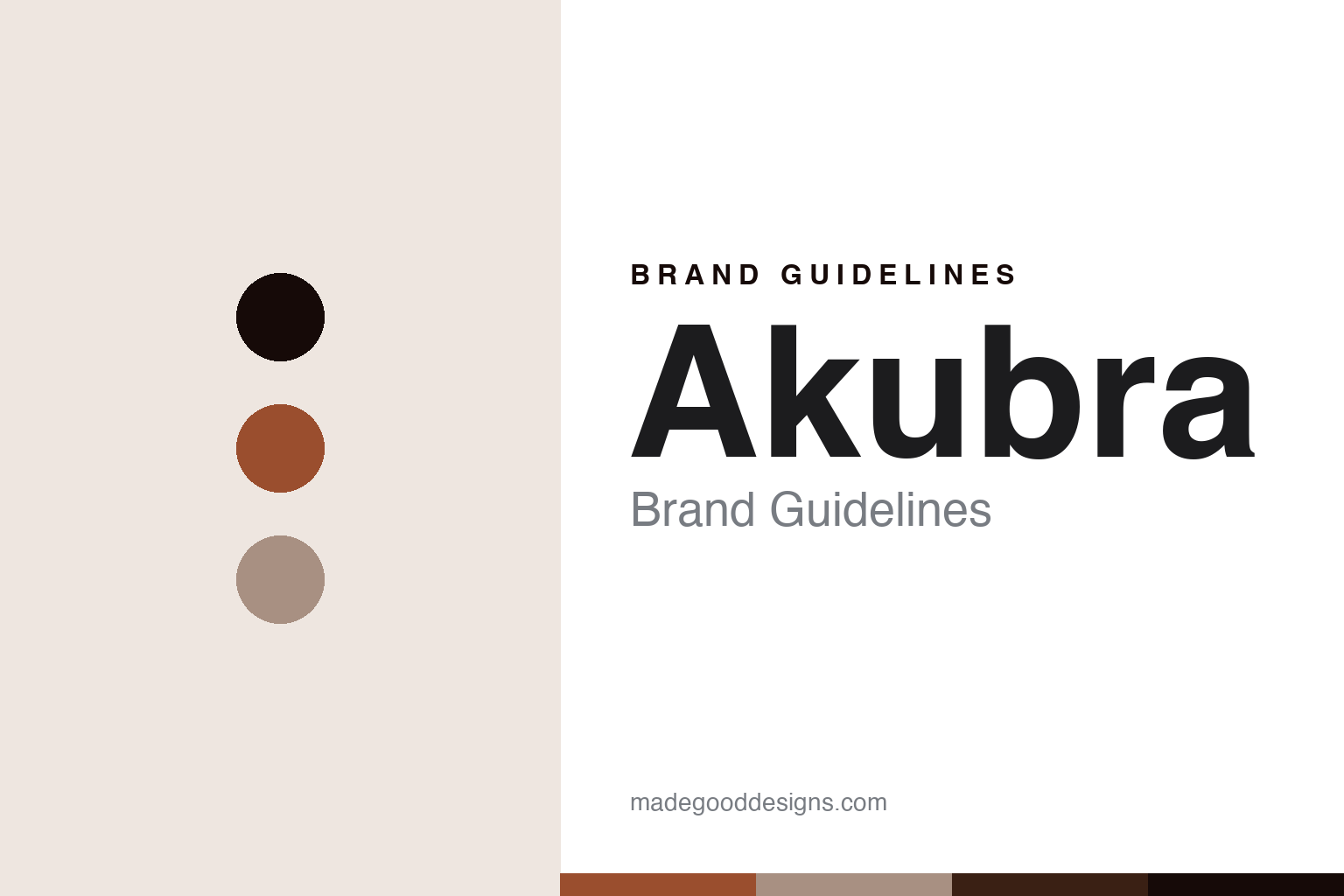
Akubra Brand Guidelines
The Australian bush hat.
Aa
Two constants: a red-earth palette and an outback-sans register. Abstract homage — not an Akubra hat, label or hatband; no Indigenous imagery.
The Australian bush hat
Akubra is the iconic Australian rabbit-fur-felt bush hat, made in Kempsey, New South Wales, and now owned by Tattarang.
Akubra is a lesson in how a hat becomes a country’s working uniform. From Kempsey, in New South Wales, Akubra makes the wide-brimmed rabbit-fur-felt bush hat that is a symbol of rural Australia — on farms, in the outback, and on the heads of the armed forces. Its answer to how a hat is made is durable and local: felt Australian rabbit fur into a tough, weatherproof hat, made at home in Kempsey. A hat that means the Australian bush.
Its identity is the Australian bush hat. Akubra’s outback and Western felt hats — the Territory, the Cattleman, the Snowy River — are the work it is known for. A hat, made for the land. A national symbol of rural Australia.
(Honest notes, so the story stays precise, with cultural care. Akubra makes its hats in Kempsey, New South Wales — genuine Australian manufacture of rabbit-fur felt, made to weather the bush. The business is marketed as founded in 1876 by Benjamin Dunkerley, though the “Akubra” brand name itself was only trademarked in 1912, so we distinguish the company’s origin from the name’s. It was long run by the Keir family, and — an important recent point — it was acquired by Tattarang, the private investment company of Andrew and Nicola Forrest, in November 2023. It is the sole maker of the Australian Defence Force’s slouch hats. On culture: the name “Akubra” is popularly claimed to come from an Aboriginal word, but that origin is unverified, so we do not present it as fact — and we use no Indigenous Australian imagery or motifs in any homage, keeping any “outback” reference to abstract earth colour only. “Akubra” is a trademark, not a generic word for a hat. Its name, logo and the bush-hat trade dress are its IP, described but never reproduced, and there is no official brand hex — these tones are an unofficial interpretation. This is design commentary and does not promote any product.)
Colour
Akubra lives in a red-earth palette. Click a swatch to copy the hex.
Akubra’s identity is rugged, earthy and Australian — a red earth, an ink, a linen, an umber, and a paper. The palette leans red earth and linen: the register of the Australian landscape and a hard-wearing felt hat. It signals the bush and the land over fashion. The honest caveat: with no published brand hex, these values are an original, unofficial interpretation, not first-party colours — an abstract nod to the earth of the landscape, not derived from or evoking any Indigenous art, and not a sampled hat.
The lesson is a red-earth palette signals a bush-hat, made-in-Kempsey identity. Akubra’s world is a rugged, felt, Australian object. For designers, it is a reminder that a warm red earth and a soft linen can carry a brand built on a landscape — the red of dry ground and the neutral of a felt brim — while staying carefully clear of Indigenous design language. Because these tones can fail as small text, keep type dark and let the colour live in the accents, palette and band. The takeaways: make it durable; make it at home; keep the culture respectful; and treat any single hex as unofficial.
Typography
The register is an outback sans — sturdy, plain, honest.
Akubra’s identity carries a sturdy, plain, honest spirit — a working hat, not a fashion piece. An outback sans captures the mood: solid, even and practical, the register of a hat made for the land. Set in a red-earth palette, the outback sans feels sturdy and honest — exactly the personality Akubra carries. It is plain rather than ornate, mirroring a tough felt bush hat. (Akubra’s real labels and hat shapes are things we describe but do not reproduce, and the exact typeface is not ours to use.) Because it is not ours to use, the honest description is “an outback-sans spirit,” shown here in a stand-in. The type behaves like the hat: sturdy, plain and honest.
Aa
An outback-sans spirit — sturdy and plain. (Specimen set in Work Sans, an outback-sans STAND-IN; NOT the Akubra wordmark or any label.)
The hat houses
Akubra stands for the bush hat, made at home with care.
Akubra is a lesson in how a hat becomes a national symbol through work, not fashion. A red-earth palette, an outback sans and a rabbit-fur felt make one thing — the hat of rural Australia — the whole house: rugged, earthy and Australian. The durable local making is the differentiator, and the symbol of the bush is the meaning. The point is a hat made in one Australian town for a century and a half, tough enough for the land and worn as a badge of rural life.
Put to work, the identity is a working symbol, made with care, as design. A hat house in this spirit would make a durable, practical hat at home, and be thoughtful about the culture it touches — using no Indigenous imagery, and not overstating an unverified etymology. A brand learning from it would see that being a country’s working hat is a durable identity — that a hat worn on farms and by the armed forces means something no fashion piece can — and that being precise, made in Kempsey, a company from 1876 with the name from 1912, owned by Tattarang since 2023, keeps the story honest. A brand learning from it would also treat cultural care as part of the brand: a hat tied to a landscape must celebrate that land through abstract natural colour, never through the design language of its First Peoples. The lesson Akubra teaches is that a working symbol can hold an identity: the durable craft gives it substance, and the careful culture keeps it trustworthy. The bush is the personality, and the felt hat is the proof.
For designers and brand-builders, Akubra holds the working-symbol pole in this round of the hat houses, from Australia: make it durable at home, and treat the culture with care. The lessons: build for the land; make it locally; use no Indigenous imagery; don’t overstate an unverified origin; and never reproduce a protected label. It is also a reminder to stay precise: Akubra is the iconic Australian rabbit-fur-felt bush hat, made in Kempsey and owned by Tattarang — with the palette here an unofficial interpretation. Akubra made the bush hat the identity — proof that a working symbol, made with care, can be the difference.
Explore & save
Keep Akubra’s identity on hand — save it to a board in the Made Good inspiration library.
Akubra identity set
Pin the red-earth palette and the outback-sans register to your own board.