Apart Brand Guidelines
The Poznań workshop that became a national jewellery chain.
Aa
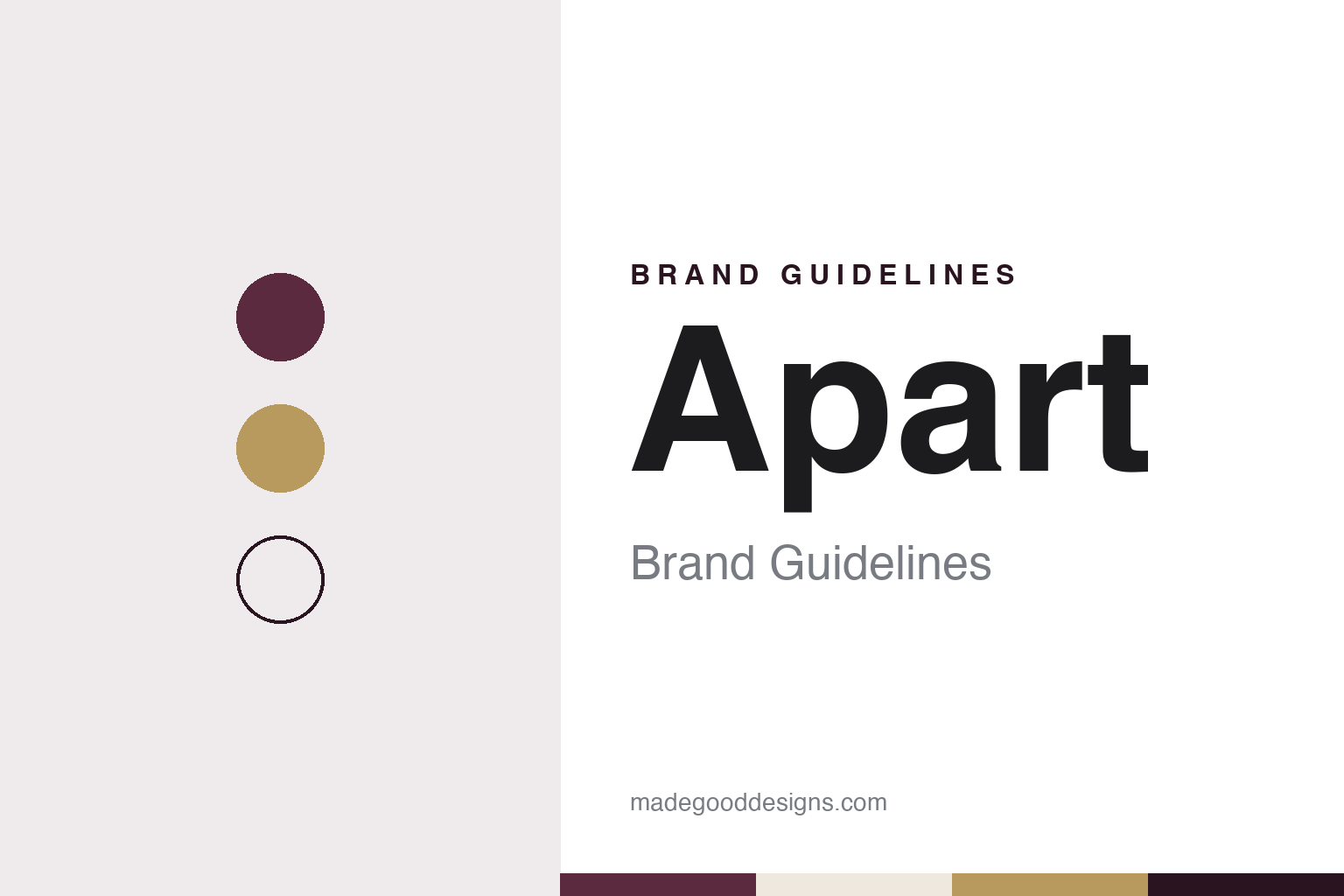
Two constants: an Apart plum, gold and stone palette and a jeweller’s serif register. Abstract homage — not an Apart product or mark; no jewellery, logo or shop sign is reproduced.
A workshop in Poznań
Two brothers, two initials and the word “art”.
Apart grew out of a jeweller’s workshop in Poznań. Rzeczpospolita, in a profile of the founders published on 4 April 2008, says Adam Rączyński trained as an engraver, passed his master craftsman’s examination at 21 and, in 1977, opened a workshop of his own. His brother Piotr Rączyński studied industrial organisation and management at Poznań University of Technology, and the two decided to join forces: Apart was formed in 1983. The newspaper explains the name as the first letters of the brothers’ first names followed by the word “art”. Fashion Biznes gave the same account of the 1977 workshop, the 1983 partnership and the name in June 2025.
The early years were spent making rather than selling. According to Rzeczpospolita, raw materials were rationed in Poland in the 1980s and silver was the easiest metal to obtain, so, like most jewellers of the time, the brothers worked mainly in silver and won orders largely through craft cooperatives. The first large sums they earned went into Italian machinery. The paper calls 1989 the breakthrough year, when orders began to arrive from the jewellery shops then opening across the country; Apart also worked as a subcontractor for other jewellery makers. Piotr Rączyński told the paper the firm had some 900 trade customers before it set out to build a retail network of its own.
By 2008 that network had grown to more than 100 salons in Poland and one in Berlin, Rzeczpospolita reported, and the company had recently built a new head office in Suchy Las, just outside Poznań. Piotr Rączyński had for many years been the company’s president, with Adam as his deputy, and the brothers told the paper that the most important decisions were always made together. The profile described Apart as still controlled by its founders, with no plans at that time to float on the stock market or bring in an outside investor.
Colour
Wedding rings, diamonds and Swiss watches.
Wedding rings were the first pillar of the retail business. Rzeczpospolita wrote in 2008 that Apart had long been associated with a wide choice of wedding bands, and claimed that as many as one in three couples marrying in Poland chose a ring carrying its logo; silver jewellery was the second important segment. The brothers then moved into diamonds, recalling for the paper the nervous moment when their first delivery of stones arrived from Antwerp. Personal contacts made at the jewellery and watch fairs in Geneva and Basel brought Swiss watch brands into the salons: the 2008 profile names Piaget, Vacheron Constantin, Jaeger-LeCoultre and Breitling among them, and the owners of the Swiss watchmaker Edox told the paper their brand had grown in Poland alongside Apart. The paper also noted that Rolex was not on sale in Apart salons; the company answered that it carried other prestigious names and did not need to have everything.
Visibility came from marketing rather than from the founders, who the paper said avoided the spotlight. The 2008 profile notes that Apart sponsored events and television programmes, that its jewellery appeared in popular shows such as Taniec z gwiazdami and in television series, and that it made the award statuettes for prizes given by women’s magazines. It also said the brand led its category in the Marqa brand ranking prepared by Rzeczpospolita.
The range today is far wider. In a June 2025 announcement reported by money.pl, the company described diamond jewellery with premium and high-jewellery collections, a growing line set with laboratory-grown diamonds, pieces combining diamonds with coloured gemstones, gold and silver collections, and licensed series inspired by Harry Potter and Friends. Apart also named its own fashion-jewellery brands Elixa, Artelioni and Aztorin, and said its accessories had widened to sunglasses, silk scarves, backpacks and fragrance. It sells watches in luxury, premium and popular price tiers, runs a loyalty programme called Apart Diamond Club, and said its online shop carried more than 26,000 products.
Typography
Shop signs, salons and own labels.
Jewellery and accessories chains sell through the shop itself as much as through any advertising, so the sign over the door, the colour of the shopfront and the way a window is arranged carry most of the identity. Histoire d’Or, the French chain, is one example: its parent company, THOM, says its stores use an open front, a single identity colour, red, and a layout meant to help customers choose a gift.
The formats in this guide run from watch and fine-jewellery boutiques to mall shops and fashion-accessories stores. Bucherer, in Lucerne, sells many watch and jewellery brands alongside its own fine jewellery, which Luxury London reported in December 2025 is designed and made in an atelier at its headquarters. At the other end of the range are chains selling fashion jewellery and accessories from small units and department-store corners, a format that France’s competition authority described in June 2021 when it reviewed the takeover of the Agatha brand’s 32 boutiques and 40 corners.
Ownership varies as widely as format. Some of the chains covered here in Switzerland, France, the Netherlands, England, Spain, Poland, Germany, Australia and the United States are family businesses, some are listed on a stock exchange, and some belong to private-equity funds or to larger groups. Bucherer was family-owned from 1888 until Rolex bought it in a deal announced in August 2023, while Histoire d’Or has passed between investment funds since the merger that created THOM.
Each guide sets out what can be checked: who founded the chain and when, who owns it now, which own-label collections and services the company names, and how it presents its founders and owners on its corporate pages. Where a fact rests only on the company’s own word, the guide says so.
Aa
A jeweller’s serif for a name built from two initials. (Specimen set in Cormorant Garamond, a serif STAND-IN; NOT the Apart logo.)
Apart
Still in the founders’ hands.
Apart is still owned by the brothers who founded it. Fashion Biznes described Polish Luxury Group in June 2025 as the holding company of Adam and Piotr Rączyński and the owner of the Apart chain, which it put at more than 220 salons and over 2,000 employees and called the largest jewellery chain in Poland. On 30 December 2024 Polish Luxury Group asked Poland’s competition authority, UOKiK, for consent to take full control of Jubitom, a jewellery and watch retailer from Gdańsk founded in 1980, Fashion Biznes reported in January 2025; the same magazine reported that UOKiK cleared the purchase in a decision of 30 May 2025. At the end of June 2025 Apart announced the takeover, saying it covered more than 30 Jubitom salons and would add watch brands such as Omega, TAG Heuer and Longines to its range.
For a design guide, Apart shows how a name built from two initials and the word “art” can carry a family firm from a single Poznań workshop to a national chain of jewellery salons. Compare Bucherer, the Swiss watch and jewellery retailer, and Pandora, a jewellery brand with its own shops. For this guide we use a deep plum, warm gold and pale stone with a serif, an unofficial interpretation; no product or logo is reproduced.
Explore & save
Keep Apart’s identity on hand — save it to a board in the Made Good inspiration library.
Apart identity set
Pin the Apart plum, gold and stone palette and the jeweller’s serif register to your own board.
Source & notes
Frequently Asked Questions
What font can I use to match the Apart look?
This guide describes Apart’s type as “A jeweller’s serif for a name built from two initials”. Its type specimen is set in Cormorant Garamond from Google Fonts as a stand-in; Cormorant Garamond is not Apart’s own lettering.
What colours are in the Apart palette?
This guide’s Apart palette is Salon plum #5B2A3E, Night plum #2A1420, Warm gold #B89A5E, Stone #EFE8DF and Paper #FAF7F3. The tones are the guide’s own unofficial interpretation, not official Apart hex codes.
When was Apart founded?
Apart was founded in 1977 workshop; Apart formed 1983, in Poznań, Poland.
Who founded Apart?
Apart was founded by Adam and Piotr Rączyński in 1977 workshop; Apart formed 1983.
Who owns Apart?
Apart today: Polish Luxury Group, owned by the founders. Apart is known for Wedding rings, diamond jewellery, Swiss watches.