Arclands Brand Guidelines
A Sanjō tool wholesaler, Home Center Musashi and Viva Home.
Aa
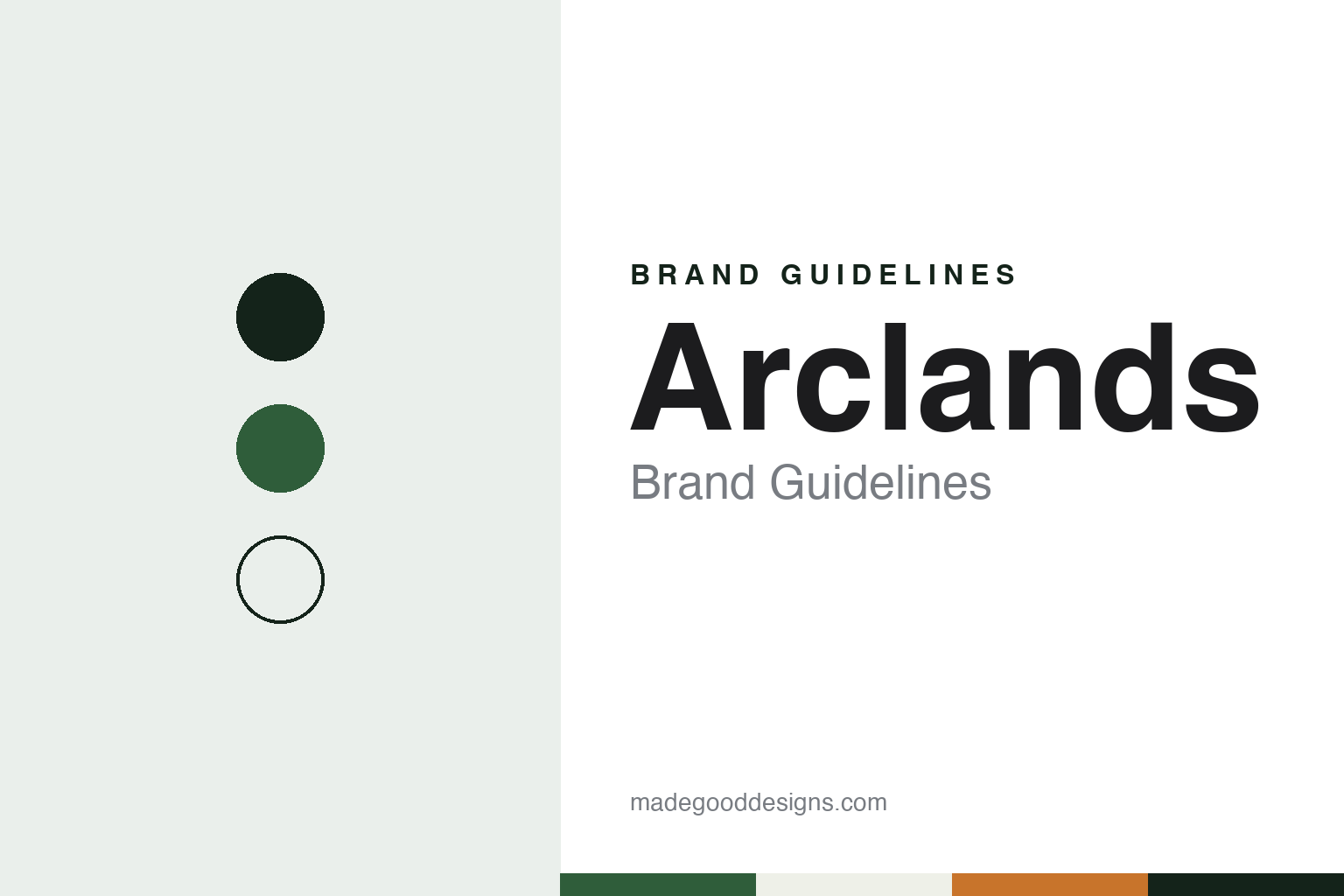
Two constants: a forest green, deep pine and timber orange palette and a warehouse gothic register. Abstract homage — not an Arclands product or mark; no logo, sign or mascot is reproduced.
Sakamoto
Hardware wholesale in Sanjō.
Arclands comes from Sanjō, in Niigata prefecture on the Sea of Japan side of Honshu. Japanese Wikipedia, citing a 2002 retail yearbook published by the Nihon Keizai Shimbun, says the business was founded in 1952 as Sakamoto Shokai, a wholesaler of hardware. The company’s own history begins in July 1970, when the family business was reorganised as a joint-stock company, Sakamoto Sangyo, to wholesale hardware centred on blades and craftsmen’s tools.
Japanese Wikipedia says the company entered DIY retailing in 1973. Its earliest home centre opened in May 1978 at Aoyama in Niigata city, now part of Nishi ward, the company says. Japanese Wikipedia records that the store name was then written “Home Center 武蔵,” using the Chinese characters for Musashi, and that the chain had a mascot modelled on Musashibō Benkei, the warrior monk of Japanese legend. Because the digits 6, 3 and 4 can be read as mu, sa and shi, the number 634 also appeared on store signs for a time.
In December 1987 Sakamoto Sangyo absorbed Musashi Co., another Sanjō company, and changed its name to Arcland Sakamoto, the company says. Its shares were registered for over-the-counter trading with the Japan Securities Dealers Association in September 1989, and in 1990 it moved into a new head office and distribution centre at Kamisugoro, in Sanjō.
Colour
Musashi stores, Katsuya and Viva Home.
The Musashi stores spread slowly from Niigata. Japanese Wikipedia dates the earliest home centre outside the prefecture, Home Center Musashi Yuza in Yamagata, to June 1992, and the earliest larger “Super Center Musashi,” in Nagaoka, to July 1993. In November 1993 the company began managing Ark Plaza Nagaoka, a shopping centre beside its own store, and in 1998 it opened a distribution centre, Arcland Depot, west of Niigata city, the company says. Later Musashi stores reached Toyama, Himeji, Kyoto, Miyagi, Osaka, Nagano and Fukui, according to Japanese Wikipedia.
The company also grew outside DIY. In 1993 it spun off its restaurant division as Arcland Service, and in August 1998 that subsidiary opened its earliest Katsuya tonkatsu restaurant, in Sagamihara, Kanagawa, the company says. Arcland Sakamoto moved to the second section of the Tokyo Stock Exchange in February 2003 and to its top section in February 2004, by the company’s dates, and took over a fitness business from Vertex in September 2019, running gyms under franchise.
The biggest change came in November 2020, when it made LIXIL Viva, operator of the Viva Home and Super Viva Home stores, a wholly owned subsidiary, after a capital tie-up and tender offer, according to Japanese Wikipedia. The company moved to the Tokyo Stock Exchange Prime market in April 2022 and absorbed the subsidiary, by then called Viva Home, in September 2022, when it also changed its name to Arclands, Japanese Wikipedia says. The former Viva Home head office in Saitama became its Kanto headquarters.
Typography
Roadside stores and own names.
Japan’s big electronics, furniture and home-centre chains mostly grew from single regional shops, and their corporate pages still tell that story in the same order: a founding year and town, a founder, a date when the company was incorporated, and the dates when its shares were listed, now usually on the Tokyo Stock Exchange’s Prime Market. Many have since become holding companies, with the stores run by a subsidiary and the parent group named separately, so the name on the sign and the name on the share register are not always the same.
Store names carry much of the identity. Some groups keep a different name for each store format: Yamada Denki, for example, uses Tecc Land for its roadside stores, LABI for its large stores beside city stations and Tecc LIFE SELECT for stores that add furniture and household goods, according to Japanese Wikipedia. Others have done the opposite. Edion put four regional store names under one name, EDION, in October 2012, the company says.
The roadside store is the common type. Japanese Wikipedia describes Tecc Land buildings with the car park on the ground floor and the sales floors above, and Edion lists roadside stores alongside shopping-mall tenants and city stores. Point cards are part of the offer as well: Yamada tested its point system before rolling it out, and Edion has added several shared point programmes since 2015, Japanese Wikipedia records.
Own-label ranges are named plainly and sit beside the makers’ brands. Edion sells products under its e angle and e angle select names, and a line developed with the furniture retailer Nitori, while Yamada sells furniture under the IDC OTSUKA name after absorbing the retailer Otsuka Kagu in 2022. This guide sets out what can be checked about each chain, and marks what rests on the company’s own word.
Aa
A sturdy gothic for aisle signs and price boards. (Specimen set in Zen Kaku Gothic New, a sans STAND-IN; NOT the Arclands logo.)
Arclands
Two home-centre names, one company.
Today Arclands lists a head office in Sanjō and a Kanto headquarters in Saitama city. Its website names home centres under Home Center Musashi and Viva Home, trade stores under Ark Master, Musashi Pro and Viva Home Pro, the Ark Oasis art-and-craft shops, Nico Pet pet shops, Musashi Shokuhinkan supermarkets and the Ark Home and Fresh House renovation businesses. Japanese Wikipedia counts 236 Musashi and Viva Home stores as of July 2026, two of them outside Japan. In September 2023 the company made Arcland Service Holdings a wholly owned subsidiary, and in September 2024 it moved the original wholesale business into a new subsidiary that again carries the Arcland Sakamoto name, the company says.
Since a tie-up with the supermarket chain Lopia in December 2024, Arclands has run Lopia stores as a franchisee in Niigata prefecture. Gekiryu Online, a retail trade publication, reported that the Nagaoka Lopia, opened on 11 February 2026, was the third, and that the store inside Home Center Musashi Niigata Nishi, which reopened on 17 September 2026 in place of a Musashi Shokuhinkan, was the fourth.
On 14 April 2026 Arclands and the home-centre chain Joyful Honda announced a plan to combine under a new joint holding company, Gekiryu Online reported; the integration was agreed in April 2026 and was not completed at the time of writing. On 3 July 2026 Arclands said it had found signs of improper accounting at Pets First Holdings, a pet-shop company it had bought outright in June 2025, set up a special investigation committee of outside experts and changed every date in the integration timetable to undecided, the same publication reported. The committee’s report, published on 2 October 2026, found that figures Pets First reported to its parent had been overstated, so that Arclands’ consolidated results for the year to February 2026 were overstated, and it recommended stronger oversight of subsidiaries, Gekiryu Online reported.
For a design guide, Arclands shows how a company can keep two store names, one inherited through a merger, beside a corporate name of its own. Compare Komeri, another home-centre chain from Sanjō, and DCM. For this guide we use forest green, deep pine and a timber orange with a sans, an unofficial interpretation; no product or logo is reproduced.
Explore & save
Keep Arclands’s identity on hand — save it to a board in the Made Good inspiration library.
Arclands identity set
Pin the Arclands forest green, deep pine and timber orange palette and the warehouse gothic register to your own board.