Aurender Brand Guidelines
The Korean music server maker that began as Widealab in 2010.
Aa
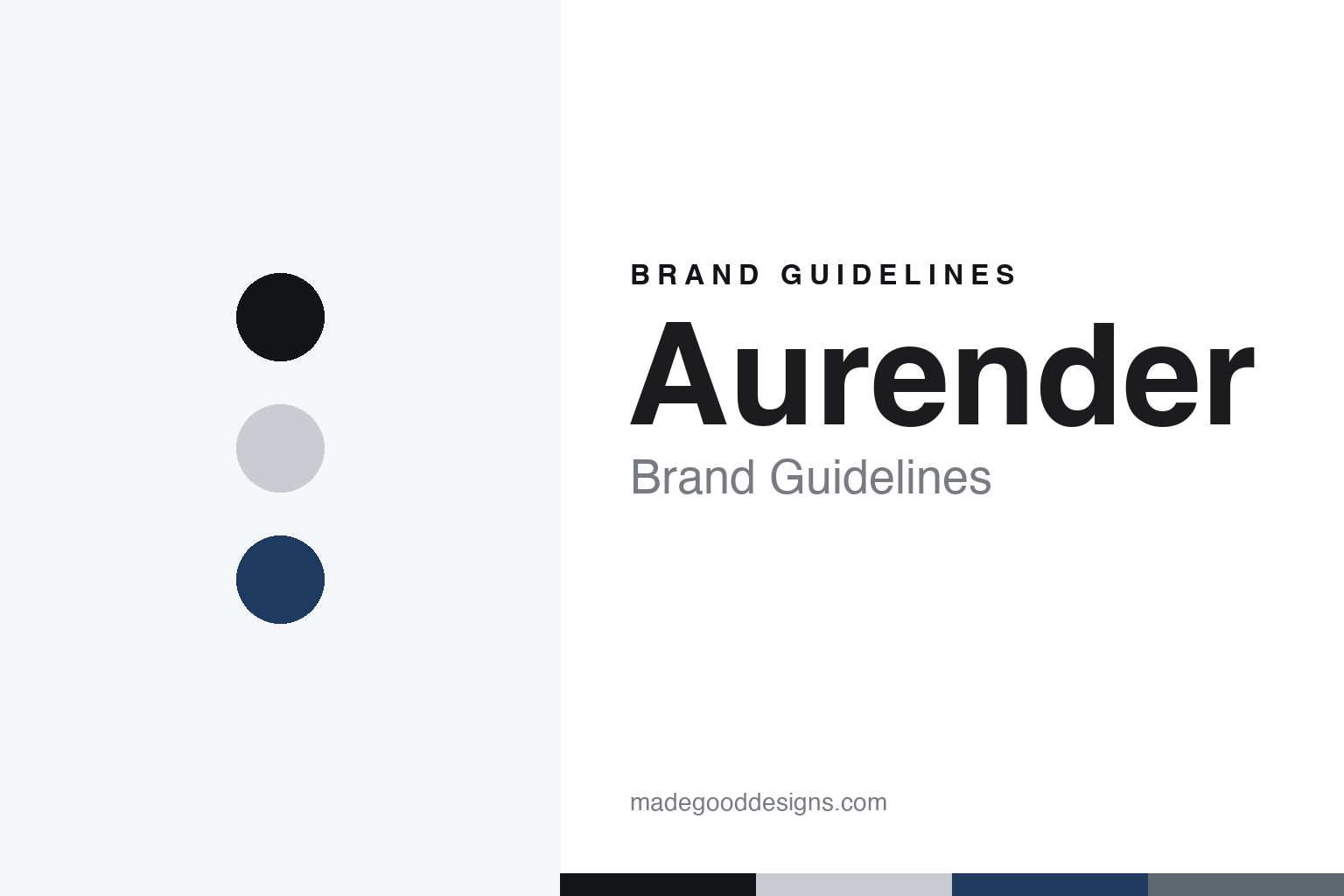
Two constants: an Aurender black, silver and blue palette and a clean digital sans register. Abstract homage — not an Aurender product or mark; no server, logo or nameplate is reproduced.
Widealab
A video-player team turns to music.
Aurender did not begin as a company called Aurender. Its first maker was Widealab, a Korean venture founded in January 2010, according to a letter from its chief executive, Lee Hyuk — known in English as Harry Lee — published on the company’s Korean website in 2011 and preserved by the Wayback Machine. He wrote that Widealab was set up with key developers from DViCO, the company he had run, which made the TViX media players.
Widealab’s English site said in 2011 that its parent company was Wonik Corporation, listed on the Korea Stock Exchange, that its founding engineers all came from Wonik, and that Lee had been chief executive of DViCO, also a Wonik Group subsidiary, where he built the DViCO, TViX and Fusion HDTV brands. A later version described the company as sitting “next to a scenic stream filled with huge fish, just south of Seoul.” We give these as the company’s own statements.
The first product was the music server. Lee wrote that after a year and a half of development it was shown abroad for the first time in July 2011 at the California Audio Show, near San Francisco’s airport — the company’s homepage that month invited visitors to a suite at the Crowne Plaza in Burlingame — and that by October Widealab had distributors in 18 countries. The brand-history site Stereoindex names that first server the S10, and says the name joins “audio” and “renderer.”
From the start the pitch was convenience as much as sound. Widealab’s 2012 site said its servers were controlled from an iPad app, which put “control of the entire music collection into the palm of your hand,” and signed off: “Bringing people closer to music with convenience and realistic sound.” In his letter Lee cast Widealab as a company that takes on challenges, and said the first server used several specifications tried for the first time.
Colour
From TVLogic division to Aurender Inc.
The company behind the brand changed over the next five years, and its own website records the steps. The Widealab name stayed in the site’s footer until late 2014. From January 2015 the “About us” page said “Aurender is the brand name of SmartAudio Division of TVLogic Co., Ltd.” — TVLogic being a Korean maker of professional broadcast monitors. Dealer histories say Lee merged Widealab into TVLogic while the S10’s successor was in production; we could not find the date or terms in the sources we checked. In January 2016 the same page named Aurender Co., Ltd., and by July 2016 Aurender Inc., the name it carries today.
Through those years the page also said where the work was done: “The products are developed and manufactured in Korea. Product design and marketing is done in California, USA.” Today the company describes itself as having been, “since 2010,” an industry leader in digital source components, “taking the computer out of ‘computer audio,’” and says it keeps “complete control and responsibility” over both the hardware and the software of its products, including its Conductor control app.
Its awards page is long. The company lists a Red Dot design award in 2015 for the FLOW, a portable DAC and headphone amplifier; The Absolute Sound’s Product of the Year for the N100H in 2015 and the W20SE in 2020 and 2021; Hi-Fi News Outstanding Product awards in 2022 and 2023; and Japanese Stereo Sound Grand Prix awards. Stereoindex adds that the S10 won Computer Audiophile’s Product of the Year for 2011.
Typography
Asia-Pacific hi-fi.
Hi-fi making in Australia and New Zealand has largely been the work of small firms a long way from their biggest markets. Plinius says it was founded in 1980 to serve “local customers in New Zealand,” and that its amplifiers are assembled at a Christchurch facility shared with other manufacturing work. Krix says it was established in Australia in 1974.
Ownership has often followed the fortunes of a parent. Halcro, its website says, was created by the physicist Bruce Candy inside his metal-detector company, Minelab; when Codan bought Minelab in 2008, Halcro was shelved, until Longwood Audio, set up by the owners of an Australian hi-fi importer, bought its assets — in 2014 or 2023, as different pages of the same site say.
South Korea’s best-known hi-fi names are digital specialists. Astell&Kern began as the premium player brand of iriver, which SK Telecom bought in 2014 and which renamed itself Dreamus in 2019; English Wikipedia says bemyfriends became Dreamus’s largest shareholder in 2025. Aurender makes music servers, and HiFi Rose belongs to Citech, a listed company that made its name with kiosks; Citech says 87% of HiFi Rose’s 2024 sales were exports.
The makers in this guide are Krix and Halcro in Australia, along with Redgum, which stopped manufacturing at the start of 2025; Plinius, in Christchurch, and Perreaux in New Zealand; Aurender, whose head office is at Anyang, just south of Seoul; and HiFi Rose, run from Citech’s offices in Seoul, according to their websites and filings.
This guide sets out what can be checked about each brand — who founded it, who owns it, and what it says about where its products are made — and marks clearly what rests only on the company’s own word.
Aa
A clean digital sans for a maker of music servers. (Specimen set in Red Hat Display, a sans STAND-IN; NOT the Aurender logo.)
Aurender
Servers, streamers and an all-in-one.
Today Aurender’s website gives its headquarters as the OBIZ Tower in Anyang, Gyeonggi-do, south of Seoul, with Aurender America in Lake Forest, California, and Aurender Europe in San Sebastián, Spain; Stereoindex dates the American company to 2015. The range has grown well beyond the first server. It now runs from digital-output music servers such as the N30SA, N200 and N150, through servers with their own DACs such as the A1000, to the AP20, which adds an amplifier in one chassis, plus content servers for ripping CDs, master clocks and a network switch. Reviewing the A1000 in February 2025, Twittering Machines priced it at $3,500, as a music server, streamer, DAC and preamplifier in one box. The company’s awards list shows the A1000 ranked first among network players under ¥1 million in the Japanese magazine HiVi’s Best Buy lists in 2025 and 2026, and Stereophile’s 2026 Recommended Components listing the N50 in its A+ class.
The website also carries an “A1 15th Anniversary” model — a nod to the 2011 debut — and a page for its appearance at the HIGH END show in Vienna in 2026. Fifteen years on, the founding idea is unchanged: a music library that lives in a dedicated component, run from an app, rather than on a general-purpose computer.
For a design guide, Aurender shows how a brand can outlast its first company — Widealab, then a TVLogic division, then Aurender Inc. — while keeping one product idea: a dedicated box in place of a computer. Compare Astell&Kern, another Korean digital-audio brand, and HiFi Rose, a Korean maker of network streamers. For this guide we use black, anodised silver and a deep blue with a sans, an unofficial interpretation; no product or logo is reproduced.
Explore & save
Keep Aurender’s identity on hand — save it to a board in the Made Good inspiration library.
Aurender identity set
Pin the Aurender black, silver and blue palette and the clean digital sans register to your own board.