Baleno Brand Guidelines
A textile group’s own casual-wear brand, under the words “Simple Living.”
Aa
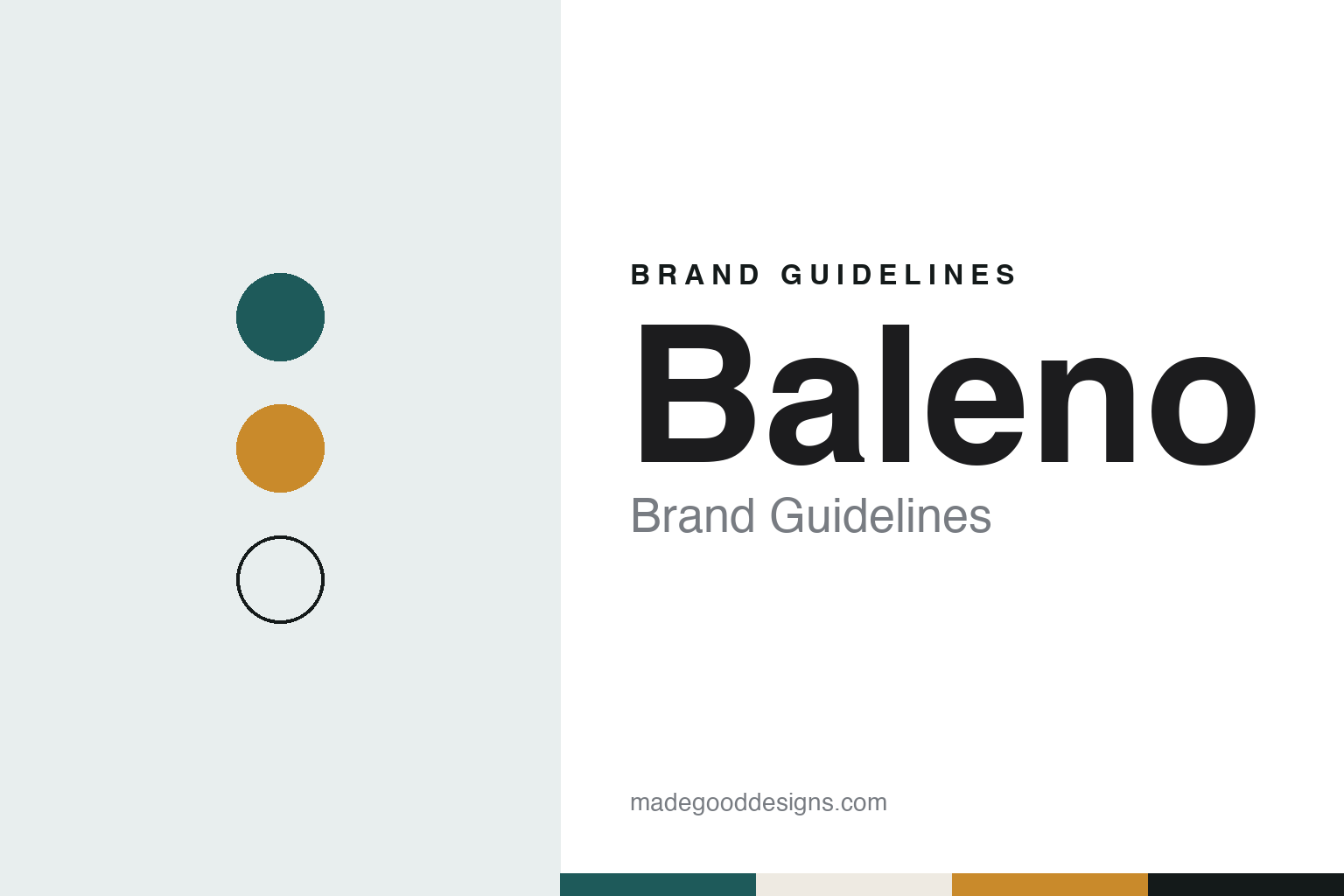
Two constants: a teal, linen and ochre palette of our own and a plain geometric sans register. Abstract homage — not a Baleno product or mark; no garment, logo or shop sign is reproduced.
A trademark and a mill
A knitting business that bought a clothing brand.
Baleno, written 班尼路 in Chinese (Bānnílù in Mandarin), is a Hong Kong casual-wear brand sold in shops and online across Asia. The brand’s own website traces its story to 1981, when, it says, the trademark “BALENO” was registered in Hong Kong. Its present shape dates from 1996, when the Hong Kong-listed textile company Texwinca acquired the trademark and set up Baleno Holdings Limited as the holding company, according to both the brand’s website and English Wikipedia.
Texwinca came to clothing retail from the mill side. The group says it began in 1975 as Tak Shun Knitting Factory, which knitted fabric for garment makers and exporters. Between 1983 and 1990, its timeline says, it added yarn dyeing and the dyeing and finishing of knitted fabric. In 1992 it moved its Hong Kong production lines to Dongguan in mainland China, formed Texwinca Holdings Limited and listed it on the Main Board of the Hong Kong stock exchange under the stock code 321.
Four years later the group moved into casual-wear retailing under the Baleno name, “with main focus in China,” its timeline says. Texwinca’s retail-brand page says that from then on Baleno developed its collections around a single idea, “SIMPLE LIVING,” with clean, simple clothes for women, men and children; the words still sit in the title of the brand’s Hong Kong website.
The rest of the group stayed in textiles. Texwinca says it set up Creative Textile Technology Company (Guangdong) Limited for garment production in 2018 and a Henan company for the same work in 2021, and that in 2023 it bought a dyeing and knitting company in Vietnam and renamed it Ecotextile (Vietnam) Company Limited.
Colour
Growth in China, a Taiwan exit and a bus uniform.
The brand grew fastest in mainland China. English Wikipedia, citing the 2004 case-study book International Retail Marketing by Margaret Bruce, Christopher Moore and Grete Birtwistle, says Baleno had 535 shops there by 2003, and that the study linked its growth to affordable prices, mass appeal, design and quality.
Not every market lasted. On 2 March 2015 the Taipei Times, in a feature on international fast-fashion chains arriving in Taiwan, reported that Baleno Kingdom Ltd, a Hong Kong-based casual-wear retailer, had left the Taiwanese market in October 2014, closing dozens of shops. The same article said older casual-wear names in Taiwan had been hurt by the new arrivals.
Texwinca’s retail-brand page sets out the family of lines under the name. Baleno itself is pitched on value for money, with designs for mixing and matching. Baleno Junior is a children’s casual-wear line for ages 3 to 12, which, the company says, launches co-branded licensed collections with different partners each season. Baleno Ladies is a women’s casual line aimed at 15- to 35-year-olds, and Baleno Sports sells athleisure clothing for sport and everyday wear. The brand’s website adds that the group runs several labels so that it can reach different customers.
Baleno also works on commissions. In November 2021 The Standard reported that the bus company KMB had partnered with “local brand Baleno” to design new staff uniforms. From 10 January 2022, KMB drivers were to wear a red and black polo shirt — the bus company’s own trademark colours — in place of the old green uniform, with a black fleece jacket, a windbreaker and dark grey trousers for winter, while terminus supervisors and bus-stop wardens moved to uniforms led by blue and black.
Typography
Shop signs, own labels and owners.
Hong Kong and Taiwanese retailers and fashion chains present themselves in at least two languages at once. A shop sign, a website header or a stock-exchange filing will often pair an English name with a Chinese one, and the two are not always translations: Baleno writes its Chinese name as 班尼路, and Bossini’s holding company appears in Chinese as 堡獅龍. Logos and colour schemes are rarely set out in public brand rules, so what can be documented is how each company writes its own name, in which case and in which script.
The formats vary widely. This group runs from mall fashion stores and multi-brand boutiques to cosmetics and drugstore chains, electrical and camera retailers and online marketplaces. Many sell through a mix of shops they run themselves, franchised or consignment counters and online stores on large platforms, and several have left markets where they once traded.
Ownership is just as varied. Some chains are family businesses that grew into listed companies; some sit inside larger groups whose main trade is something else, such as a textile maker that owns a clothing brand; and some have been taken private after years on the stock exchange. Filings with the Hong Kong stock exchange and Taiwan’s exchanges record many of those changes with dates, and they are used here alongside dated reports in the trade and business press.
Collections and own brands are given as the companies name them, from children’s and sports lines to streetwear labels, and corporate pages on founders and owners are treated as the company’s own account. This guide sets out what can be checked about each chain — who founded it, who owns it and how it presents its name — and marks clearly what rests only on the company’s word.
Aa
A plain geometric sans for a “Simple Living” label. (Specimen set in DM Sans, a sans STAND-IN; NOT the Baleno logo.)
Baleno
A retail arm inside a textile group.
Baleno is not a stand-alone company. Texwinca’s environmental, social and governance report for the year to 31 March 2024, filed with the Hong Kong stock exchange in July 2024, defines the Baleno Group as two companies: Baleno Kingdom Limited (班尼路有限公司) and Guangzhou Friendship Baleno Co. Ltd. It lists them with the group’s Dongguan textile and garment plant as the core of the business it reports on, covering textile and garment manufacturing and casual-wear retailing in Hong Kong, Dongguan and Guangzhou.
The same report describes a shift in how Baleno sells. During that year, it says, the group “continued to reduce the retail network and expanded the E-commerce sales, consignment stores and franchise stores,” while its Hong Kong retail business “remained stable.” Texwinca’s website now says that Baleno has evolved from a traditional offline retailer into a casual-wear brand centred on e-commerce, run through online shops on large platforms alongside physical stores in mainland China, Hong Kong and Southeast Asia. In July 2024 The Standard reported that Texwinca, which it described as Baleno’s owner, remained cautious about Hong Kong’s retail market as residents travelled north across the border to shop.
Texwinca’s own pages describe the brand’s design in plain words: “simplicity in design,” clothes for “mixing and matching with ease,” and the “SIMPLE LIVING” concept. Those phrases do the work of a brand book, and the sub-labels follow the same plain rule: Junior, Ladies and Sports each add one word to the main name rather than inventing a new one. The KMB uniforms show the other side of the work: there, by The Standard’s account, the colours were the bus company’s, and Baleno supplied the design.
For a design guide, Baleno shows how a textile group can run a mass casual-wear brand under one plain idea and a family of simply named lines. Compare Bossini, another Hong Kong casual-wear chain owned by a listed group, and Uniqlo, the Japanese casual-wear chain. For this guide we use a deep teal, a linen and an ochre with a sans, an unofficial interpretation; no product or logo is reproduced.
Explore & save
Keep Baleno’s identity on hand — save it to a board in the Made Good inspiration library.
Baleno identity set
Pin the Baleno teal, linen and ochre palette and the plain geometric sans register to your own board.
Source & notes
Frequently Asked Questions
What font can I use to match the Baleno look?
This guide describes Baleno’s type as “A plain geometric sans for a “Simple Living” label”. Its type specimen is set in DM Sans from Google Fonts as a stand-in; DM Sans is not Baleno’s own lettering.
What colours are in the Baleno palette?
This guide’s Baleno palette is Deep teal #1E5A5A, Ink #141A1A, Linen #EEEAE2, Ochre #C98A2B and Paper #F8F7F3. The tones are the guide’s own unofficial interpretation, not official Baleno hex codes.
Who owns Baleno?
Baleno is owned by Texwinca Holdings Limited (Since 1996).