Cajamar Brand Guidelines
A farm cooperatives’ bank from Almería that spread across Spain.
Aa
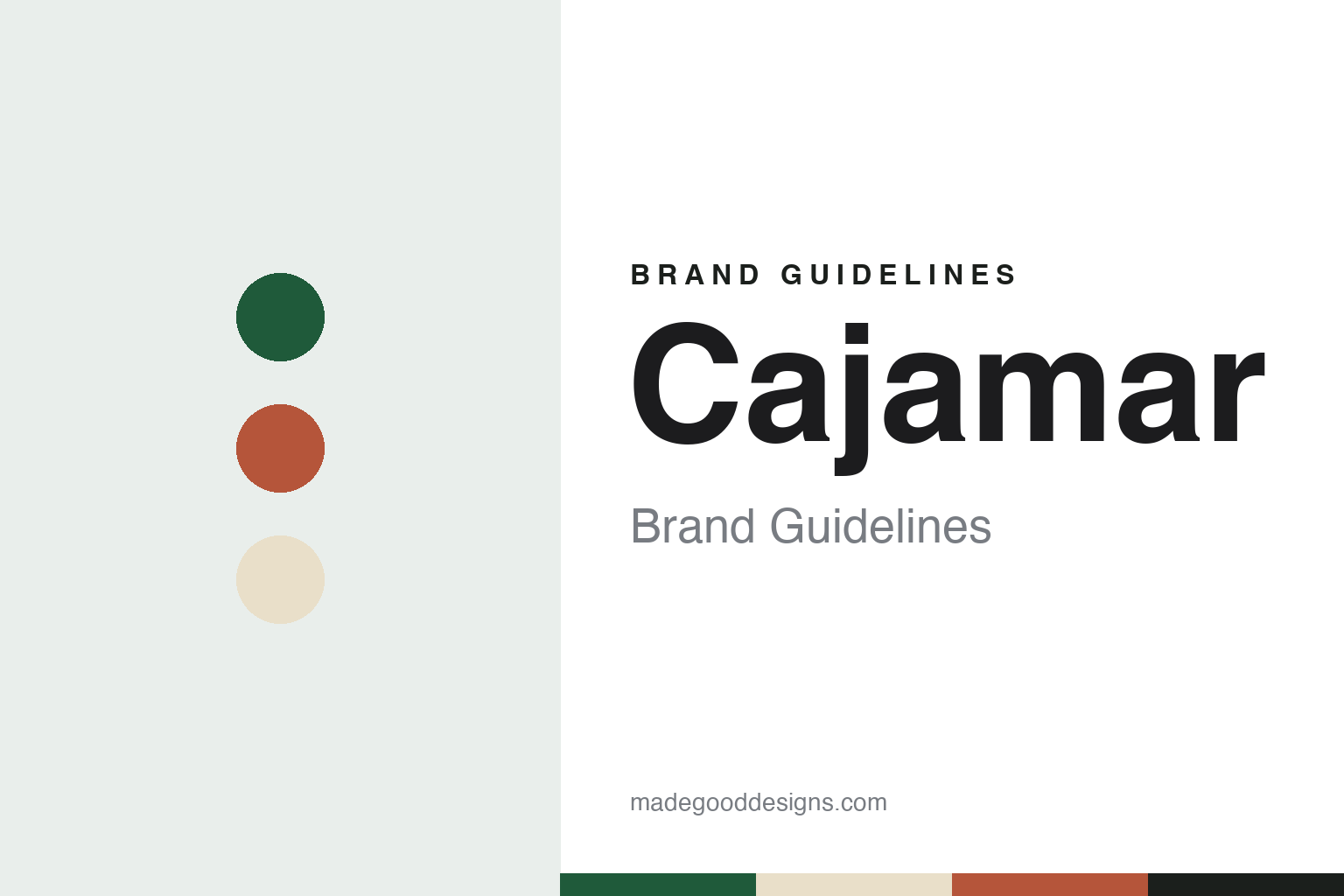
Two constants: a field green, terracotta and sand palette and a plain grotesque register. Abstract homage — not a Cajamar asset; no logo, wordmark or product is reproduced.
Caja Rural Provincial de Almería
Farm cooperatives, a small office and the first greenhouses.
Cajamar began as the Caja Rural Provincial de Almería, a credit cooperative for the farmers of the province of Almería. In a 2026 anniversary feature published in the newspaper Ideal, Cajamar says the bank was constituted on 8 June 1963 by 29 agricultural cooperatives of Almería, most of them small and short of money, which is why it took three years to start trading. It grew out of the provincial union of farm cooperatives and was meant to give the cooperative farm movement a bank it could call its own.
The first office opened on 20 April 1966 in a small room on Calle Méndez Núñez in the city of Almería, Spanish broadcaster Onda Cero reported on the sixtieth anniversary in April 2026. At a time when traditional banks were wary of local farmers, the station said, the new caja lent money for the first wells, greenhouses and drip irrigation. The company’s feature places the founding in a period when the province’s grape and orange harvests were declining and the first vegetables grown on sanded plots, in the open and under shelter, were showing promise.
Growth was steady, according to the same company feature. In 1967 the statutes were changed so that members of the farm cooperatives could join the credit cooperative directly as individuals. In 1968 it was registered with the Banco de España as a credit cooperative and began to channel official farm credit, and in January 1969 it opened its first branch, at Adra; the absorption of the Caja Rural Cooperativa de Albox followed that April. By the end of 1972, the feature says, it had 50 branches. It opened its first offices in the Murcia region in 1989 and in Barcelona in 1990.
Spanish Wikipedia lists the bank’s presidents from 1966 onward and sets out the chain of mergers that produced today’s bank: Caja Rural del Campo de Cartagena in 1989, the rural banks of Almería and Málaga in 2000, Caja Rural del Duero in 2007, Caja Rural de Baleares in 2010, the Valencian banks in 2011 to 2013, Caja Rural de Canarias in 2013 and Caixa Albalat in 2018. After the 2000 merger with Málaga, the company feature says, the bank expanded nationally as Cajamar Caja Rural.
Colour
From a provincial caja to a national cooperative group.
The larger mergers came in a short span. On 15 December 2011, the news agency Europa Press reported, the boards of Cajamar Caja Rural and Ruralcaja, which it described as the two largest rural banks in Spain, signed a merger project; the merged cooperative was to be called Cajas Rurales Unidas, with its registered seat in Almería and an operating and institutional seat in Valencia. The same report said Cajamar had promoted the Grupo Cooperativo Cajamar, the first “sistema institucional de protección” (SIP), a mutual support scheme for cooperative banks, authorised by the Banco de España, which Spanish Wikipedia dates to December 2009. The bank trades today as Cajamar Caja Rural, Sociedad Cooperativa de Crédito.
A central bank followed. On 28 November 2013 the newspaper ABC reported that the general assembly had approved the Banco de Crédito Social Cooperativo, which was to start operating in April 2014 with 32 shareholding entities; the group would delegate strategy, risk policy and control, treasury and the commercial plan to the new bank, and from 2014 it would be supervised by the European Central Bank. Spanish Wikipedia says Cajamar Caja Rural is the largest shareholder of that bank, which leads and represents the group, and lists 19 entities in the group, most of them small rural banks in the Valencia region, such as Caixa Rural Torrent and Caixa Rural de Vila-real.
The cooperative structure is set out by the bank. Its legal form is a credit cooperative, and its governing bodies are the general assembly and the governing council, Spanish Wikipedia says. On its corporate pages Cajamar calls itself Spain’s leading rural bank and credit cooperative, says the group has more than 1.8 million members, and describes a social-economy remit with special attention to the farm and food sector, households, the self-employed and small firms. It says it is one of the ten significant institutions of the Spanish financial system and so comes under direct supervision by the European Central Bank’s Single Supervisory Mechanism.
Farming research remains part of the picture. In September 2026 Ideal reported that the Las Palmerillas experimental station was hosting the thirteenth exhibition of historic table-grape varieties of Almería, organised by the Fundación Cajamar with the Grupo Ecologista Mediterráneo, and that the two had set up a gene bank of rescued vines on the station’s land.
Typography
Design and documentation.
Cooperative and ethical banks sit in a corner of finance where the ownership model is part of the message. A cooperative bank is owned by its members, who usually buy shares and vote at a general meeting; an ethical bank sets out which sectors it will and will not lend to. Many institutions do both, and their identities tend to say so plainly, with wordmarks in strong single colours — orange, green and red among them — and names that point to a place, a farming root or a founding idea.
Their websites follow a recognisable pattern. Beside pages on current accounts, savings, mortgages and business lending, they usually carry a section on membership: how to join, how many shares a member needs, and how voting works. GLS Bank in Bochum, for example, gives each member one vote at its annual general assembly regardless of how many shares they hold, according to German Wikipedia.
Imagery tends towards the local and the collective: branch fronts, regional offices, member meetings and the projects a bank has financed, from housing to renewable energy and schools. Statements of values and sustainability policies are given prominent space, and they are presented as the bank’s own commitments rather than as independent findings. GLS Bank goes further than most by publishing its business loans in its customer magazine, Der Bankspiegel, German Wikipedia says.
The paper trail matters as much as the logo. These banks publish annual reports, and many add impact or sustainability reports that set out where deposits went. This guide uses those documents, encyclopaedias and dated press reports to record when each bank was founded, how its local banks and central institutions merged, and how it describes its own structure, keeping the bank’s claims attributed to the bank.
Aa
A plain grotesque — a sober register for a cooperative bank. (Specimen set in Inter Tight, a sans STAND-IN; NOT the Cajamar logo.)
Cajamar
Every province, mobile branches and two pending partners.
In May 2025 Ideal reported from the annual general assembly, held at the bank’s headquarters in the Almería science and technology park, that Cajamar planned to complete its presence in every Spanish province with a new office in San Sebastián that month; its president, Eduardo Baamonde, said it would become “the only rural bank present across the whole country.” He said more than a third of the branch network was in towns of fewer than 5,000 people, and the group said its 12 mobile offices served 78 villages in Alicante, Almería, Castellón, Cuenca and Valencia. Ideal gave the group’s network at the end of 2024 as 751 offices.
New outside shareholders have been agreed but not completed. On 24 June 2026 Ideal reported that Crédit Agricole S.A. and the Banco de Crédito Social Cooperativo had signed a strategic alliance under which the French group would buy a 9.9 percent minority stake in the bank, with commercial agreements on custody, factoring, leasing and investment products; the deal was subject to no objection from the authorities and was expected to be formalised in the following months, so it is treated here as pending. On 2 October 2026 Europa Press reported that the insurer Generali had agreed to acquire a further 9.9 percent and would take a board seat once the purchase was authorised and completed; that deal too was pending at the time of writing. The report said the group’s own entities would keep more than 78 percent of the bank’s capital.
A naming note: Cajamar is also the name of a town in the Brazilian state of São Paulo, which has no link to the Spanish bank.
For a design guide, Cajamar shows how a farm-credit cooperative can keep its rural story while growing into a national group. Compare Crédit Agricole, the French cooperative group that agreed in 2026 to take a stake, and Laboral Kutxa, another Spanish credit cooperative. For this guide we use a field green, terracotta and sand with a sans, an unofficial interpretation; no product or logo is reproduced.
Explore & save
Keep Cajamar’s identity on hand — save it to a board in the Made Good inspiration library.
Cajamar identity set
Pin the field green, terracotta and sand palette and the plain grotesque register to your own board.