Camplify Brand Guidelines
A Newcastle van-sharing marketplace that grew into a listed group.
Aa
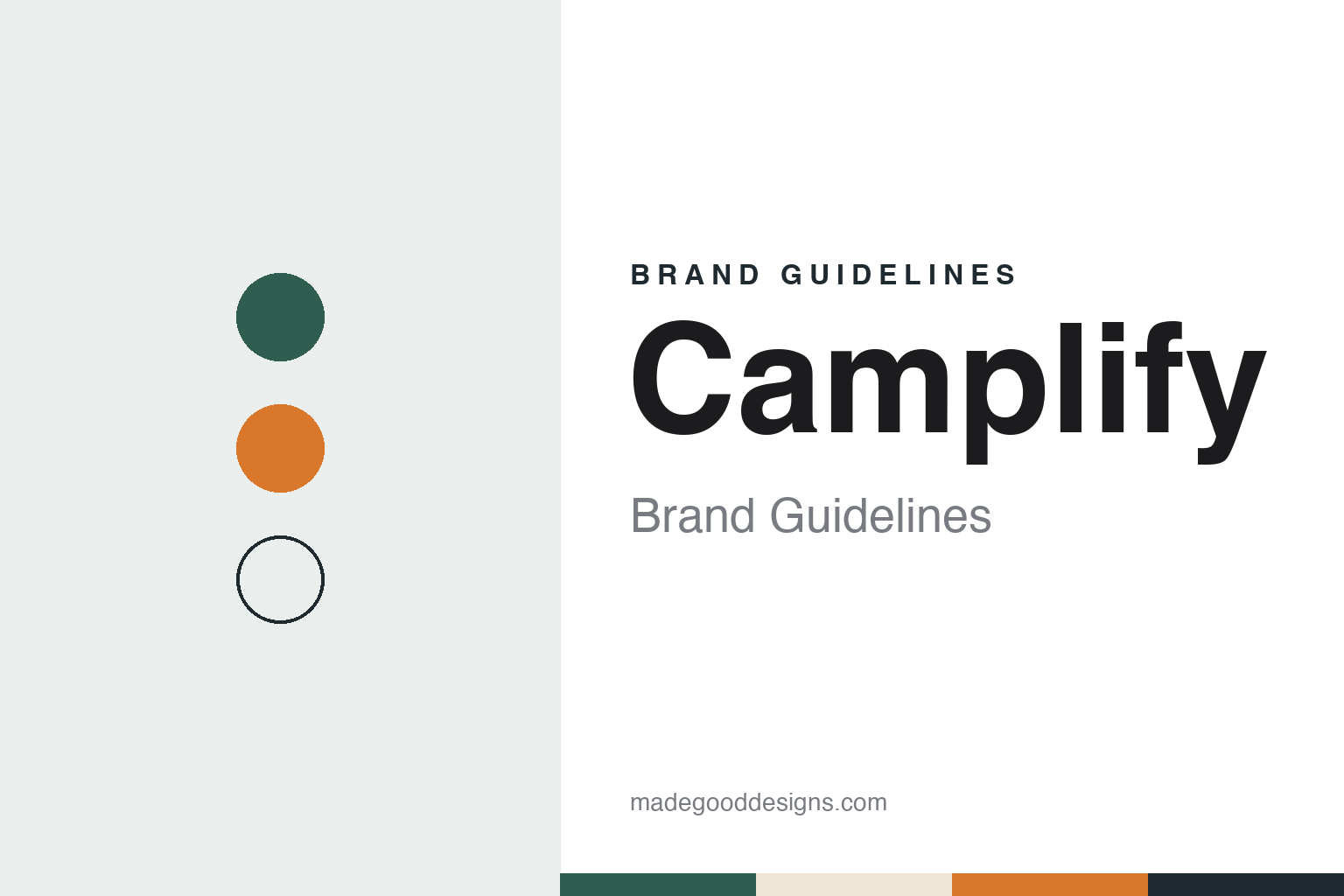
Two constants: a gum green, slate and sunset orange palette and a friendly sans register. Abstract homage — not a Camplify product or mark; no vehicle, logo or app screen is reproduced.
Newcastle, 2015
A founder, his neighbours’ driveways and an accelerator.
Camplify comes from Newcastle, the port city north of Sydney in New South Wales. The company’s own account of its beginnings centres on its founder and chief executive, Justin Hales. Wanting to revisit the caravanning holidays of his childhood, he went looking for a van to hire and, the company says, kept noticing caravans and campers standing unused on driveways around his neighbourhood. The idea that followed was simple: let the owners of those vans rent them out to other people, and build the service that sits between the two.
Backing from a local business accelerator helped turn that idea into a company, and Camplify says it first launched in Australia in 2015. Startup Daily gave the same year in June 2021, describing Camplify as a peer-to-peer online marketplace that connects owners of recreational vehicles with people who want to hire them. Among the shareholders that report listed at the time of its stock-market debut were NRMA Treasury and the start-up accelerator and investor Slingshot.
The model shapes the brand. Camplify’s listings are other people’s caravans, motorhomes, camper trailers and campervans, each put on the platform by its owner, and the company’s work is the marketplace around them: the listings, the bookings, the payments and the cover. Its annual reports describe the business in exactly those terms, as a digital marketplace connecting RV owners with hirers, and its website calls the result “van sharing.”
Newcastle has stayed at the centre of the story. The company’s website says Camplify was founded and built in the city, on the traditional country of the Awabakal and Worimi peoples. Its annual reports are still signed off in Newcastle, and in 2025 the group gave its principal place of business as Wickham, a district of the city close to the harbour.
Colour
Vans from driveways, sold as a community.
Camplify presents itself less as a rental company than as a community of owners and travellers. Its website talks of a “van sharing community” and of making “van life” accessible to all; it casts owners who list their caravans as small entrepreneurs, and says more than 200 small rental businesses have been launched on its platform. The listings span caravans, campervans and motorhomes, and the site sorts them by type and by state, from New South Wales to Tasmania, with road-trip itineraries and camping guides alongside.
Around the marketplace sit further products. Club Camplify is a premium membership, and the website also lists managed services for owners and offers a booking app for download. The biggest change came in the 2025 financial year, when Camplify launched MyWay, a member-backed cover scheme for owners, in Australia and New Zealand. The annual report for that year called it a move from a “marketplace-led” to a “membership-first” company, and by the 2026 report the cover was provided through a mutual, MyWay Mutual.
MyWay has a European root. When Camplify bought PaulCamper in 2022, it also took over PaulCamper Insurance Brokers, and its August 2023 results announcement said it had begun turning that business into a managing general agency called MyWay.
The geography grew in stages. In June 2021 Startup Daily listed Camplify’s markets as Australia, the United Kingdom, New Zealand and Spain. The PaulCamper purchase added Germany, Austria and the Netherlands, and the group’s 2026 annual report lists all seven countries. In its August 2023 results Camplify counted 15,083 vehicles on the Camplify platform and 13,316 on PaulCamper’s.
The brand speaks with a local accent. The company says Camplify first said “G’day” to Australia in 2015, and its pages acknowledge the Awabakal and Worimi peoples and say the company is committed to supporting the growth of Indigenous tourism.
Typography
Fleets, marketplaces and owners.
Campervan and motorhome rental is sold with pictures of the open road, but two different kinds of business sit behind those pictures. Some companies own and run fleets of their own vehicles from depots; others are marketplaces, on which private owners list their own caravans, campervans and motorhomes and the platform handles the booking and the cover. Camplify, launched in Newcastle, New South Wales, in 2015, and PaulCamper, launched in Berlin in 2013, are marketplaces of the second kind, and since December 2022 both have belonged to the same group listed in Australia.
This guide looks first at the vehicle as each company publishes it: in a company livery or paint scheme, photographed against a landscape, or listed as an owner’s own van in that owner’s own photographs. Where a company describes its vans, its colours or its paintwork, the guide gives that as the company’s own account, with the date of the source.
Names come next. Rental firms give names to their vehicle ranges and models, and marketplaces give names to their memberships and cover products: Camplify sells a premium membership called Club Camplify and member cover under the name MyWay, while PaulCamper says it built its rental cover together with Allianz. Bookings are made online, and some companies also offer an app, as Camplify does on its website; this guide describes such apps plainly, from what the companies say about them.
Finally, there are the owners. Some names in this category belong to larger groups, and corporate pages, annual reports and stock-exchange filings show who owns what and since when. This guide follows those documents and dated press reports, gives fleet, depot and country counts only as a dated source states them, and treats the colours and typefaces shown here as an unofficial interpretation rather than official brand values.
Aa
A friendly sans for a community marketplace. (Specimen set in Outfit, a sans STAND-IN; NOT the Camplify logo.)
Camplify Holdings
An ASX listing, a Berlin purchase and a mutual.
Camplify went public early in its life. Its parent, Camplify Holdings Limited, listed on the Australian Securities Exchange under the code CHL on 28 June 2021, Startup Daily reported. At that point the rental operator Apollo Motorhome Holidays was its largest shareholder, with 17.79 per cent, according to the same report.
The next big step came at the end of 2022, when Camplify bought PaulCamper, the Berlin peer-to-peer camper platform founded in 2013. The German motorhome magazine promobil reported the takeover on 3 November 2022, noting that the deal was settled partly in cash and partly in shares; Camplify’s results for the 2023 financial year counted PaulCamper from 2 December 2022. The German business kept its own name, and Camplify Holdings describes itself as made up of Camplify and PaulCamper.
Joining the two took time. Camplify’s 2025 annual report said moving PaulCamper onto Camplify’s own technology had been more disruptive than expected and had reduced trade in its German-speaking markets before the work was finished. The 2026 report said the group now runs on a single global platform and that European markets remained subdued. It also recorded a binding strategic partnership, signed in October 2025, with JB Group, an Australian caravan and motorhome manufacturing group whose owner, Ping Xue Li, joined Camplify’s board in December 2025. Andrew McEvoy chairs the company, and Hales remains chief executive.
For a design guide, Camplify shows how a marketplace brand works when the vans on it belong to their owners: the name, the voice and the products have to hold thousands of different vehicles together. Compare PaulCamper, its German sister platform, and Apollo, the rental company that was its largest shareholder at listing. For this guide we use a gum green, a deep slate and a sunset orange with a sans, an unofficial interpretation; no product or logo is reproduced.
Explore & save
Keep Camplify’s identity on hand — save it to a board in the Made Good inspiration library.
Camplify identity set
Pin the Camplify gum green, slate and sunset orange palette and the friendly sans register to your own board.