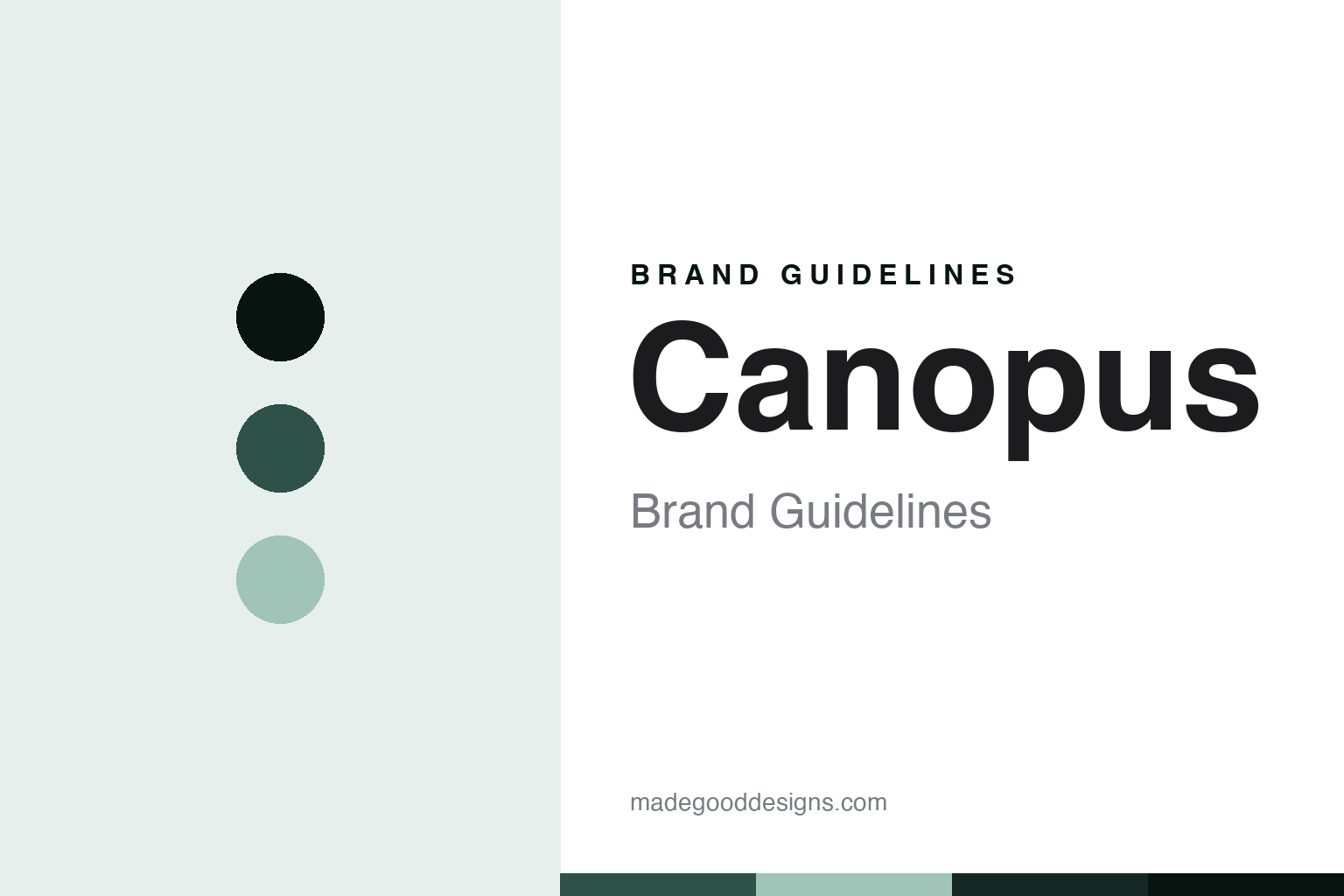
Canopus Brand Guidelines
The Tokyo drum maker.
Aa
Two constants: a shell-teal palette and a boutique-sans register. Abstract homage — not a Canopus drum, lug or mark.
The Tokyo drum maker
Canopus is the Japanese boutique drum maker established in 1981, building vintage-voiced drums and snares in its own Tokyo workshop.
Canopus closes the round from Tokyo. A boutique Japanese drum maker, Canopus builds drum kits, snare drums and hardware, prized for vintage-voiced shells and precise bearing edges. Its answer to how a maker becomes a name is craft at small scale: build drums by hand in a Tokyo workshop, chase a specific vintage sound, and get the shell details exactly right. A Japanese drum, made in the workshop that designs it.
Its identity is the Tokyo drum maker. Canopus’s vintage-voiced drums, its Tokyo workshop craft and its boutique scale are the work it is known for. A drum, made in Tokyo. A workshop where the makers play.
(Honest notes, so the story stays precise. Canopus — CANOPUS Co., Ltd. — was established on 1 March 1981 and is based in Nakano-ku, Tokyo; its live presence is at canopusdrums.com. On what it makes, it is boutique drum kits, snare drums and hardware, with vintage-voiced lines such as the Neo-Vintage NV60 and series such as Zelkova, High Standard and Custom. On where it is made — a theme of this round — Canopus states its workshop is at its Tokyo headquarters, where the shell craft (bearing edges, internal sanding) is done in-house; so its core shell lines are Japanese-made, in Tokyo. Honestly, we could not confirm that every line, all its hardware, or its separate related brand are Japan-made — many Japanese boutique makers outsource hardware — so we say the core shell lines are Tokyo-made without claiming every part of every line. On ownership, it is an independent Japanese company; its listed representative director is Shigeaki Matsumura, whom we present as its current officer rather than as its 1981 founder, which we could not confirm. Its bearing-edge precision figure and its endorsers we attribute as the company’s own. On the name: Canopus is a star, known in East Asian tradition as an auspicious “Old Man Star,” which we reference as the company frames it, reproducing no star or deity imagery. Its name and marks are IP, described but never reproduced, and there is no official brand hex; these tones are an unofficial interpretation. This is design commentary and does not promote any product.)
Colour
Canopus lives in a shell-teal palette. Click a swatch to copy the hex.
Canopus’s identity is boutique, Japanese and precise — a shell teal, an ink, a sea foam, a deep teal, and a paper. The palette leans shell teal and sea foam: the register of a lacquered drum shell and a fine finish. It signals boutique craft over mass production. The honest caveat: with no published brand hex, these values are an original, unofficial interpretation, not first-party colours.
The lesson is a shell-teal palette signals a boutique, made-in-Japan identity. Canopus’s world is a boutique, wooden, Japanese object. For designers, it is a reminder that a shell teal and a soft sea foam can carry a maker built on shell craft — the depth of a lacquered shell and the neutral of a workshop bench. Because these tones can fail as small text, keep type dark and let the colour live in the accents, palette and band. The takeaways: build at small scale; get the details right; keep the workshop craft; and treat any single hex as unofficial.
Typography
The register is a boutique sans — precise, clean, made.
Canopus’s identity carries a precise, clean, made spirit — a boutique drum workshop, not a mass brand. A boutique sans captures the mood: even, exact and modern, the register of a Tokyo shell shop. Set in a shell-teal palette, the boutique sans feels precise and made — exactly the personality Canopus carries. It is workshop craft rather than a marketing wall, mirroring a vintage-voiced drum. (Canopus’s real logo and wordmark are things we describe but do not reproduce, and the exact typeface is not ours to use.) Because it is not ours to use, the honest description is “a boutique-sans spirit,” shown here in a stand-in. The type behaves like the maker: precise, clean and made.
Aa
A boutique-sans spirit — precise and made. (Specimen set in Libre Franklin, a boutique-sans STAND-IN; NOT the Canopus logo or any mark.)
The instrument around the world
Canopus stands for the boutique drum made in a Tokyo workshop.
Canopus closes the world tour with a quiet idea: the boutique drum, made where it is designed. A shell-teal palette, a boutique sans and a vintage-voiced drum make one thing — the Tokyo drum maker — the whole identity: boutique, Japanese and precise. The Tokyo workshop craft is the differentiator, and the vintage-voiced shells are the meaning. The point is a small Japanese maker that builds drums by hand in a Tokyo workshop, chasing a specific vintage sound and getting the shell details exactly right.
Put to work, the identity is boutique craft, honestly told, as design. A maker in this spirit would build at small scale, make the core lines at home, and get the details right — vintage-voiced shells, precise bearing edges, a Tokyo workshop. A brand learning from it would see that boutique craft is a durable identity — that a drum built by the workshop that designs it carries a care a factory cannot — and that being precise, established 1981 in Tokyo, core shell lines Japanese-made, an independent Japanese company, keeps the story honest. Canopus closes the round on its made-at-home note: a national maker building in its own workshop, in its own city — and the honest editorial move is to say the core shell lines are Tokyo-made without over-claiming that every part of every line and its hardware is Japanese. The discipline is in the caveats: presenting Matsumura as the current representative director rather than the founder, attributing the bearing-edge figure and endorsers to the company, and referencing the star-name meaning as the company frames it, without any imagery. The lesson Canopus teaches is that boutique craft can hold an identity: the workshop making gives it substance, and the honesty about what is and isn’t Japan-made keeps it credible. The craft is the personality, and the Tokyo-made drum is the proof.
For designers and brand-builders, Canopus closes the instrument around the world, from Japan: build at small scale, in your own workshop. The lessons: keep the craft in-house; make the core lines at home; be honest about what parts are and aren’t; attribute your figures; and never reproduce a logo. It is also a reminder to stay precise: Canopus is the Japanese boutique drum maker established in 1981, building vintage-voiced drums and snares in its own Tokyo workshop — with the palette here an unofficial interpretation. Canopus made boutique craft the identity — proof that a drum made in the workshop that designs it, honestly told, can be the difference.
Explore & save
Keep Canopus’s identity on hand — save it to a board in the Made Good inspiration library.
Canopus identity set
Pin the shell-teal palette and the boutique-sans register to your own board.