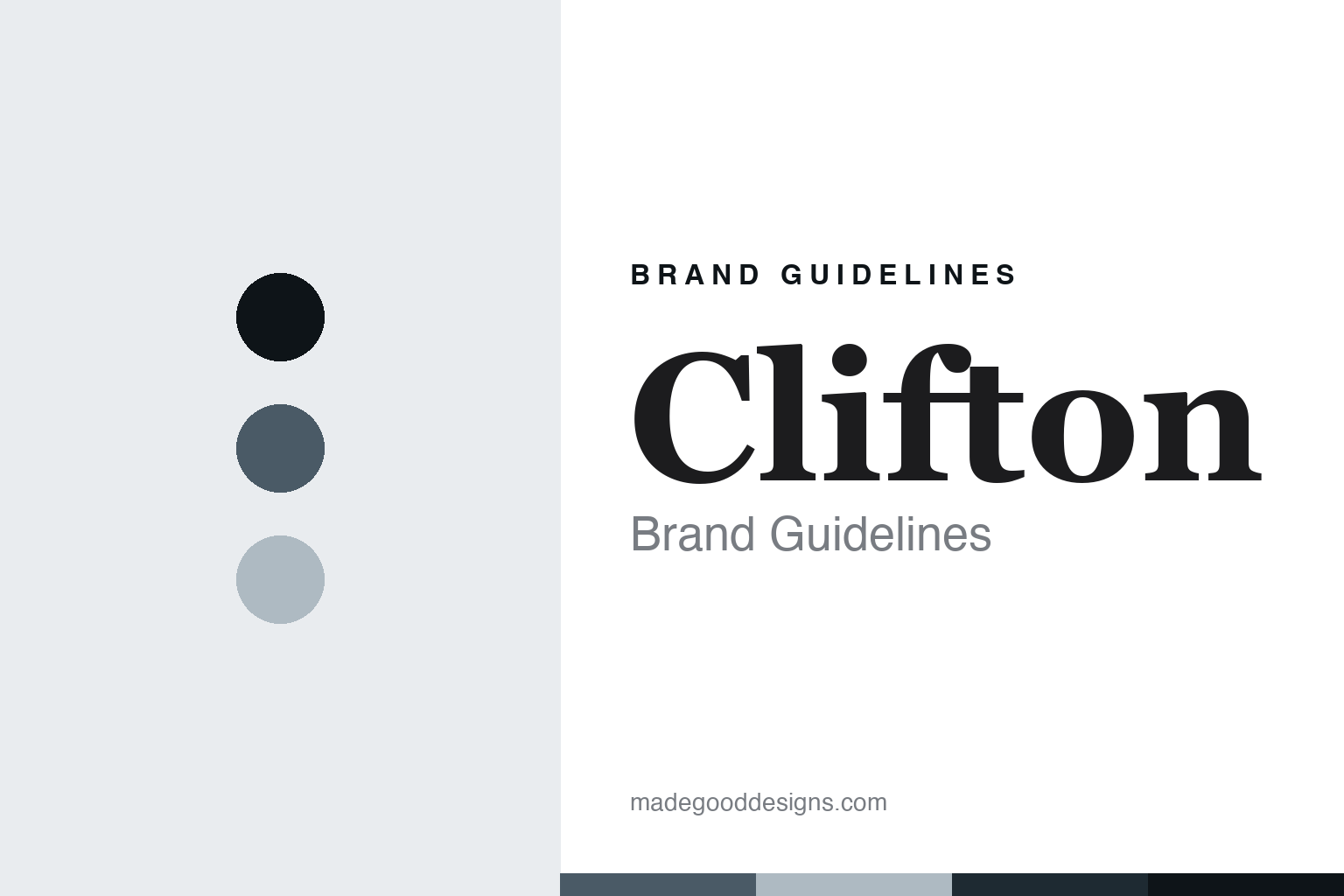
Clifton Brand Guidelines
The Sheffield plane.
Aa
Two constants: a Sheffield-steel palette and a Sheffield-serif register. Abstract homage — not a Clifton plane or mark.
The Sheffield plane
Clifton is the English bench-plane brand made by Thomas Flinn & Co in Sheffield, part of the city’s long toolmaking tradition.
Clifton opens the world tour from Sheffield, England — the city whose name has meant steel and tools for centuries. Clifton makes premium bench and block planes, shoulder and rebate planes, and spokeshaves, made in Sheffield by the toolmaker Thomas Flinn & Co. Its answer to how a maker becomes a name is the city itself: make a heavy, accurately-machined English plane in the town that has ground blades for generations. An English plane, made in Sheffield.
Its identity is the Sheffield plane. Clifton’s made-in-Sheffield craft, its English bench planes and its Thomas Flinn workshop are the work it is known for. A plane, made in Sheffield. A tool from the steel city.
(Honest notes, so the story stays precise. Clifton planes are made and sold today by Thomas Flinn & Co of Sheffield, which has made tools in the city since 1923 and also makes Pax saws; Clifton passed to Thomas Flinn after the earlier Sheffield firm behind it, under the predecessor name Clico, and we do not name a founder or a specific Clifton founding year, which we could not verify. On what it makes, bench and block planes are the core, with shoulder, rebate and bull-nose planes and spokeshaves. On where it is made — the theme of this round — Clifton planes are made in Sheffield, England; genuinely English-made, and central to the identity. On materials, the plane bodies are accurately-machined grey cast iron, ground and stress-relieved for stability, with walnut knobs and totes and O1 high-carbon blades — we say grey cast iron for the planes, since only the spokeshaves use ductile iron, and we attribute the blade hardness figures as reported. On ownership, it is the Sheffield toolmaker Thomas Flinn & Co; we do not assert it is family-owned, which we could not confirm, and, honestly, we could not load an official Clifton site during our checks, so we rely on the tools being actively sold in 2026 by established retailers rather than on a live first-party page. Its name and marks are IP, described but never reproduced, and there is no official brand hex; these tones are an unofficial interpretation. This is design commentary and does not promote any product.)
Colour
Clifton lives in a Sheffield-steel palette. Click a swatch to copy the hex.
Clifton’s identity is machined, English and made — a Sheffield steel, an ink, a frost, a deep steel, and a paper. The palette leans Sheffield steel and frost: the register of ground cast iron and a cool machined face. It signals weight and precision. The honest caveat: with no published brand hex, these values are an original, unofficial interpretation, not first-party colours.
The lesson is a Sheffield-steel palette signals a machined, made-in-England identity. Clifton’s world is a machined, iron-and-walnut, English object. For designers, it is a reminder that a cool Sheffield steel and a soft frost can carry a plane maker from the steel city — the blue-grey of ground iron and the neutral of a machined sole. Because these tones can fail as small text, keep type dark and let the colour live in the accents, palette and band. The takeaways: machine it accurately; make it in the steel city; ground it true; and treat any single hex as unofficial.
Typography
The register is a Sheffield serif — solid, classical, made.
Clifton’s identity carries a solid, classical, made spirit — an English toolmaker, not a fashion label. A Sheffield serif captures the mood: traditional, weighty and steady, the register of a steel-city workshop. Set in a Sheffield-steel palette, the serif feels solid and made — exactly the personality Clifton carries. It is city heritage rather than a logo, mirroring a heavy bench plane. (Clifton’s real wordmark and the Thomas Flinn mark are things we describe but do not reproduce, and the exact typeface is not ours to use.) Because it is not ours to use, the honest description is “a Sheffield-serif spirit,” shown here in a stand-in. The type behaves like the city: solid, classical and made.
Aa
A Sheffield-serif spirit — solid and made. (Specimen set in Cormorant Garamond, a serif STAND-IN; NOT the Clifton or Thomas Flinn logo.)
The tool around the world
Clifton stands for the bench plane made in Sheffield.
Clifton opens the world tour with a city: the plane from the steel town. A Sheffield-steel palette, a Sheffield serif and a bench plane make one thing — the Sheffield plane — the whole identity: machined, English and made. The made-in-Sheffield craft is the differentiator, and the Thomas Flinn workshop is the meaning. The point is a premium English plane, accurately machined and ground in the city whose name has meant tools for centuries.
Put to work, the identity is city heritage, honestly told, as design. A maker in this spirit would machine it true, make it in the town that knows the craft, and ground every face — grey cast iron, walnut totes, made in Sheffield. A brand learning from it would see that a place with a craft heritage is a durable identity — that a plane ground in the steel city carries a provenance a generic tool cannot — and that being precise, made by Thomas Flinn & Co, a Sheffield toolmaker since 1923, keeps the story honest. Clifton opens the round on the where-made theme, and the honest editorial moves are careful: anchoring the heritage on Thomas Flinn and Sheffield rather than an unverified Clifton date, correcting the material to grey cast iron for the planes (ductile iron only for the spokeshaves), and being honest that we lean on the tools being sold in 2026 rather than a live official page. The discipline is in the caveats: not naming a founder, not asserting family ownership, and attributing the blade figures. The lesson Clifton teaches is that a place can hold an identity: the Sheffield making gives it substance, and the honesty about the lineage keeps it credible. The city is the personality, and the Sheffield-made plane is the proof.
For designers and brand-builders, Clifton opens the tool around the world, from England: make it in the town that knows the craft. The lessons: make in-country; anchor heritage on what you can verify; get the material right; attribute the specs; and never reproduce a logo. It is also a reminder to stay precise: Clifton is the English bench-plane brand made by Thomas Flinn & Co in Sheffield, part of the city’s long toolmaking tradition — with the palette here an unofficial interpretation. Clifton made the steel city the identity — proof that a plane made in Sheffield, honestly told, can be the difference.
Explore & save
Keep Clifton’s identity on hand — save it to a board in the Made Good inspiration library.
Clifton identity set
Pin the Sheffield-steel palette and the serif register to your own board.