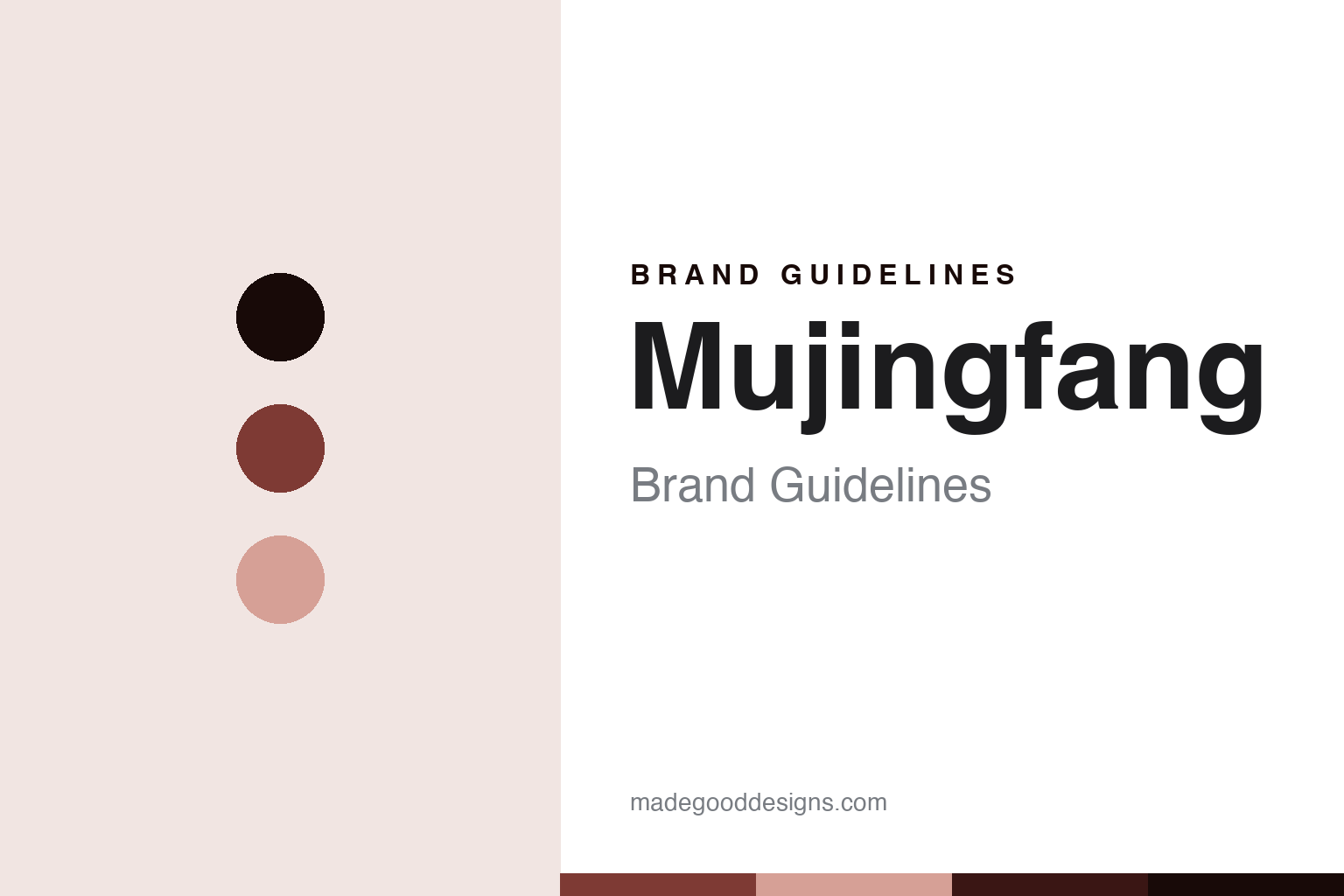
Mujingfang Brand Guidelines
The Chinese plane.
Aa
Two constants: a rosewood-red palette and a workshop-sans register. Abstract homage — not a Mujingfang plane or mark.
The Chinese plane
Mujingfang is the Chinese maker of wooden-bodied hand planes and tools, made in Foshan, Guangdong, and sold worldwide through specialist distributors.
Mujingfang closes the world tour from Foshan, in Guangdong, southern China. It makes wooden-bodied hand planes — in European, Hong Kong and Taiwanese styles, plus shoulder planes — along with spokeshaves, chisels and carving tools. Its answer to how a maker becomes a name is affordable wooden craft made at home: build hardwood planes in a range of world styles, in China, and sell them everywhere through specialist tool sellers. A Chinese plane, made in China.
Its identity is the Chinese plane. Mujingfang’s made-in-China craft, its hardwood planes and its world-styles range are the work it is known for. A plane, made in Foshan. A Chinese maker sold around the world.
(Honest notes, so the story stays precise, because where-made is the theme. Mujingfang is a genuine Chinese maker that makes in China — a national maker making at home, not a designed-here, made-elsewhere case — based in Foshan, Guangdong, operating under the parent name Woodwell, and founded in 1982. On what it makes, wooden-bodied hand planes are the core, in European, Hong Kong and Taiwanese styles plus shoulder planes, with spokeshaves, chisels and carving tools; the company calls its range one of the world’s largest selections of wooden planes, which we attribute. On where it is sold, it reaches English-speaking markets largely through specialist distributors rather than a large first-party storefront, which we say plainly. On its blades, distributors describe hand-forged carbon steel at about RC58 or tungsten-molybdenum high-speed steel at about RC64, which we attribute. On woods, the company describes rare hardwoods; the rosewood and beech bodies commonly attributed to it we treat as reported, and we note that rosewood and red sandalwood are protected under the CITES convention, so we reference the wood only as a material and tradition and make no claim about sourcing. On ownership, we say an independent Chinese company operating under the Woodwell name and name no individual. Its name and marks, including its Chinese characters used as a wordmark, are IP, described but never reproduced, and there is no official brand hex; these tones are an unofficial interpretation. This is design commentary and does not promote any product.)
Colour
Mujingfang lives in a rosewood-red palette. Click a swatch to copy the hex.
Mujingfang’s identity is wooden, Chinese and made — a rosewood red, an ink, a warm timber, a deep rosewood, and a paper. The palette leans rosewood red and timber: the register of a warm hardwood plane body. It signals wood and home making. The honest caveat: with no published brand hex, these values are an original, unofficial interpretation, not first-party colours.
The lesson is a rosewood-red palette signals a wooden, made-in-China identity. Mujingfang’s world is a wooden, hardwood, Chinese object. For designers, it is a reminder that a warm rosewood red and a soft timber can carry a maker built on wooden planes — the red-brown of a hardwood body and the neutral of a plane sole. Because these tones can fail as small text, keep type dark and let the colour live in the accents, palette and band. The takeaways: make it in wood; make it at home; sell it through people who know it; and treat any single hex as unofficial.
Typography
The register is a workshop sans — plain, warm, made.
Mujingfang’s identity carries a plain, warm, made spirit — a wooden-plane workshop, not a lifestyle brand. A workshop sans captures the mood: even, warm and practical, the register of a Foshan bench. Set in a rosewood-red palette, the workshop sans feels warm and made — exactly the personality Mujingfang carries. It is affordable wooden craft rather than a logo, mirroring a hardwood plane. (Mujingfang’s real wordmark, its Chinese characters and the Woodwell mark are things we describe but do not reproduce, and the exact typeface is not ours to use.) Because it is not ours to use, the honest description is “a workshop-sans spirit,” shown here in a stand-in. The type behaves like the workshop: plain, warm and made.
Aa
A workshop-sans spirit — warm and made. (Specimen set in Mulish, a workshop-sans STAND-IN; NOT the Mujingfang wordmark or characters.)
The tool around the world
Mujingfang stands for the wooden plane made in China.
Mujingfang closes the world tour with a plain, honest idea: a Chinese maker, making in China. A rosewood-red palette, a workshop sans and a wooden plane make one thing — the Chinese plane — the whole identity: wooden, Chinese and made. The made-in-China craft is the differentiator, and the range of world styles is the meaning. The point is a Foshan workshop that has built hardwood planes since 1982, in European, Hong Kong and Taiwanese styles, and sells them worldwide through the specialist sellers who know them.
Put to work, the identity is home making, honestly told, as design. A maker in this spirit would work in wood, make it at home, and reach the world through people who understand the tool — hardwood planes, world styles, made in Foshan. A brand learning from it would see that a national maker making at home is a durable and honest identity — that a Chinese plane made in China is exactly what it says, with none of the designed-here, made-elsewhere sleight of hand this vein keeps warning against — and that being precise, founded 1982, based in Foshan, Guangdong, under the Woodwell name, keeps the story honest. Mujingfang closes the round by completing its point: the world tour ends where the vein’s core lesson is clearest, with a maker whose country and place of making are the same, and the honest editorial moves are to say made in China plainly and well, to attribute the blade and range claims, and to reference rosewood only as a material and tradition given its CITES protection, with no sourcing claim. The discipline is in the caveats: naming no individual owner, treating the specific woods as reported, and being honest that it sells largely through distributors. The lesson Mujingfang teaches is that home making can hold an identity: the Foshan making gives it substance, and the plainness about where and how keeps it credible. The making is the personality, and the China-made plane is the proof.
For designers and brand-builders, Mujingfang closes the tool around the world, from China: make it at home, and say so plainly. The lessons: work in your material; make in-country; reach the world through specialists; attribute the specs and reference protected materials carefully; and never reproduce a logo. It is also a reminder to stay precise: Mujingfang is the Chinese maker of wooden-bodied hand planes and tools, made in Foshan, Guangdong, and sold worldwide through specialist distributors — with the palette here an unofficial interpretation. Mujingfang made honest home making the identity — proof that a wooden plane made in China, honestly told, can be the difference.
Explore & save
Keep Mujingfang’s identity on hand — save it to a board in the Made Good inspiration library.
Mujingfang identity set
Pin the rosewood-red palette and the workshop-sans register to your own board.