Cartus Brand Guidelines
A Connecticut relocation firm carried by software names and a lower-case voice.
Aa
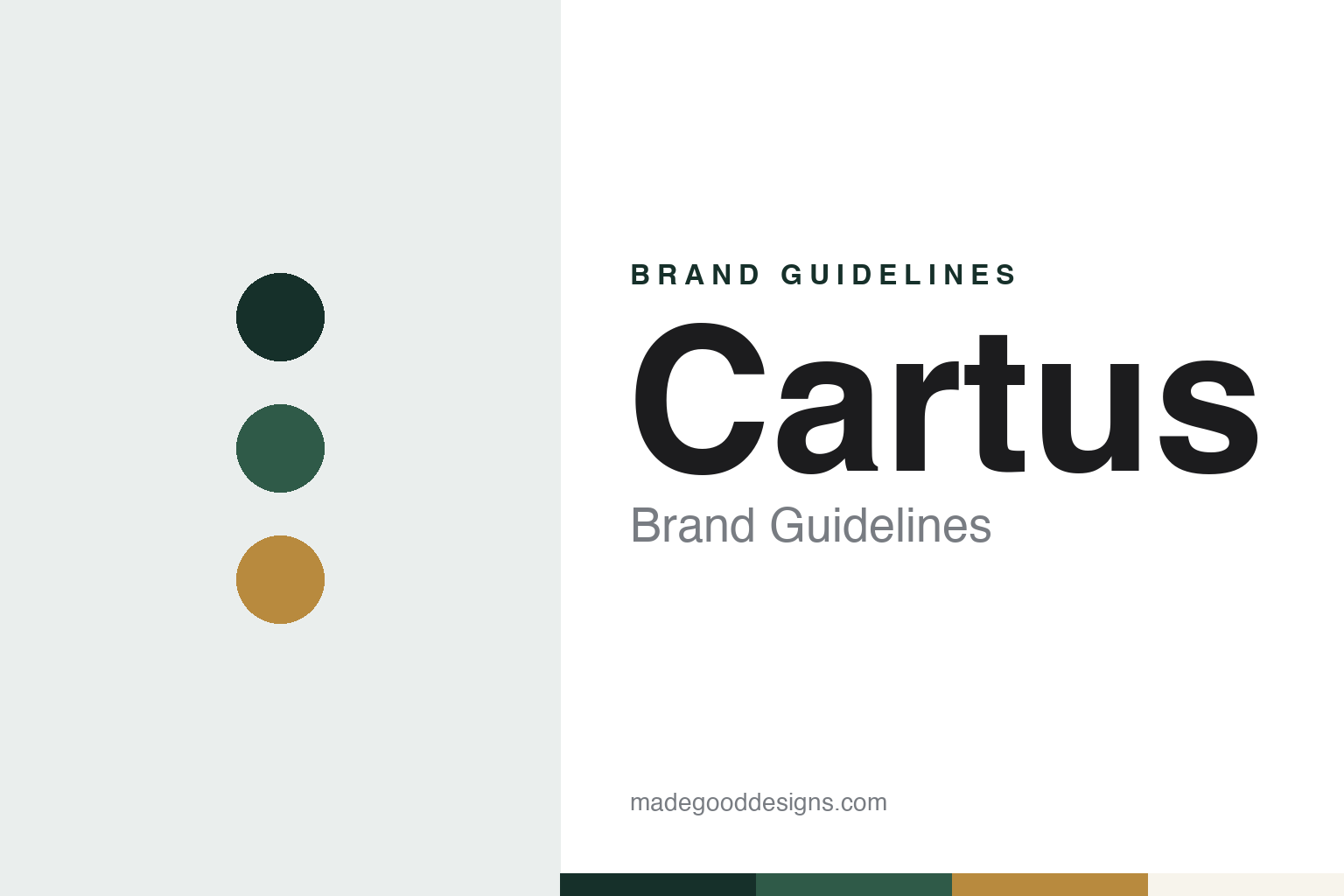
Two constants: a forest ink, moss and brass palette and a soft serif register. Abstract homage — not a Cartus product or mark; no logo or app screen is reproduced.
Associated Homefinders
A home-finding service in Wilton, Connecticut.
Cartus is a corporate relocation company headquartered in Danbury, Connecticut. Its own timeline traces it to 1955, when it was founded as Associated Homefinders in Wilton, Connecticut, and that it launched a home-finding programme that year. In the 1960s, the company says, it managed a group move for Shell Oil and set up a national home-finding referral network, with clients including Western Electric and Hercules Powder.
Services widened decade by decade, according to the same timeline. In the 1970s it added temporary housing, household-goods moves and international assignment services, and opened an office in the UK. In the early 1980s it introduced spouse and partner assistance, and in the later 1980s immigration services and a consulting arm. Its global headquarters opened in Danbury in the early 1990s. Offices followed in Hong Kong in the late 1990s, Singapore in the early 2000s, Shanghai later that decade, and São Paulo and Bengaluru between 2015 and 2019. Intercultural and language training arrived in the late 1990s, alongside a website for clients and relocating employees.
The timeline then turns from offices to tools. In the early 2000s, it says, Cartus held its initial global supplier conference, put expense reimbursement online and introduced an eProcurement tool for household-goods moves, which it extended to temporary housing later in the decade. In 2022 it joined the Worldwide ERC Sustainability Advisory Council, according to the same page, and launched its podcast.
The website says Cartus has supported clients and relocating employees for 70 years. It describes itself as a talent mobility company: its work is managing employee moves for corporate clients — home sale and purchase, temporary housing, immigration, destination support and the moving of household goods through a supply chain of partners — rather than running a fleet under its own name.
Colour
Cendant, Realogy, Anywhere and Compass.
The corporate chain behind the name is long. English Wikipedia’s history of Cendant says the franchising group HFS bought PHH Corporation in 1997, bringing in mortgage, relocation and fleet businesses, and merged with CUC International in December 1997 to form Cendant; on 31 July 2006 Cendant spun off its real-estate division as Realogy. Cartus’s website still links to a pension scheme under the Cendant Relocation Services name. Realogy renamed itself Anywhere Real Estate with effect from June 2022, and English Wikipedia lists Cartus among Anywhere’s subsidiaries, alongside franchised brokerage brands such as Century 21, Coldwell Banker and Sotheby’s International Realty.
The latest change came in 2026. Real Estate News reported on 9 January 2026 that Compass had closed its all-stock acquisition of Anywhere early that day, with Anywhere surviving as a wholly owned subsidiary of Compass and the combined business operating as Compass International Holdings. In a release dated 12 May 2026, Cartus Corporation describes itself as a Compass International Holdings company; its about page still refers to Anywhere as its parent.
Most of what Cartus sells is software and service programmes. Its timeline lists the CartusMobile app in the early 2010s, MovePro360 in 2020 as a central hub for mobility programmes, and Benefits Builder, a core-and-flex option, later that year. In 2021 it rebranded its segment for small and midsize programmes as Cartus Insignia, and in May 2026 it launched Cartus Concierge, a programme for executive moves whose listed services include school placement advice, fine-art transport and pet relocation. In January 2026 the company said its near-term and net-zero emissions targets had been validated by the Science Based Targets initiative.
Recognition, as the company reports it, includes awards in Singapore in November 2025: a Tripartite Alliance Award for work-life excellence, for the second time, and two golds at the HR Vendors of the Year awards run by Human Resources Online.
Typography
Vans, crates and service programmes.
Moving and relocation companies present themselves in two registers at once. One is physical: vans, trailers, crates and containers that carry a company’s name along streets and across borders. The other is corporate: service pages, client portals, apps and reports written for the human-resources and mobility teams that commission employee moves.
Livery is the older of the two. American van-line names such as Allied and North American date from 1928 and 1933, according to English Wikipedia, and groups that later bought them have kept those names in use: SIRVA, formed in 1998 and 1999, still lists Allied and northAmerican as brands in their own right on its website. Crate and container work shows up in the service lists themselves: SIRVA’s website menus separate household-goods, commercial and specialty moving, and a May 2026 Cartus release lists fine-art wrapping and transportation, temperature-controlled wine shipping and pet transportation among the services of its executive programme.
The corporate side is mostly software and programme names. Cartus lists its CartusMobile app and its MovePro360 hub in its own timeline, and SIRVA lists a technology platform, Connect+, beside its relocation services; both describe home sale and purchase, temporary housing, immigration and destination support as parts of one managed programme for an employer.
Corporate pages carry the rest of the story: networks of agents and partners, owners, offices and depots, and the countries served. Those figures change with each acquisition, merger or refinancing, so this guide gives them only with the date and the source that reported them, and marks clearly what rests on a company’s own word.
Aa
A soft serif for a service brand. (Specimen set in Fraunces, a serif STAND-IN; NOT the Cartus logo.)
Cartus
A 2023 identity and a registered line.
The current identity is much younger than the company. Cartus’s timeline says it launched a new brand identity and a redesigned public website in 2023, and the site carries a registered line, “where mobility meets agility,” which the company calls “more than just a catchphrase.” The website sets its navigation and section headings in lower case — “about us,” “why cartus,” “let’s talk tech” — and presents its product names as marks of their own, with CartusOnline, MovePro360 and Benefits Builder each shown as registered names. A podcast, Mobility Matters, followed in 2022, the year before the new identity.
Because the company manages moves rather than putting its own name on trucks, its visual presence is mostly on screens and in documents: the client and employee portals, the mobile app, research reports such as its 2026 Global Talent Mobility Survey, and a press room of dated releases. The website’s main sections are relocation services, insights, technology and a “why cartus” section that covers supply chain management, sustainability and flexible mobility. The May 2026 Concierge release shows the same register at the top of the range: it promises matching with the company’s most tenured mobility specialists and round-the-clock support for high-profile moves, with every move tailored to the executive’s family and confidentiality needs.
For a design guide, Cartus shows how a relocation brand can be carried by software names, a lower-case voice and a registered line rather than by vehicle livery. Compare SIRVA, which pairs a relocation business with van-line brands, and Crown Relocations. For this guide we use a forest ink, a moss green and a brass with a serif, an unofficial interpretation; no product or logo is reproduced.
Explore & save
Keep Cartus’s identity on hand — save it to a board in the Made Good inspiration library.
Cartus identity set
Pin the Cartus forest ink, moss and brass palette and the soft serif register to your own board.