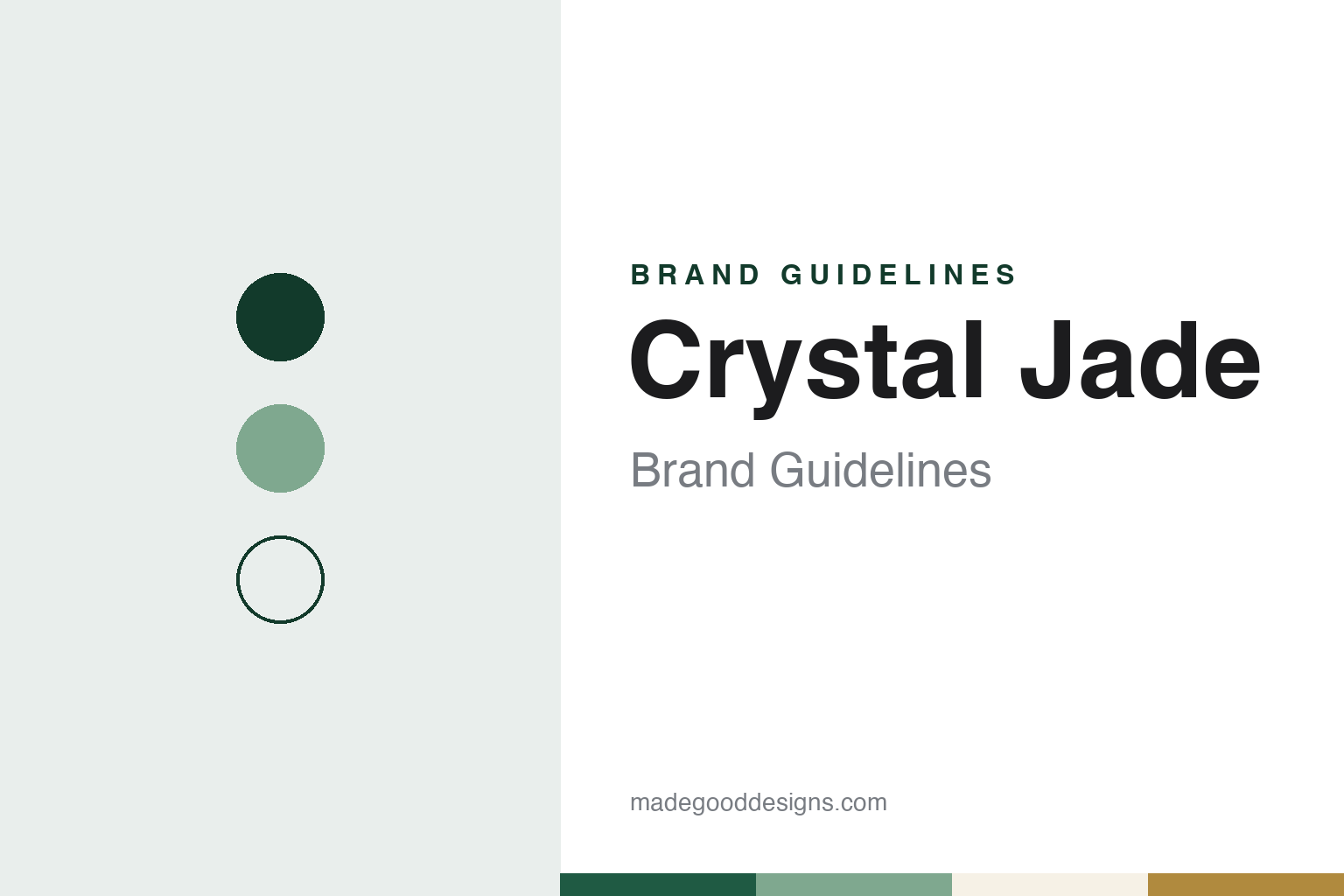
Crystal Jade Brand Guidelines
A Cantonese dining room in Singapore that grew into a family of brands.
Aa
Two constants: a Crystal Jade green, celadon and gold palette and a Classic serif register. Abstract homage — not a Crystal Jade dish, sign or mark; no logo or menu is reproduced.
Cairnhill
A hotel dining room that moved to Orchard Road.
Crystal Jade’s first restaurant opened in 1991 in the Cairnhill Hotel in Singapore. The National Library Board’s Singapore Infopedia, in an entry it describes as valid as at 2010, says it was managed by Alfred Leung, who had come to Singapore from Hong Kong more than twenty years earlier, and that the restaurant struggled because the hotel sat in a quiet, low-traffic area.
In 1992 the business looked for fresh investment. Infopedia says Leung brought in his brother-in-law Ip Yiu Tung, the chairman of a clock- and watch-making factory in Hong Kong, who took a 49 per cent share; Leung held 17 per cent, and there were other partners. English Wikipedia also dates Ip’s investment to 1992. The group then closed the Cairnhill restaurant and moved to Orchard Road, opening a more casual Crystal Jade Kitchen at Isetan Scotts and a flagship, Crystal Jade Palace, at Ngee Ann City. Infopedia says both became known for their cooking and service.
For its first decade the company kept out of the newspapers. Infopedia records that Crystal Jade regularly declined interviews and did not invite the media to restaurant launches, with Leung, then managing director, holding that the food should speak for itself. That changed after June 2004, when Leung left the group and went on to start the Imperial Treasure restaurant group, later selling his minority stake. Ip became managing director as well as chairman and, Infopedia says, reversed the policy because he saw press coverage as useful to the business.
Infopedia describes Ip as the principal shareholder with a controlling interest at the time of its entry, and says expansion was largely paid for from the business itself rather than from debt or outside investors.
Colour
Cantonese first, then Shanghai, Teochew and bread.
The group began with Cantonese fine dining and then widened its range. Infopedia lists the steps. In 1998 it opened Crystal Jade Shanghai Restaurant at the Great World City mall; it followed with Crystal Jade Golden Palace, serving Teochew food at Paragon, and Hu Cui, a Shanghainese restaurant at Ngee Ann City. The casual Kitchen format spread quickly, and by 2003 the group had ten Kitchen outlets and five La Mian Xiao Long Bao restaurants serving handmade noodles and dumplings, with simpler decoration and a lower-priced menu than the fine-dining rooms.
Bread came next. In 2001 the group introduced Crystal Jade Cakery, a bakery selling Hong Kong- and Taiwanese-style breads and cakes, which grew into the Crystal Jade My Bread chain; Infopedia notes that this was the only part of the business offered for franchising at the time. The names share one word, Crystal Jade, with a second word marking the format: Palace, Kitchen, La Mian Xiao Long Bao or My Bread.
The group went abroad early. Infopedia says the first overseas restaurant opened in November 1996 at the Legend Hotel Saigon in Ho Chi Minh City, after the hotel approached the company, and that by 2004 it had six overseas outlets in Shanghai, Hangzhou, Hong Kong, Ho Chi Minh City and Jakarta, later adding Seoul, Tokyo, Bangkok and Kuala Lumpur. Inside Retail Asia reported in May 2014 that the group then ran more than 120 outlets, from fine dining to bakeries, focused on Singapore, Hong Kong and mainland China, with joint ventures and franchises in Thailand, Indonesia, Vietnam, the Philippines, South Korea, Japan and India.
Inspectors noticed. English Wikipedia lists one MICHELIN star in the Singapore guide from 2016 to 2018 and a Bib Gourmand in the Shanghai guide in 2017, and the company’s own site lists the Singapore star for the same years.
Typography
Asian restaurant chains and their identities.
Asian restaurant chains tend to present themselves through what happens in the kitchen. Din Tai Fung’s own history page opens with the xiaolongbao and its count of 18 folds, and the Taipei Times traced that formula to the founder’s son working alongside the shop’s first dim sum chefs.
Names and shop fronts carry a lot of the identity. Tim Ho Wan’s Chinese name means “to add good luck,” English Wikipedia says, and Din Tai Fung’s joins the names of a former employer and an oil supplier, according to the company and the Taipei Times. Long-kept signs, such as the brushed board that Din Tai Fung says still hangs at its first restaurant on Xinyi Road, link a chain of many branches back to one room.
Dish naming is usually plain and descriptive: barbecue pork buns, steamed rice rolls, pan-fried turnip cake, soup dumplings. Groups can list signature dishes by name when they announce deals, as Jollibee Foods Corporation did for Tim Ho Wan in November 2024, GMA News reported. Guidebook recognition travels with a name too: Tim Ho Wan’s first shop in Mong Kok appeared with a star in the 2010 Michelin Guide, Gourmet Traveller reported in 2015, and that star still features in how the chain is introduced in press coverage.
The corporate side is published too. Company pages set out founders and founding years, parent groups describe their portfolios in stock exchange disclosures, and franchise partners appear in trade press when rights change hands. This guide sets out what can be checked about each brand — who founded it, who owns it and how it grew — and marks clearly what rests only on the company’s own word.
Aa
A classic serif for a Chinese dining-room brand. (Specimen set in Cormorant Garamond, a serif STAND-IN; NOT the Crystal Jade logo.)
Crystal Jade
Private equity, then receivers.
The family-controlled years ended in 2014. Inside Retail Asia reported in May 2014 that L Capital Asia, the private-equity firm backed by LVMH, had agreed to buy a majority stake in Crystal Jade Culinary Concepts for an undisclosed sum, its third direct investment in food and drink; English Wikipedia puts the stake at about 90 per cent and says Standard Chartered Private Equity invested in the company in June 2015. The Business Times reported in September 2026 that the group’s shareholders included entities of Affirma Capital and L Capital Asia.
2026 brought a sharp contraction in Singapore. The Business Times reported that the group closed five Singapore outlets during the year, including those at The Clementi Mall, Jurong Point and Great World. On 30 September 2026 the advisory firm Kroll announced that its representatives had been appointed receivers over the Singapore holding company, Crystal Jade Culinary Concepts Holding, and its Hong Kong counterpart, Crystal Jade Culinary Concepts Holding (Great China). Kroll said the restaurants would keep trading under key members of the existing management while it reviewed the group’s finances and options. The Straits Times explained that a receivership differs from a liquidation: the company still exists and can keep operating while the receiver manages the assets a secured creditor holds.
A week later the network shrank again. CNA reported on 7 October 2026 that four more Singapore outlets had closed on 6 October: three La Mian Xiao Long Bao restaurants, at Bugis Junction, Toa Payoh and i12 Katong, and a Crystal Jade GO at Punggol Oasis Terrace, leaving nine restaurants open in Singapore. The group’s central kitchen, Crystal Jade Food Manufacturing, which sat outside the receivership, stopped operating on 5 October. Kroll said in a media release, CNA reported, that its representatives intended to market the business for sale as a going concern; no sale had been completed at the time of writing.
For a design guide, Crystal Jade shows how one family name can stretch across a banquet hall, a noodle bar and a bakery, each told apart by a second word. Compare PUTIEN, another Singapore Chinese chain built on one regional cuisine, and Jumbo Seafood, a Singapore seafood group. For this guide we use a jade green, celadon and porcelain cream with an old gold, set with a serif, an unofficial interpretation; no product or logo is reproduced.
Explore & save
Keep Crystal Jade’s identity on hand — save it to a board in the Made Good inspiration library.
Crystal Jade identity set
Pin the Crystal Jade green, celadon and gold palette and the Classic serif register to your own board.