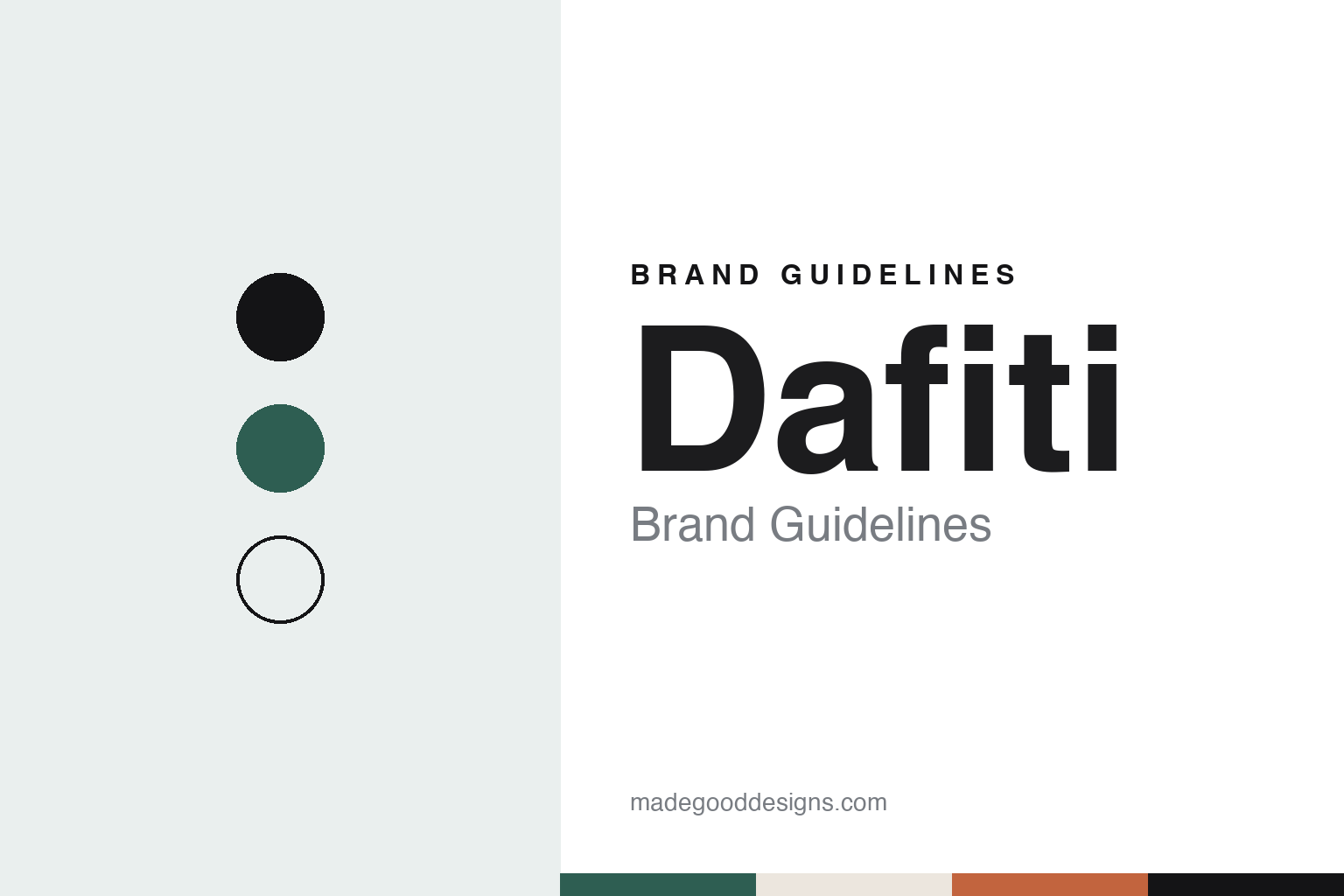
Dafiti Brand Guidelines
The São Paulo online fashion shop launched in 2011.
Aa
Two constants: a Dafiti pine, sand and terracotta palette and a Clean grotesque register. Abstract homage — not a Dafiti product or mark; no package, logo or screen is reproduced.
January 2011
Four founders and a shoe shop online.
Dafiti went live in January 2011 as an online shop based in São Paulo. Portuguese Wikipedia and the Argentine business paper El Cronista, writing in September 2023, give the same four founders: the Brazilian Philipp Povel, the Germans Malte Huffmann and Malte Horeyseck, and the Frenchman Thibaud Lecuyer. The start-up was backed by Rocket Internet, the Berlin company that built and funded online businesses in many countries. El Cronista says Povel had earlier founded MyBrands, an outlet for European designer labels later bought by Zalando, and that Lecuyer had come to Brazil to open Rocket Internet’s regional office.
The business started narrow. For its first months, El Cronista reports, Dafiti concentrated on women’s shoes, buying stock itself and running the delivery side in order to control what the customer received. It then widened into clothing, home decoration and beauty products. By December 2012, The Next Web reported, it offered around 80,000 products from 700 brands in Brazil, across apparel, shoes, accessories, beauty and home decor, and its staff had grown from ten people to about 1,200 in under two years.
That growth was paid for by repeated funding rounds. The Next Web listed early backers including Rocket Internet’s own circle of investors, the Swedish investment company Kinnevik, J.P. Morgan in August 2012 and, in December 2012, a round led by Quadrant Capital Advisors with Kinnevik and Summit Partners taking part, the fourth round in 23 months. The same report said the site had passed 20 million unique visitors in the previous 30 days, helped by Brazil’s third Black Friday.
Colour
Latin American expansion and Global Fashion Group.
Dafiti moved quickly beyond Brazil. Portuguese Wikipedia says it opened in Chile in November 2011 and Argentina in December 2011, and in Colombia in 2012; by the end of 2012, The Next Web reported, it was also selling in Mexico. At home, El Cronista reports, the company opened a 38,000-square-metre distribution centre in Jundiaí, in São Paulo state, in 2013, and later added 300 robots to its São Paulo distribution centre.
The ownership changed in 2014. In September that year, FashionUnited reported, Kinnevik signed a definitive agreement with Rocket Internet and other investors to combine five online fashion businesses founded in 2011 and 2012 into Global Fashion Group, or GFG: Dafiti for Latin America, Lamoda, Jabong, Namshi and Zalora. English Wikipedia says GFG is registered in Luxembourg with headquarters in London, and that its shares have been listed on the Frankfurt Stock Exchange since July 2019. FashionUnited reported at the time that the group would keep several ways of selling side by side, from holding its own stock to branded shops and open marketplaces, depending on the market, with mobile shopping apps as a core focus.
Inside the group, Dafiti absorbed two more Brazilian shops. In 2015 GFG bought Kanui, an online seller of sports, outdoor and street fashion, and Tricae, which sold clothing and goods for babies and children, and folded both into Dafiti, English Wikipedia says; Portuguese Wikipedia dates the merger to July 2015 and says the combined business became the Dafiti Group. The same source says Dafiti opened its site to outside sellers as a marketplace in August 2015, alongside the stock it bought itself. In 2015 Dafiti also ran Dafiti Live, a temporary concept shop where customers could try on items sold on the site, pay by phone or tablet and have the goods delivered to their homes, and in 2018 it added Retira Fácil, a choice of collecting orders from more than ten pick-up points in the city of São Paulo, Portuguese Wikipedia says.
Typography
Brazilian retail identity.
Brazilian retail brands are read most easily through their store formats. The food format at the centre of this group is the atacarejo, a word that joins atacado, wholesale, and varejo, retail. In 2009 the consultant Alberto Serrentino told Estadão that it is a Brazilian hybrid: about half the shoppers are small food businesses and half are households, entry is open without a membership card, and the range is built on basic branded goods sold in bulk. Chains such as Assaí and Atacadão present themselves through big warehouse stores, large signs and services added inside them, such as butchers, bakeries and wine sections.
Group ownership shapes these brands as much as design does. Banners are bought, converted and spun off: Assaí left GPA in 2021, Carrefour bought Atacadão in 2007, and stores from Extra, Makro and Grupo BIG have been converted to other banners. For the pharmacy, home, stationery and book chains in this set, each guide names the owner, any merger and the dates as published sources give them.
Logos and campaigns are documented unevenly. Some changes are reported in detail by marketing titles, as with Assaí’s redrawn sun of 2024, made with Troiano Branding; for many banners the official colours and typefaces are not published at all, so the palettes in these guides are our own interpretations. Own-label ranges, loyalty programmes and apps appear here only as the companies or the press describe them.
Corporate pages fill in the rest: founders, owners, stock-market listings and delistings, and, for at least one bookseller in this set, judicial recovery, the Brazilian court-supervised restructuring process. These guides state such events plainly, with their dates, and say when a chain closed or changed hands rather than implying that it still trades as before.
Aa
A clean grotesque for an online fashion register. (Specimen set in Inter Tight, a sans STAND-IN; NOT the Dafiti logo.)
Dafiti
A smaller map and a fulfilment model.
The map later shrank. English Wikipedia says Dafiti sold its operations in Mexico in March 2016. In Argentina, El Cronista reported in September 2023, Dafiti closed its platform from 18 September 2023, citing high inflation and import restrictions, and was selling off its remaining stock; English Wikipedia says the Chilean business closed in the first quarter of 2025. The founders had also moved on by then: El Cronista says Horeyseck left first, Lecuyer in 2019, and Povel and Huffmann in 2021. In Colombia, the same paper reports, the company relied on small local hubs in Cali, Medellín and Bogotá rather than one large warehouse.
As of May 2026, the trade title Mercado&Consumo described Dafiti as present in Brazil and Colombia and as the Latin American arm of Global Fashion Group, which lists the same two markets on its own site. In an interview with that title, Dafiti’s chief commercial officer described a fulfilment service the company calls “shopping de bolso,” or pocket mall, in which partner brands send their stock to Dafiti’s distribution centre and Dafiti runs the online shop, delivery, returns and customer service; the company told Mercado&Consumo in March 2026 that the fulfilment project had launched in 2024.
For a design guide, Dafiti shows an online-only Brazilian fashion retailer whose identity has to work on a screen and a parcel rather than a shopfront. Compare it with Amazon, another online retailer, and with Saraiva, a São Paulo bookseller that also sold online. For this guide we use a deep pine, sand and terracotta with a sans, an unofficial interpretation; no product or logo is reproduced.
Explore & save
Keep Dafiti’s identity on hand — save it to a board in the Made Good inspiration library.
Dafiti identity set
Pin the Dafiti pine, sand and terracotta palette and the Clean grotesque register to your own board.