Dan Murphy’s Brand Guidelines
The Prahran liquor store of 1952 that went national.
Aa
Two constants: a deep green, cream and muted gold palette and a shopfront serif register. Abstract homage — not a Dan Murphy’s product or mark; no sign, logo or label is reproduced.
Chapel Street
A winemaker’s shop a few hundred metres from his father’s.
Dan Murphy’s began in Melbourne in 1952. English Wikipedia, citing the company’s own history, says Daniel Francis Murphy, a winemaker and journalist, learnt the trade in a liquor store owned by his father, Timothy Murphy, and opened his first shop on Chapel Street in Prahran, a few hundred metres from his father’s store. The same article says Murphy was a friend of winemakers including Maurice O’Shea and Max Schubert, and that in 2016 the business opened Dan Murphy’s Cellar in the cellar of the original Prahran store, a space for boutique and premium bottles.
For more than four decades the business stayed small. When Woolworths bought it in 1998, it had five stores in Melbourne, the wine writer Chris Shanahan wrote in 2005; English Wikipedia describes the same five stores as spread across Victoria. Woolworths’ own corporate history puts it in one line: in 1998 the group “entered into contracts with Dan Murphy,” and three years later it established BWS.
Shanahan described what Woolworths had bought as a proven large-format business model, honed over decades by Murphy and, in later years, by a partner, Tony Leon. Unusually for a large company, he wrote, Woolworths did not fold the chain into its own culture. It left Leon to run the business separately from Melbourne, away from the group’s Sydney head office, while it paid for a national rollout: from five stores in 1998 to 43 across Australia by 2005, with two in Canberra. Shanahan quoted Leon describing the business in plain terms: “We’re traders. We buy and sell liquor and that’s what we work on.” Leon also told him that a new store was expected to take about three years to perform well.
Colour
Large-format stores and a founder on the sign.
The format is the brand. Shanahan described a Dan Murphy’s store in 2005 as “prairie-like” space filled with wines, beers and spirits, drawing customers from 20 to 30 minutes’ travel away, and its advertising as direct and single-minded, built around the line “Nobody beats Dan Murphy.” He quoted a lesson Leon said he had learnt from Murphy himself: no single advertisement works, but advertising works. Shanahan also reported that Coles Myer, then the owner of Liquorland, Vintage Cellars and First Choice, had answered with a look-alike large-format chain, First Choice, which it was rolling out nationally.
On signs and shopping bags, English Wikipedia says, the brand is led by a green-and-white illustrated bust of its founder and a serif logotype.
Growth continued under Woolworths and then under Endeavour Group. In June 2025 the trade site Drinks Digest reported four new large-format stores — at Clyde North in Victoria, Dunreath Village near Perth Airport, Jesmond in New South Wales and Unley in South Australia — taking the national total to 283. The same report described a second, smaller format: the premium Cellar concept, with a new store at Middle Park in Victoria offering a curated range of fine wines and spirits and an emphasis on discovery and expert guidance. Drinks Digest also reported that Dan Murphy’s had been named liquor store of the year in Roy Morgan’s customer-satisfaction awards for 2025, its third win in a row.
English Wikipedia names the chain’s loyalty programme My Dan’s, says the business also trades online through danmurphys.com.au, and gives its head office as Richmond, in Melbourne.
Typography
How the category presents itself.
Liquor, beer and wine store chains sell much the same goods, so they rely heavily on what sits around the bottles: the shop sign, the logo, the colours on the fascia and the bags, and the layout inside. The chains in this guide come from Australia, Finland, Canada, France and the Netherlands, and they show how differently that job can be done, from a founder’s portrait on the sign to a set of initials or a plain public-service name.
Store formats vary as much as the signs. At one end are large warehouse-style stores that draw shoppers from a wide area; in 2005 the wine writer Chris Shanahan described Dan Murphy’s stores in Australia as “prairie-like” spaces. At the other are neighbourhood shops beside supermarkets, smaller premium “cellar” stores and, in Australia, drive-through outlets, which BWS said in 2021 numbered 220 in its own fleet.
Ownership shapes the identity too. Some chains in this guide are state or provincial retailers owned by the public sector; others belong, or have belonged, to supermarket groups, as Dan Murphy’s and BWS did under Woolworths before the 2021 listing of Endeavour Group; others again trade as franchises under a shared name. Own-label ranges, tastings, delivery services and loyalty schemes, such as Dan Murphy’s My Dan’s, are part of the brand, and each company names them in its own way.
Most of these chains publish their own histories, on corporate or careers pages that name founders, first shops and owners. This guide uses those pages as the companies’ own accounts, sets them beside independent press and registers where it can, and describes colours and lettering in words; the palettes shown here are an unofficial interpretation, not the companies’ own.
Aa
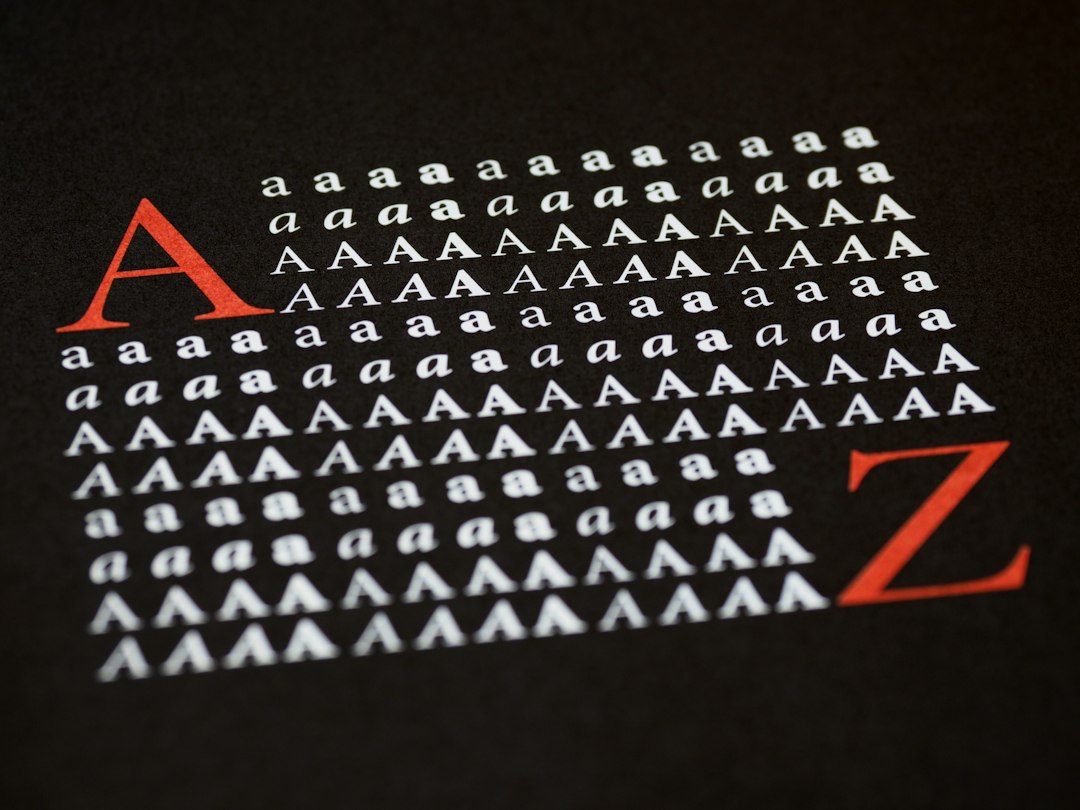
A shopfront serif — the register of a founder’s name over the door. (Specimen set in Libre Caslon Text, a serif STAND-IN; NOT the Dan Murphy’s logo.)
Dan Murphy’s
From Woolworths to Endeavour Group.
Ownership changed shape again in the 2020s. Woolworths merged its liquor and hospitality operations into Endeavour Drinks in 2019, Retail Insight Network reported in 2024. After Woolworths shareholders approved a demerger on 18 June 2021, Endeavour Group began trading on the Australian Securities Exchange on 24 June 2021, Inside FMCG reported on the day; it described Endeavour as the owner and operator of the Dan Murphy’s and BWS chains and a number of hotels, with 28,000 team members. Woolworths kept a minority stake for three more years and in September 2024 agreed to sell its remaining 4.1 percent through a block trade, Retail Insight Network reported, ending its long relationship with the business it had bought in 1998.
Endeavour has also been a wine producer, through its Pinnacle Drinks business. In May 2026 ABC News reported that the group would step away from some vineyards and wineries in South Australia, Victoria and Tasmania and close its VinPac bottling plant at McLaren Vale at the end of the year, keeping its Angaston site in the Barossa open. It would hold on to brands including Chapel Hill, Riddoch Coonawarra and Krondorf Barossa while buying grapes on the market instead; the company called the move a strategic transformation of Pinnacle Drinks. ABC News described Endeavour, the owner of Dan Murphy’s and BWS, as Australia’s largest retail drinks network.
For a design guide, Dan Murphy’s shows how a founder’s name and face can carry a chain long after it passes to new owners. Compare BWS, its neighbourhood sister chain under Endeavour, and Liquorland, which Shanahan listed among Coles Myer’s liquor chains in 2005. For this guide we use a deep green, cream and a muted gold with a serif, an unofficial interpretation; no product or logo is reproduced.
Explore & save
Keep Dan Murphy’s’s identity on hand — save it to a board in the Made Good inspiration library.
Dan Murphy’s identity set
Pin the Dan Murphy’s deep green, cream and muted gold palette and the shopfront serif register to your own board.
Source & notes
Frequently Asked Questions
What font can I use to match the Dan Murphy’s look?
This guide describes Dan Murphy’s type as “A shopfront serif — the register of a founder’s name over the door”. Its type specimen is set in Libre Caslon Text from Google Fonts as a stand-in; Libre Caslon Text is not Dan Murphy’s own lettering.
What colours are in the Dan Murphy’s palette?
This guide’s Dan Murphy’s palette is Cellar green #1F4A33, Ink #121A15, Label cream #F3EFE4, Muted gold #B38B3E and Paper #FAF8F2. The tones are the guide’s own unofficial interpretation, not official Dan Murphy’s hex codes.
When was Dan Murphy’s founded?
Dan Murphy’s was founded in 1952, in Prahran, Melbourne, Australia.
Who founded Dan Murphy’s?
Dan Murphy’s was founded by Daniel Francis Murphy in 1952.
Who owns Dan Murphy’s?
Dan Murphy’s is owned by Woolworths (from 1998); Endeavour Group.