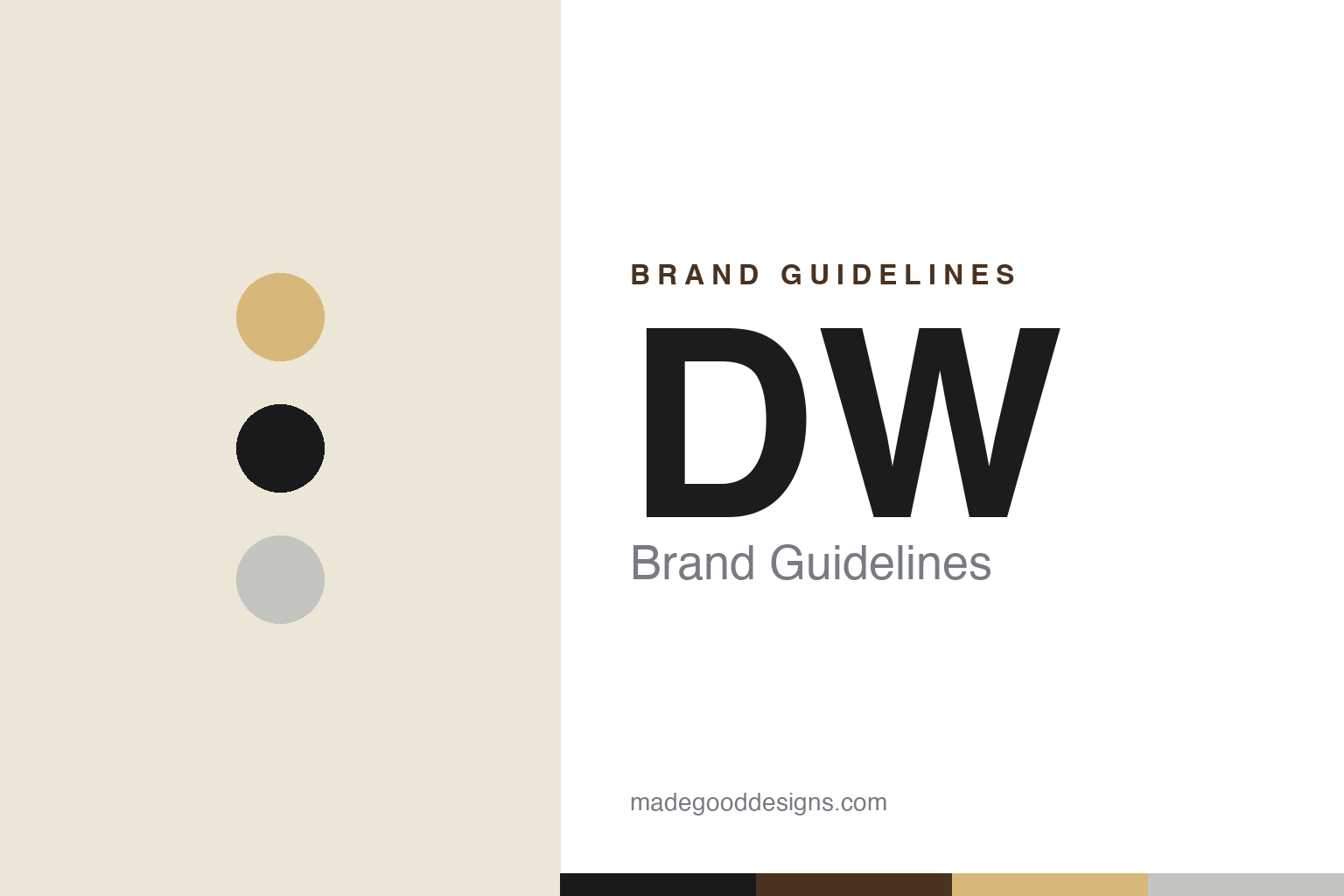
DW Brand Guidelines
From a teaching studio to America’s custom drums — timbre-matched shells and the 5000 pedal.
Aa
Two constants: a natural maple-and-black palette and a strong grotesque. Abstract homage — not the DW wordmark or logo.
From studio to custom kit
DW built the boutique standard.
DW — Drum Workshop — is a lesson in craft turning a teaching studio into a premium brand. It was founded in 1972 by Don Lombardi, and it began not as a factory but as a drum teaching studio in Santa Monica, California. (An honest note on people: John Good was originally one of Lombardi’s students, not a 1972 co-founder; he partnered early, helped fund the studio through a small drum-equipment business, and became DW’s defining master shell-builder.) (Two more honest notes: no official brand hex is published, and the wordmark typeface is undocumented.)
DW grew into one of the top-tier American custom drum makers, based in Oxnard, California. Its landmarks: the DW 5000 bass-drum pedal (a genuine industry benchmark, whose lineage traces to the Camco pedal tooling DW acquired in the late 1970s — pedals were DW’s reputation before shells were), the flagship Collector’s Series USA drums, and John Good’s famous “Timbre Matching” — tapping and pitch-sorting raw shells so each drum sings at a chosen note (his nickname: “The Wood Whisperer”).
On ownership, a precise, recent fact: DW was acquired by Roland Corporation in 2022 (about US$65 million, completing into early 2023). DW’s group also includes PDP (Pacific Drums and Percussion), Latin Percussion (LP) (acquired 2014–15), Gibraltar hardware and the revived Slingerland name. (An honest note: despite a common myth, DW does not own Gretsch Drums.) From studio to custom kit.
Colour
DW lives in a natural maple-and-black palette. Click a swatch to copy the hex.
DW’s identity is natural, premium and precise — the honey of natural maple shells, deep black, chrome hardware and cream. The palette reads as high-end and craft-driven: the tones of a beautifully finished custom drum, warm wood and polished metal, exactly the boutique, made-in-USA world of DW. It’s a premium, material-led world that signals craft, quality and precision. It’s a maple-and-black palette that signals custom craft, quality and warmth. The honest caveat: DW publishes no official brand hex, so the maple, black and chrome here are an original, unofficial interpretation of its drums, not first-party values.
The lesson is a maple-and-chrome palette signals premium craft. DW’s natural-wood world reads as high-end and precise. For designers, it’s a reminder that warm wood with polished metal — the actual materials of a fine drum — can express boutique quality and craftsmanship. The takeaways: draw the palette from real materials (maple, chrome); use warm wood plus metal for premium craft; and treat specific hexes as unofficial when there’s no published spec.
Typography
The wordmark is a strong grotesque — premium and modern.
DW’s identity carries a strong, premium, modern spirit — a bold “DW” wordmark whose confident letterforms read as high-end and assured. A strong grotesque captures the mood: it’s solid and modern, matching a top-tier American custom drum maker known for precision and craft. Set against a natural maple-and-black palette, the type feels premium and confident — exactly the boutique, made-in-USA personality DW carries from the 5000 pedal to the Collector’s Series. It’s strong and modern rather than ornate or vintage, mirroring instruments defined by engineering and timbre-matched craft. (DW’s real logo is a trademark we describe but don’t reproduce.) Because the exact wordmark isn’t ours to use, the honest description is “a strong grotesque spirit,” not the DW logo. The type behaves like the brand: strong, premium and modern.
Aa
A strong grotesque spirit — premium and modern. (Specimen set in Archivo, a strong grotesque evoking a premium modern brand; NOT the DW logo, which is a trademark.)
Craft obsession as the difference
DW listens to the wood.
DW is a lesson in obsessive craft as a brand position. Its differentiator is a near-fanatical attention to the sound of the raw material: John Good’s “Timbre Matching” — literally tapping thousands of unfinished shells and sorting them by pitch so each drum resonates at an intended note — treats a drum shell like a tonewood to be tuned, not just a tube to be built. That craft obsession (backed by USA manufacturing and benchmark hardware like the 5000 pedal) let DW rise from a Santa Monica teaching studio into the aspirational, top-tier custom drum brand, chosen by professionals who care about tone above all. The lesson is that a genuine, demonstrable obsession with quality — a signature process others can’t easily copy — can lift a brand to the premium tier and justify the premium price. Anyone can build a drum; DW listens to each shell first. Obsess over the craft, and quality becomes the brand. Tune the wood.
For designers and brand-builders, DW offers a clear takeaway: a signature craft process can define the premium tier. The lessons: make your quality process visible and ownable (Timbre Matching); back it with real substance (USA build, the 5000 pedal); and keep the facts precise — DW was founded in 1972 by Don Lombardi as a teaching studio, John Good is the master shell-builder (not a 1972 co-founder), and DW was acquired by Roland in 2022. It’s also a reminder to keep it honest: DW doesn’t own Gretsch Drums, the Roland deal was 2022 (not 2021), and no official brand hex or typeface is published, so the palette and type here are an interpretation. DW listens to the wood — proof that craft obsession can be the difference.
Explore & save
Keep DW’s identity on hand — save it to a board in the Made Good inspiration library.
DW identity set
Pin the maple palette and the strong-grotesque spirit to your own board.