Ebonite Brand Guidelines
A name older than its company.
Aa
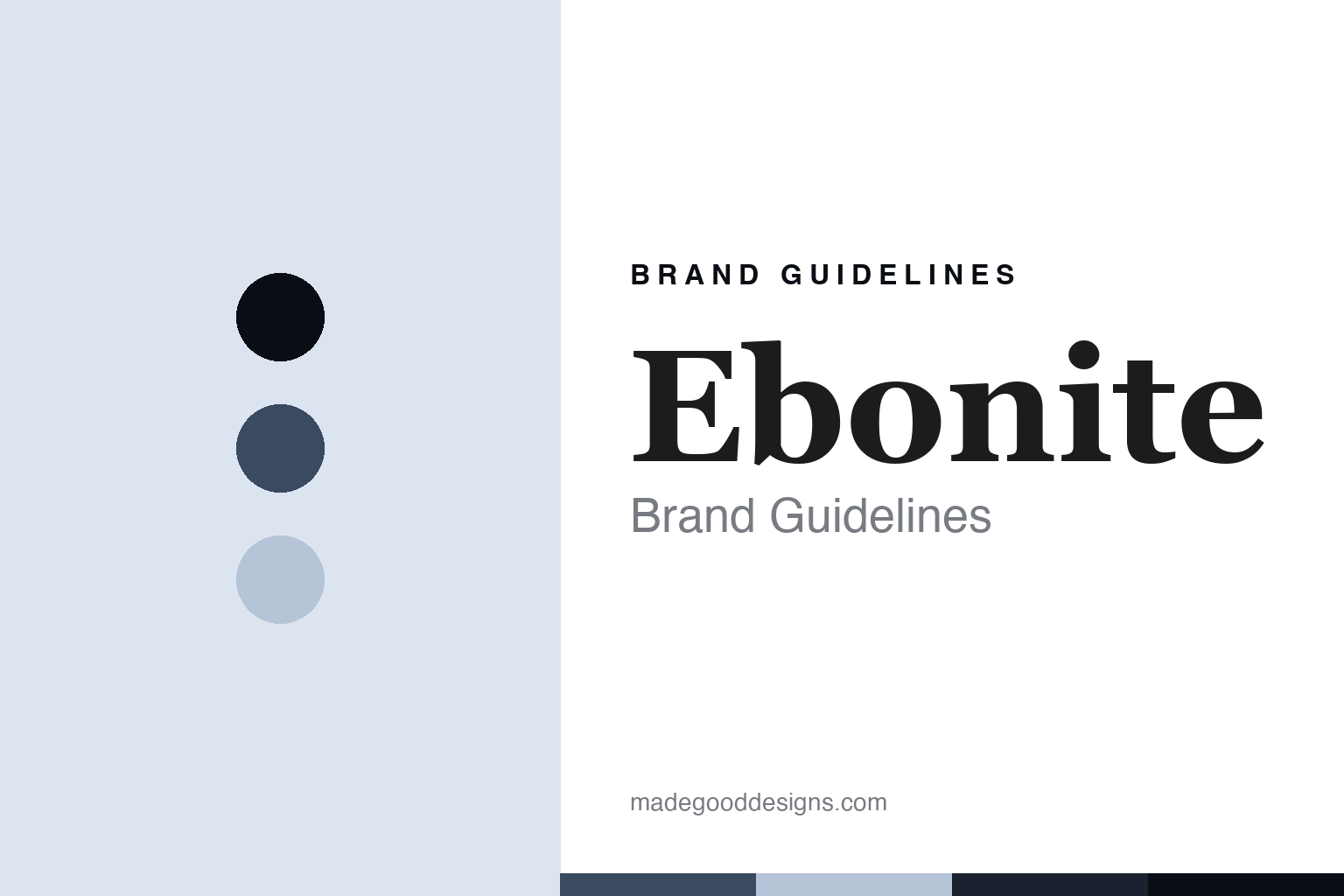
Two constants: an Ebonite-graphite palette and a hard-rubber-serif register. Abstract homage — not an Ebonite product or mark; no ball, core or logo is reproduced.
A name older than its company
The brand is named after a material. The corporation that carried it was formed seventy-six years later, and the corporation that owns it now has never run the factory.
Start with the word. Ebonite is not a coinage — it is the trade name of a real substance, vulcanised hard rubber, called that because it was meant to stand in for ebony. The brand has said as much itself: an early version of its history page explained that “the name Ebonite was derived from the rubber compounds used in the production of balls.” That page is only reachable in archive now, and our attempt to re-confirm it was rate-limited, so we report it as the company’s own account rather than as independently verified. The material chain behind it — ebony, then hard rubber, then the brand — is well documented.
There is a pleasing echo in that. The same substance gave its name to a corner of the fountain-pen trade, where hard rubber is still turned into barrels by houses that treat it as a premium material. The bowling brand and the pen makers are named after the same chemistry.
The founding date is less settled than the name. The company has told three versions of it: its 1998 site said 1907 and placed the work in Newton, Massachusetts; its 2001 timeline said 1905 and named the first ball; and by 2016 it was describing itself as “over 109 years” old, a figure its chief executive reused unchanged in 2019 — which would imply 1910. We write it as founded in 1905 according to the company’s own later accounts, with the note that its earlier material said 1907. The “109 years” is arithmetic repeated without recalculation, not a datum, and none of it could be confirmed independently.
What is firmer is that Ebonite began as a division, not a company. The founding entity was S & W Manufacturing Company of Newton, Massachusetts, and what a conglomerate bought in 1973 was, in the company’s own words, “the Ebonite division of S & W.” The buyer was Fuqua Industries of Atlanta — corroborated by a state record showing a Delaware-incorporated “Ebonite Corp.” qualifying in Kentucky in January 1974 with a principal office in an Atlanta bank tower. An investor group headed by Thomas V. Malloy bought it in 1981; Highland Capital followed in 1984.
And here is the fact the rest of the entry turns on. Ebonite International, Inc. was incorporated in Kentucky on 23 December 1981 — matching the Malloy buyout to the month. The corporation that carried the name for the next thirty-eight years was a buyout vehicle, and the name it carried was roughly seventy-six years older than it was.
Colour
The corporation still exists. It files annual reports. It no longer has the name, and the name no longer has the factory.
On 15 November 2019 Brunswick Bowling announced it had acquired the assets of Ebonite International — the brands, the trademarks, the technologies. The sport’s own governing body carried the announcement. The purchase did not include the Hopkinsville plant, and the plant closed that day.
Kentucky’s own filing records the scale: a WARN notice received 15 November 2019, Christian County, Ebonite International, Inc., 171 employees, marked Closure, projected date 14 January 2020. Local reporting gave the split that reconciles exactly to it — 110 hourly and 61 salaried — and noted the plant had opened in 1967. The county judge-executive, told the news, said: “It’s a shock. I mean, I had no idea they were even considering selling. Of course, that’s one of our claims to fame has been that more bowling balls are made here than any place in the world.” Employees stayed on payroll with severance into mid-January; the factory itself stopped that Friday.
Now follow the corporations. In the state register, two entities organised in 1981 and 2002 under the Ebonite name were renamed about seven weeks after the sale. Both are still active, in good standing, and still filing annual reports in 2026, under names that mean nothing to anybody. That is the fingerprint of an asset sale: the corporate person stays behind, the name walks out. The registered agent of both is the man who was Ebonite’s own finance chief from 1985 — he still signs the annual reports of the shells.
So the ordinary way of telling this story is backwards. The company did not die and leave a brand behind. The corporations survive in Hopkinsville under meaningless names, while the name that means something sits in Michigan inside someone else’s business.
The brand has kept producing throughout. Counting entries on the governing body’s approved-ball list, roughly 111 new Ebonite balls have been approved since the day its factory shut — a figure we counted from the published list and treat as approximate. Where they are made is not stated on the brand’s site. Its owner names two manufacturing locations of its own, in Hungary and in Mexico, and describes its Michigan address as research and development.
Typography
What the brand deleted after 2019 says more than what it kept.
Six weeks after the acquisition, Ebonite’s site still carried a line across the footer of every page: “Ebonite is proud to offer American Union Made products.” Read the verb. Not we make — we offer. Even at its most patriotic the sentence was carefully built, and it has since gone, along with the site that carried it.
Two other deletions are sharper. The brand used to publish a page headed Private Ownership: “A major corporate virtue of Ebonite International is our private ownership. Our decisions are not subject to the shifting sands of Wall Street’s quarter-to-quarter profit push… our decisions, and our future, are placed solidly in our own hands.” Every clause of that is now false — the brand sits under a company whose own licensor is listed on the New York Stock Exchange. And it once named its plants outright: “our three locations in Hopkinsville, Kentucky; Columbia, Tennessee and Lakewood, Colorado… extend from ball making to cut-and-sew manufacturing to electronics, machining, capital goods manufacturing and assembly.” A brand that once listed three factories by name now states no place of manufacture at all.
This is the fourth round running in which a house has deleted something load-bearing from its own account of itself — a verb, an ownership line, a royal warrant, a founder’s name. Ebonite deleted a factory list.
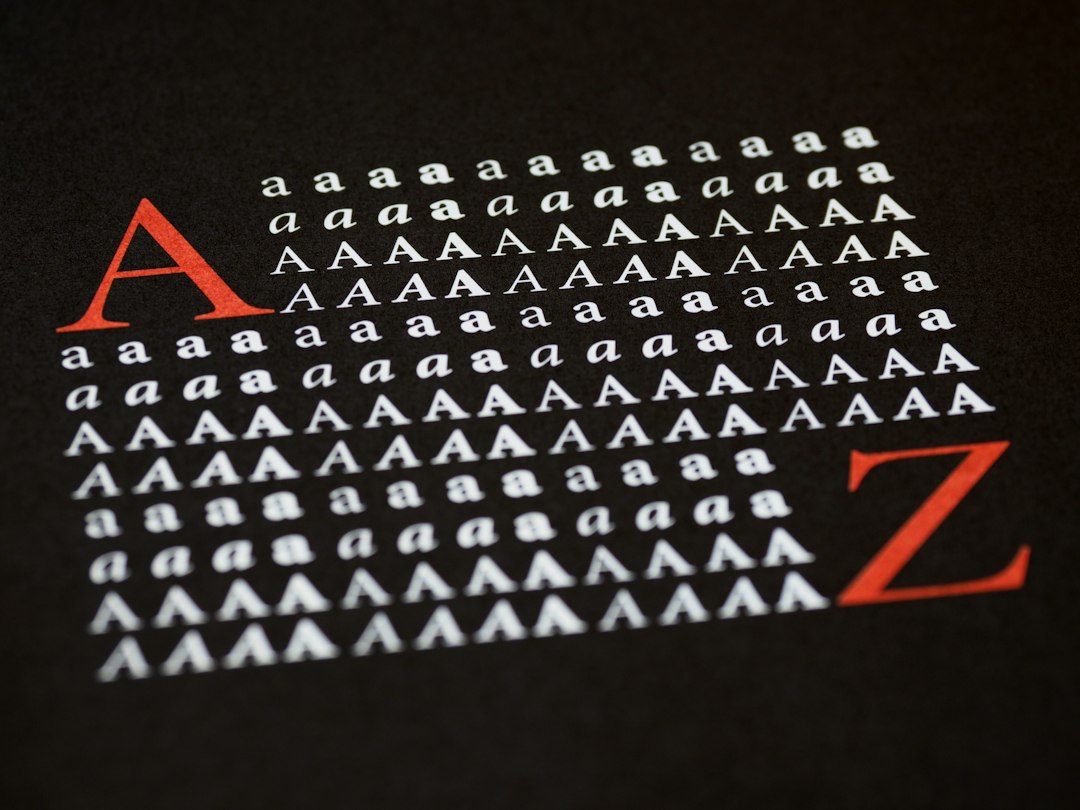
Typographically the brand reads as what it is: an old American sporting name kept in service. We set it here in a high-contrast serif as a stand-in, because a name that predates its own company by three-quarters of a century is a serif proposition, and because the register of the thing — heritage carried forward by a new owner — is exactly what the typography has to do.
Aa
A hard-rubber-serif brand — old, heavy, American. (Specimen set in Fraunces, a hard-rubber-serif STAND-IN; NOT the Ebonite logo or products.)
The outlived-its-company node
Ebonite stands for a name that has outlasted every corporation that owned it.
Ebonite holds the round’s outlived-its-company node, and it is the purest case we have published. The name came from a material patented in the nineteenth century. The business began as a division of a company in Massachusetts. The corporation that made the name famous was formed in 1981 and is now called something else. The trademark — first registered in the United States in 1964 and renewed as recently as January 2024 — is owned today by a company in Michigan that never operated the Kentucky plant.
Each of those four things has a different lifespan, and the brand is the only one that runs through all of them. That is worth saying plainly, because the usual shorthand — “Ebonite, founded 1905” — compresses four separate entities into one imagined continuous firm. There is no corporate continuity here at all.
For anyone building an identity on a heritage name, the lesson in this entry is the deletions rather than the dates. The brand kept its name, its typography and its catalogue. It lost its factory list, its ownership claim and its carefully-worded origin line — and it lost them quietly, in a site rebuild, with no announcement. The things a brand stops saying are a record too, and they are usually easier to date than the things it says.
Explore & save
Keep Ebonite’s identity on hand — save it to a board in the Made Good inspiration library.
Ebonite identity set
Pin the Ebonite-graphite palette and the hard-rubber-serif register to your own board.