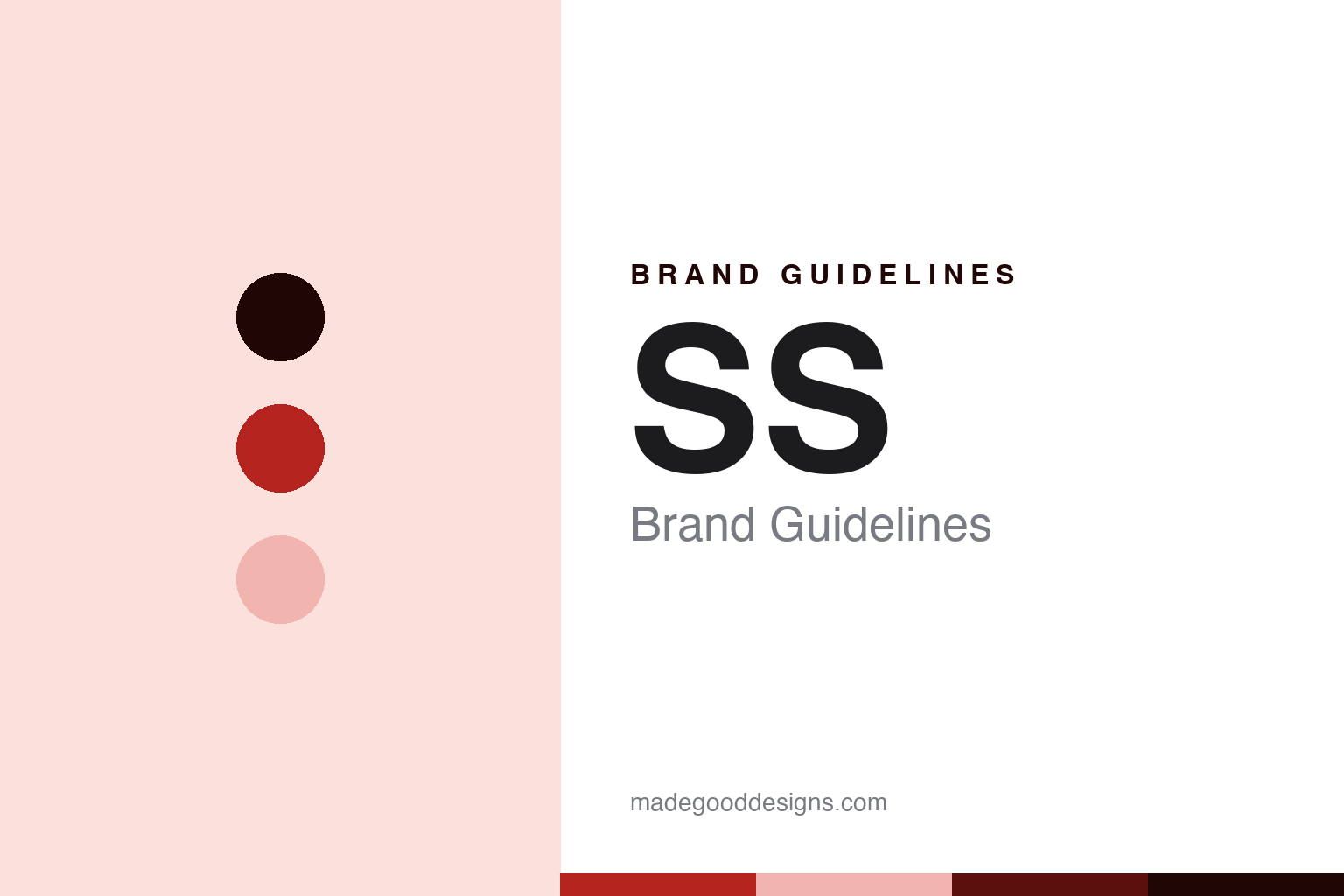
SS Brand Guidelines
The maker behind a World Cup six.
Aa
Two constants: a Sunridges-red palette and a condensed-sans register. Abstract homage — not an SS product or mark; no bat, sticker or logo is reproduced.
A father, a son, and a trademark
SS stands for Sareen Sports. The family has run it from Meerut for more than half a century.
SS tells its own beginning in one long sentence. The business, it says, was “started in the year 1969 by Mr. N.K. Sareen under the inspiration of his father Mr. M.L. Sareen… to launch their registered Trade-Mark SS SUNRIDGES in the year 1976.” It says it began exporting cricket bats to the United Kingdom and Australia in 1979, and added balls and soft-leather protective gear under the same flagship name in 1985. Those are the company’s dates, and we report them as such.
The legal shape is unusual for a brand of this reach. Sareen Sports Industries is listed as a partnership firm, not a private limited company, which means there is no corporate registration number to look up — the business is, in law, its partners. India’s sports-goods export council lists N.K. Sareen and Jatin Sareen as its contacts, at an address in the Victoria Park sports colony of Meerut; its current site gives a factory on the Mawana Road. Its newer sub-brand is TON, and its web address now carries both names.
Meerut is one of India’s two great sports-goods cities, alongside Jalandhar. The district industries centre counts 9,720 sports-related small businesses with a turnover of about ₹1,852 crore in 2025–26. SS is one of the best-known names among them, and it is still run by the family that founded it.
Colour
Its English willow comes from the same Essex company it has used for nearly fifty years.
The most precise account of how SS works comes from a 2024 report in the International Business Times on the English-willow trade. It said that the Essex willow company J.S. Wright & Sons “has supplied Sareen Sports in Meerut, India, for nearly half a century,” and that SS “manufactures from 500 to 800 bats daily using the processed clefts it receives from JS Wright.” Turning a cleft into a finished bat, the same report said, takes 24 to 36 hours.
J.S. Wright describes itself as “the world’s largest and oldest established company supplying English cricket bat willow,” founded in 1894 when, it says, Jessie Samuel Wright was asked to supply willow for W.G. Grace’s bats. It says it plants about 30,000 trees a year. Its site also makes a claim about its share of the market — but it makes it two different ways on two different pages, once about bats and once about willow, so we quote neither.
SS sells English-willow and Kashmir-willow bats as separate ranges. The difference matters more than it sounds. English willow is grown mainly in eastern England, where a 1974 order gave councils in six counties the power to have trees infected with watermark disease felled and burned; the Forestry Commission said in 2014 that the order was not then being enforced. Kashmir willow comes from the valley, under a 2000 law that bars unprocessed clefts from leaving the territory. A bat’s grade begins with which tree it came from.
The English tree takes time. J.S. Wright says cricket-bat willow — Salix alba caerulea — takes 12 to 20 years to mature and is felled at a girth of about 58 inches; it was not, when we checked, taking on new growers until the 2027–28 planting season. Kashmir’s trade is younger and more local. A 2026 report in Kashmir Life described about 400 bat units, mostly in the Awantipora–Bijbehara belt of south Kashmir, which its manufacturers’ association said make around three million bats a year — the association’s figure, not an official one. Both woods end up, finished, in the same Meerut catalogues; SS lists them as separate ranges, at separate prices, and leaves the buyer to decide which kind of tree they want to swing.
Typography
The six that won India the 2011 World Cup came off a bat with someone else’s name on it. SS had made it.
The most striking fact about SS is about a bat that did not carry its name. In a 2015 feature on the economics of bat sponsorship, The Cricket Monthly reported: “Dhoni’s 2011 World Cup-winning six came off a Reebok-branded bat that was made by SS.” One of the most famous shots in Indian cricket, in other words, was struck with an SS bat wearing a sportswear company’s sticker.
That is how the professional bat trade has often worked. A player signs with a brand; the brand’s stickers go on the bat; the bat itself may come from a specialist maker the public never sees. This round keeps finding the pattern. SG told the same magazine it made bats for international brands it would not name; DSC says its family began by making bats “for the world’s top brands”; and the English maker Millichamp & Hall says its bats went on an Ashes tour “disguised with the labels of their better-known sponsors.”
The rules make that possible. MCC’s Law 5 fixes the bat’s materials and dimensions — the blade “shall consist solely of wood,” no more than 10.8 centimetres wide and 6.7 deep — but it is about wood and dimensions, not names. The Laws govern the willow; the market governs the label on it.
The same magazine put SS’s revenue at ₹35 crore in the 2012 financial year — small beside the brands whose names went on its bats.
Aa
A tall condensed sans — the shape of a bat sticker, built to be read from the stands. (Specimen set in Oswald, a sans STAND-IN; NOT the SS or TON marks or products.)
Two letters on a blade
A bat brand lives on a sticker, and a sticker has to be read from a hundred metres away.
Bat branding is a distinct graphic problem. The mark has to sit on the face and back of a narrow blade, survive close-up television and still be legible from the boundary. That pushes every maker towards short names and heavy letters — which is exactly what two initials, SS, and a three-letter sub-brand, TON, provide. “Sunridges” is the longer name behind them, kept from the 1976 trademark.
The irony of the Dhoni bat is that the sticker problem was solved, that night, by someone else’s logo. For a maker, the identity question is whether to sell its name or its skill. SS has done both. On the shelf, meanwhile, its own catalogue is organised first by wood — English or Kashmir — and only then by model, which tells you what its buyers ask first.
For this guide we use a Sunridges red and a pale coral with a tall condensed sans. These are an unofficial interpretation, not SS’s own colour values, and nothing of its marks is reproduced.
Explore & save
Keep SS’s identity on hand — save it to a board in the Made Good inspiration library.
SS identity set
Pin the Sunridges-red palette and the condensed-sans register to your own board.