Everbright Environment Brand Guidelines
A 1993 Hong Kong listing that became a waste-to-energy group.
Aa
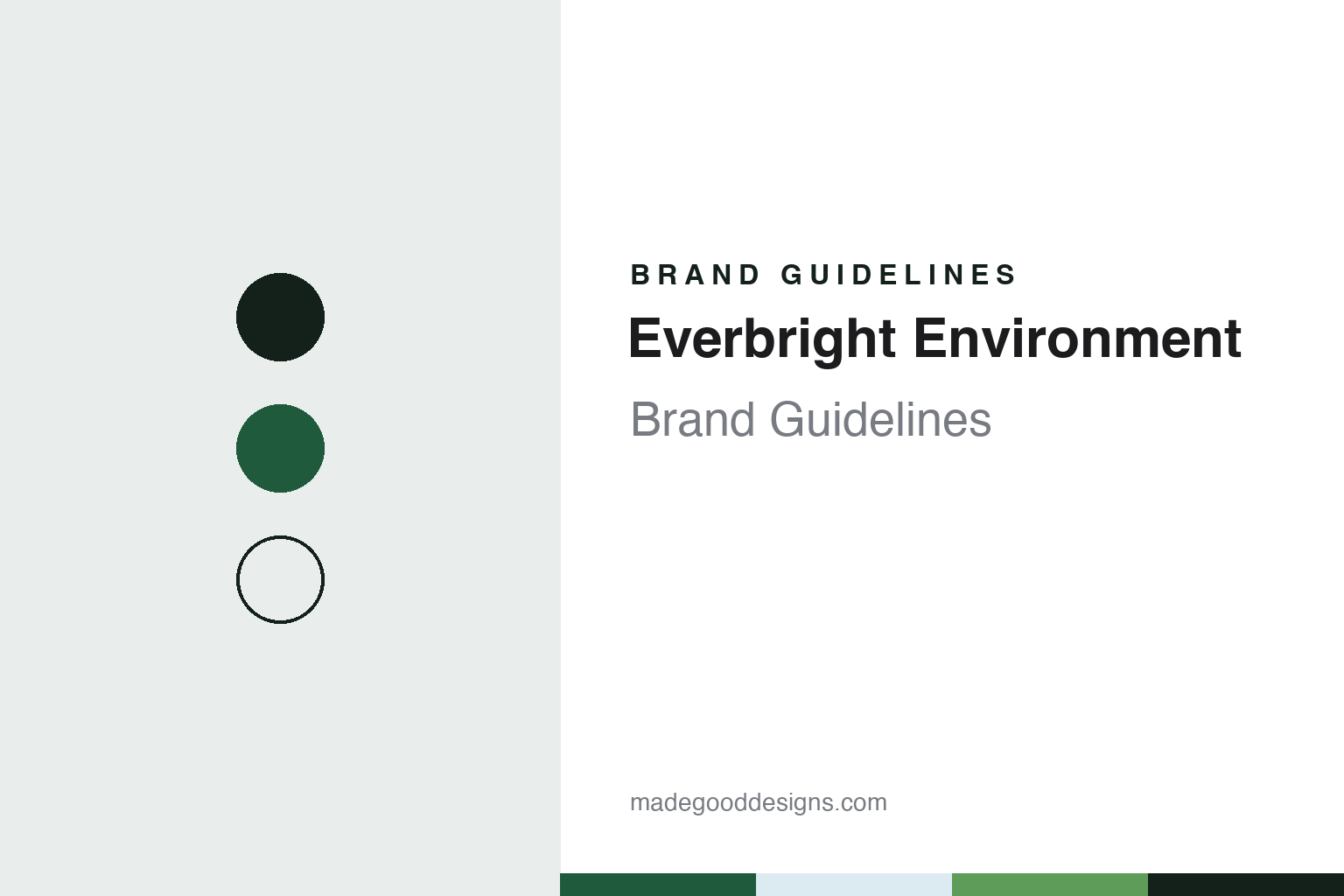
Two constants: an Everbright Environment green and sky palette and a Corporate sans register. Abstract homage — not an Everbright Environment asset or mark; no logo, plant or livery is reproduced.
Everbright International
A listed Hong Kong company turned waste-to-energy group.
Everbright Environment is the Hong Kong-listed environmental company of China Everbright Group, a Chinese state-owned enterprise. Its corporate roots run through a stock-market transaction rather than a founding. English Wikipedia records that in 1993 China Everbright Holdings, a state-owned business based in Hong Kong, took over a listed Hong Kong company, Newfoundland International, which had been incorporated in 1961, and injected part of the group’s business into it. The listed company traded for many years as China Everbright International Limited, under the Hong Kong stock code 257, which it still uses.
The turn to waste came later. In its March 2026 results release the company dates its “transformation into the environmental field” to 2003. Its own milestones page, which runs from 2007, records the waste-to-energy plants of that period in Jiangsu: commercial operation at Yixing in June 2007, construction starting at Changzhou in May 2007, and work on a second phase at Suzhou. Waste water came alongside, with treatment plants in Jinan and Zibo in Shandong province.
In 2020 the company announced that its name would change from China Everbright International Limited to China Everbright Environment Group Limited, according to its milestones page, and it now presents itself as Everbright Environment. Its head office is in Admiralty on Hong Kong Island, and English Wikipedia lists mainland offices in Beijing, Jinan, Nanjing and Shenzhen.
Colour
Five sectors and two listed subsidiaries.
The company organises itself into five sectors: environmental energy, environmental water, greentech, equipment manufacturing and an environmental research institute. Environmental energy, which it calls its largest sector, covers waste-to-energy plants and the treatment of food and kitchen waste, leachate, fly ash, sludge and construction waste, along with environmental industrial parks and waste sorting. The water business was spun off into China Everbright Water, listed in Singapore and Hong Kong, and China Everbright Greentech was split off in 2017, English Wikipedia says; both remain listed subsidiaries, according to the company’s 2026 release. The milestones page says the water arm reached the Singapore Exchange in 2014 through a reverse takeover of a listed company, which was then renamed China Everbright Water Limited.
Its scale figures come from the company itself. As of 31 December 2025, it said, it held 605 environmental projects, including 196 waste-to-energy projects with a designed household-waste processing capacity of 163,050 tonnes a day, and worked in 24 provinces, autonomous regions, municipalities and a special administrative region of China. The same release describes Everbright Environment as the largest environmental enterprise in China and the biggest waste-to-energy operator globally; those are the company’s own descriptions.
It also builds its own equipment. Its milestones page records that its first self-developed grate furnace, rated at 1,000 tonnes a day, came off the production line in the third quarter of 2020, and its 2025 results mention a micro-scale grate furnace developed and built in-house. In 2025, it says, a process it developed for the pyrolysis of spent power batteries was listed in a national catalogue of environmental technologies. Earlier, in December 2014, its self-developed grate furnace series received the European Union’s CE marking, according to the same page.
Typography
Design and documentation.
Waste and environmental-services companies speak to several audiences at once. A household wants a pickup day and a holiday calendar; a town council wants a collection contract; a hospital wants a compliant route for regulated medical waste; investors want results and a sustainability report. Their websites tend to separate those audiences into service pages: residential and commercial collection, recycling, roll-off containers, landfills and transfer stations, special and hazardous waste, medical waste and document shredding.
The plants are named the way the companies describe them. Waste Connections’ 2026 sustainability report speaks of collecting and treating landfill biogas for “beneficial use” and of a growing network of renewable natural gas facilities; trade coverage such as Waste Dive reports these plants, along with leachate-treatment systems, through quarterly results and project announcements. Where this guide uses terms such as recycling operation, energy-from-waste plant or landfill-gas plant, it follows the wording of the company or of a dated report, and environmental claims are given as the company’s own description.
Much of a waste brand is seen on the street rather than on a screen: on collection trucks, containers and depots, and in the photography of fleets and yards that fills sustainability reports. Mobile apps now carry part of the load, sending collection reminders and service alerts, as Waste Connections says its WasteConnect app does. Greens, blues and ambers recur in this guide’s own palettes for the sector; those palettes are unofficial interpretations, not company colours, and no truck livery, logo or mark is reproduced.
Ownership matters as much as identity. Large groups grow by buying local haulers, and specialist names often survive inside them: Stericycle, the medical-waste company bought by WM in 2024, now forms WM’s Healthcare Solutions business. Each guide sets out who founded a company, who owns it now and what rests only on the company’s own word.
Aa
A corporate sans — the register of an infrastructure group. (Specimen set in IBM Plex Sans, a sans STAND-IN; NOT the Everbright Environment logo.)
Everbright Environment
Poland, Vietnam, Uzbekistan and a second listing.
Expansion abroad began in Europe and South-East Asia. In August 2016 China Everbright International bought a 97.12 per cent stake in Novago, a waste company based in Mława, in Poland’s Mazowieckie province, from the investor Abris Capital Partners, the Polish business site wGospodarce reported; the town of Mława kept the remaining 2.88 per cent. Novago, founded in 1992, ran waste collection, landfill, refuse-derived fuel and combined heat-and-power operations from six plants, the site said. The company’s milestones page records its Can Tho waste-to-energy plant in Vietnam entering operation in the fourth quarter of 2018 and a plant at Hue completed in 2024. In 2025 it secured two waste-to-energy projects in Uzbekistan, at Fergana and Namangan, and opened representative offices in Vietnam, Indonesia and Central Asia, it says.
A second listing is planned. In the fourth quarter of 2025 the company announced a proposal to issue RMB shares and list on the Shenzhen Stock Exchange, with no more than 800 million shares. On 9 November 2026 Sina Finance reported a BofA Securities note on the plan, which said the proceeds were meant for seven projects, mainly waste-to-energy plants in Dongguan, Uzbekistan and Vietnam; the listing had been proposed in late 2025 and was not completed at the time of writing.
The brand is corporate rather than consumer-facing, and much of its public face is the plants themselves. The milestones page describes the Changzhou plant, after upgrading works in 2020, as a fenceless “community-friendly plant” and an “urban public living room,” and records eighteen of the group’s facilities on a national list of environmental plants open to the public in 2025. Its website says it receives nearly 40,000 visitors a year. The name change reached its charity too: the milestones page lists the Everbright Environment Charitable Foundation, which until the rename carried the Everbright International name, as lead sponsor of Earth Hour in Hong Kong for a seventh consecutive year in 2020.
For a design guide, Everbright Environment shows how an infrastructure group can present its plants as public buildings rather than hidden works. Compare Veolia, a French group with waste, water and energy arms, and Covanta, an American energy-from-waste operator. For this guide we use a deep green and a harbour sky blue with a sans, an unofficial interpretation; no product or logo is reproduced.
Explore & save
Keep Everbright Environment’s identity on hand — save it to a board in the Made Good inspiration library.
Everbright Environment identity set
Pin the Everbright Environment green and sky palette and the Corporate sans register to your own board.